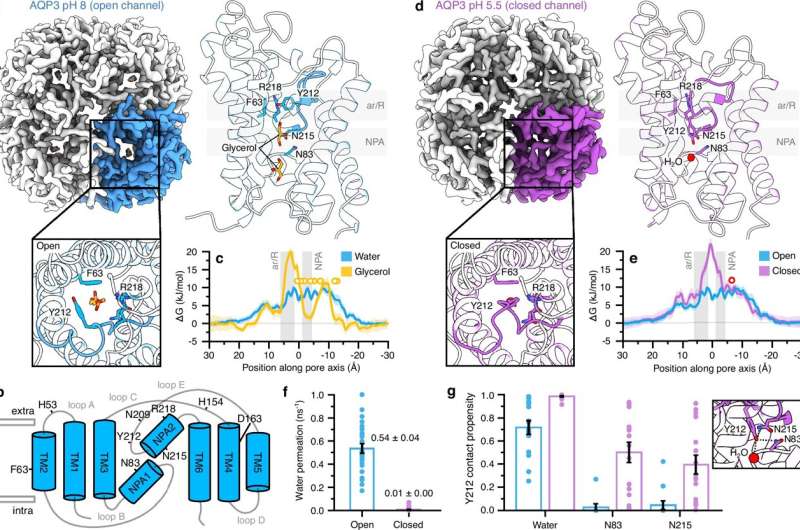
For the first time, scientists have discovered how cells effectively block harmful free radicals, according to a new study published in Nature Communications. Researchers at Lund University revealed that cells possess a protective mechanism that prevents excessive concentrations of harmful molecules, such as hydrogen peroxide, from entering.
Free radicals, while sometimes crucial for cell function, can also lead to damage and cell death if not properly regulated. Hydrogen peroxide, a common disinfectant, serves as an example of a free radical that cells utilize in small amounts to send important signals. When present in excessive amounts, however, it can become detrimental to cell health.
Professor Karin Lindkvist, who led the study, explained the significance of these findings. “Our cells produce free radicals when we inhale oxygen. Previously, it was thought that hydrogen peroxide could flow freely through the channels in the cell membrane. We have shown that these channels have a protective system,” she stated.
Advancements in cryo-electron microscopy allowed researchers to visualize this protective mechanism. The study found that the channels, typically open to allow beneficial molecules like water and glycerol to enter, can close when hydrogen peroxide levels outside the cell rise too high. In this case, hydrogen peroxide molecules attach to the channel’s exterior, effectively locking the door and safeguarding the cell.
Lindkvist expressed surprise at the results, describing the moment as akin to witnessing a cell actively closing its protective channel against potential harm. “Doing that acts as an automatic protection against dangerous levels entering the cell,” she noted.
This discovery enhances understanding of how cells manage stress and regulate free radicals. It holds potential implications for conditions such as diabetes and cancer, where cellular stress levels are often disrupted. “Cancer cells, for example, produce extreme quantities of free radicals during rapid growth. Yet, they do not succumb to damage, suggesting they have mechanisms to eliminate excess radicals,” Lindkvist explained.
The research team plans to explore whether targeting these channels could lead to new cancer treatments. “In our next study, we want to investigate whether it is possible to kill cancer cells by blocking the channels,” she added.
This study, led by Peng Huang and colleagues, represents a significant step forward in cellular biology, shedding light on the intricate balance cells maintain in managing free radicals. The findings may pave the way for innovative therapies in the future, particularly in the treatment of diseases characterized by oxidative stress.
For further details, refer to the article titled “Structural insights into AQP3 channel closure upon pH and redox changes reveal an autoregulatory molecular mechanism” in Nature Communications.