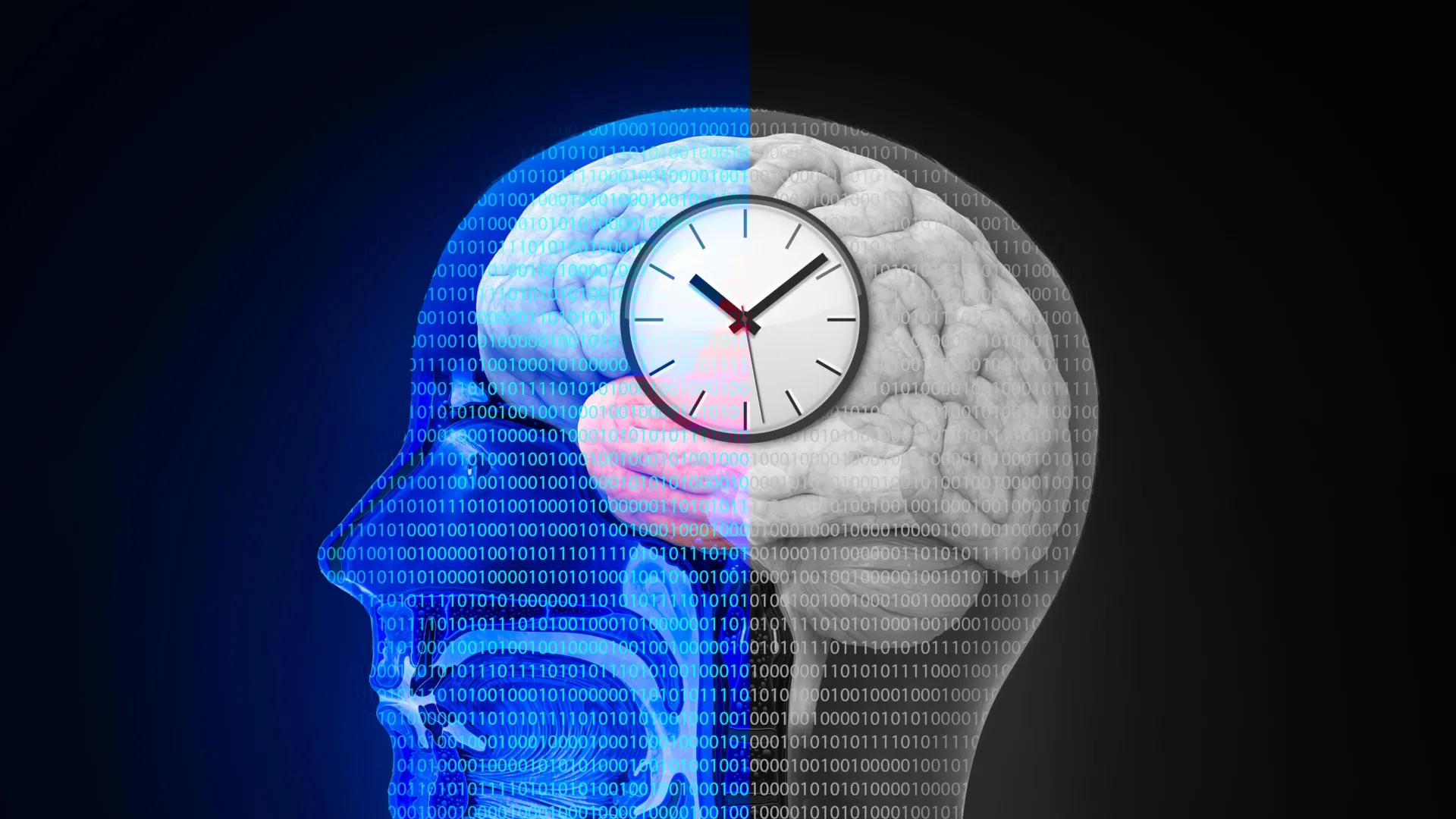
Researchers at Rutgers University have revealed key insights into how the brain integrates fast and slow information processing, which may explain variations in cognitive abilities among individuals. Published on January 3, 2026, in the journal Nature Communications, the study highlights the role of different brain regions operating on unique internal clocks, facilitating efficient communication through white matter connections.
Understanding Brain Processing Timelines
The human brain continually processes information that arrives at varying speeds. Some signals require immediate responses, while others necessitate a more measured interpretation of context and intention. The study conducted by Rutgers Health explored how these different speeds are managed to support thinking, decision-making, and behavior.
According to Linden Parkes, assistant professor of Psychiatry at Rutgers Health and the study’s senior author, “To affect our environment through action, our brains must combine information processed over different timescales.” This integration is essential for effective human behavior.
The research team analyzed brain imaging data from 960 individuals, creating detailed maps of their brain connections, known as connectomes. By employing mathematical models, they tracked how information flows through these networks, linking regional processing to overall behavior.
Significance of Neural Timescales
The findings indicate that each brain region operates within its own intrinsic neural timescale (INT), which determines how long it retains information before processing the next signal. Parkes noted the significance of this arrangement, stating, “We found that differences in how the brain processes information at different speeds help explain why people vary in their cognitive abilities.”
The study also connected these timing patterns with genetic and biological factors within brain tissue. Interestingly, similar mechanisms were identified in mouse brains, suggesting that these processes may be conserved across species.
Parkes emphasized the implications of the research, stating, “Our work highlights a fundamental link between the brain’s white matter connectivity and its local computational properties.” Individuals whose brain wiring aligns well with the fast and slow information processing tend to demonstrate higher cognitive capacities.
Future Research Directions
Building on these findings, the research team plans to investigate neuropsychiatric conditions, including schizophrenia, bipolar disorder, and depression. The aim is to understand how disruptions in brain connectivity can affect information processing over time. This research could pave the way for new insights into mental health treatments.
The study involved collaboration with Avram Holmes, an associate professor of psychiatry and a core member of both the Rutgers Brain Health Institute and the Center for Advanced Human Brain Imaging Research. Contributions also came from postdoctoral researchers Ahmad Beyh and Amber Howell, and Jason Z. Kim from Cornell University.
These findings not only deepen our understanding of cognitive function but also offer potential avenues for addressing mental health challenges through a clearer understanding of brain connectivity and its impact on behavior.