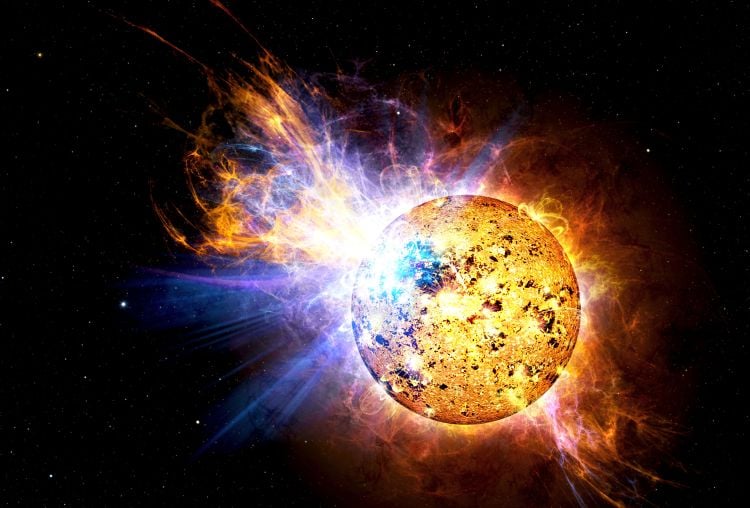
Observations from the European Space Agency’s (ESA) Solar Orbiter spacecraft have revealed new insights into the mechanisms that trigger solar flares. These explosive events, which can disrupt satellite communications and power grids on Earth, are initiated by initially weak disturbances that evolve into powerful magnetic avalanches. This discovery enhances our understanding of solar dynamics and their impact on our planet.
The Solar Orbiter, launched in February 2020, has been conducting detailed observations of the Sun from a unique vantage point. The spacecraft’s findings indicate that solar flares begin with small-scale disturbances in the Sun’s magnetic field. As these disturbances grow, they lead to a cascade of magnetic avalanches, ultimately resulting in the eruption of solar flares.
Mechanism of Solar Flares Unveiled
Research indicates that these avalanches create a ‘sky’ of plasma blobs that continue to rain down even after the flare itself has subsided. This process resembles an avalanche on a snowy mountain, where the initial movement of a small quantity of snow can lead to a much larger and more destructive event. The Solar Orbiter’s ability to capture this rapid evolution provides invaluable data for scientists studying solar activity.
According to ESA officials, this research marks a significant advancement in solar physics. Understanding the mechanisms behind solar flares is crucial for predicting their occurrence and mitigating their effects on Earth. The data collected by the Solar Orbiter will contribute to improved forecasting models, potentially safeguarding technology and infrastructure on our planet.
The implications of this research extend beyond mere scientific curiosity. Solar flares can have severe consequences for communication systems, navigation devices, and even electrical grids. By enhancing our understanding of how these phenomena occur, scientists hope to develop better protective measures for technology that relies on stable solar conditions.
The Solar Orbiter’s mission continues as it gathers more data, aiming to provide a comprehensive view of the Sun’s behavior. As researchers analyze the information collected, they anticipate further revelations about solar dynamics and their far-reaching effects on Earth and the solar system.
In summary, the ESA’s Solar Orbiter has shed light on the intricate processes behind solar flares, revealing that these explosive events are triggered by cascading magnetic avalanches. This breakthrough not only enhances our understanding of solar activity but also holds potential benefits for managing the impacts of solar phenomena on technology and infrastructure.