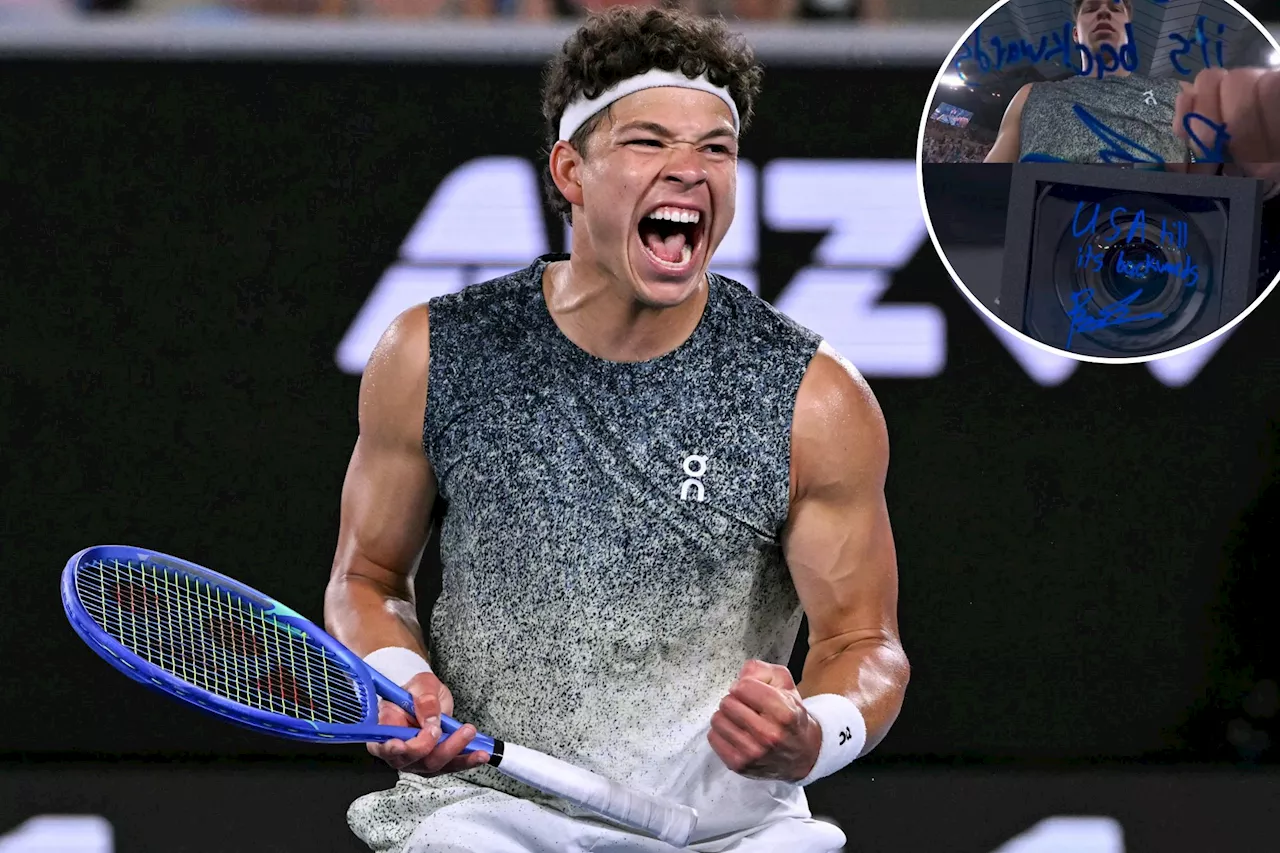
American tennis player Ben Shelton made headlines at the 2026 Australian Open after a decisive victory over Valentin Vacherot in the third round. Following the match, Shelton participated in the tradition of signing a camera, but his message was notably pointed: “USA ‘til it’s backwards.” This phrase reflects a contemporary slang expression of unwavering support.
During the tournament, American players have faced inquiries about the significance of representing the United States on an international stage. Several athletes, including Taylor Fritz, Coco Gauff, and Madison Keys, have shared their thoughts in response to similar questions posed by a reporter. These discussions often center on the complexities of national identity in the current sociopolitical climate.
After his match, Shelton’s declaration resonated with many fans, particularly at a time when American athletes are navigating heightened scrutiny regarding their representation. He expressed pride in his country, bringing attention to a sense of unity among American tennis players.
Coco Gauff, another prominent American player, was asked about her feelings regarding the state of the U.S. one year into President Donald Trump‘s second term. She articulated a desire for greater peace and kindness within the country. Gauff stated, “I hope forward that we can have a lot more peace in our country and more kindness in the way we speak to each other.” Her reflection highlights the challenges faced by individuals, particularly those from marginalized communities, in the current political landscape.
Additionally, Amanda Anisimova was questioned about her experiences representing the U.S., especially in light of recent events affecting the country. Her responses underscore the emotional weight athletes carry while competing on behalf of their nation.
The atmosphere at the Australian Open has been charged not just with competition but also with meaningful dialogue. During the tournament, former player Tennys Sandgren criticized the line of questioning directed at the athletes, suggesting that reporters should focus more on their performance rather than delving into political matters.
As Shelton celebrated his victory, he exemplified a new wave of athletes who are not only champions on the court but also voices for their generation. His signing of the camera encapsulated a blend of sportsmanship and patriotism, reflecting the sentiments of many who strive to represent their country with pride.
The Australian Open continues to showcase not only athletic excellence but also the personal narratives of the players involved. As the tournament progresses, the stories of athletes like Shelton and Gauff remind fans of the intersection between sports and societal issues, emphasizing the importance of dialogue in the world of athletics.