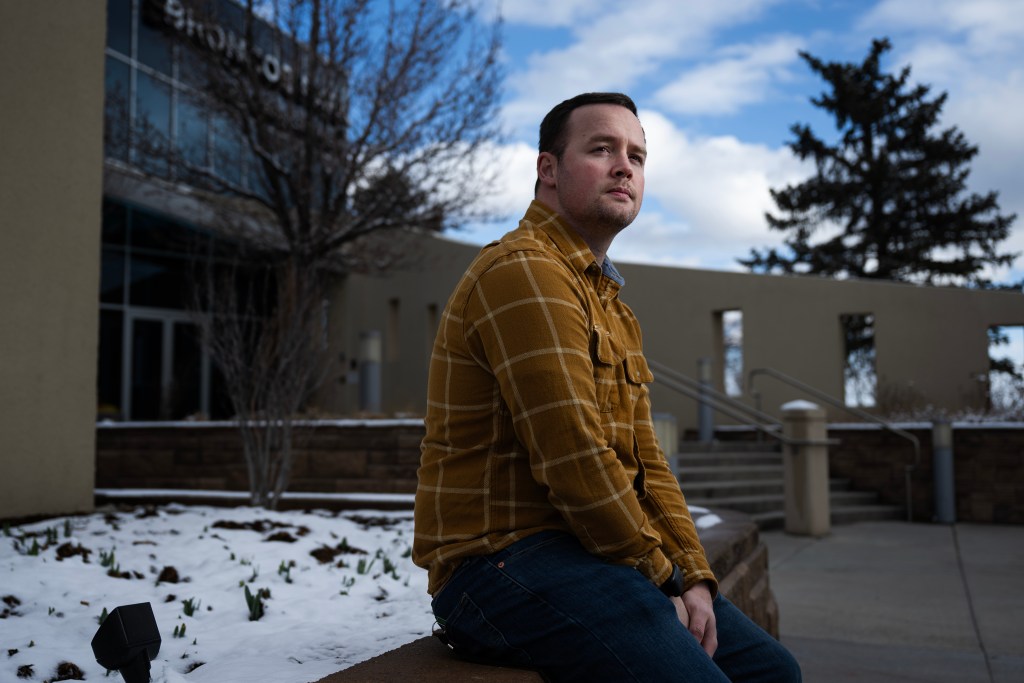
On December 28, 2023, Cody Roark, a 31-year-old reporter for Mile High Sports, discovered an alarming Facebook post claiming he had died. The post, attributed to a questionable account named “Wild Horse Warriors,” sparked confusion and concern among Roark’s colleagues and friends. The misinformation included a graphic stating that a “Denver Broncos analyst” had passed away due to domestic violence, leaving behind a young child. Roark, who does not have children, was baffled by the situation.
The story unfolded when Doug Ottewill, a coworker of Roark’s, was helping his mother set up her new iPad. As she scrolled through Facebook, she encountered the post and expressed her sorrow. Ottewill quickly texted Roark to check on him, only to find out that he was very much alive and bewildered by the claims circulating online.
Roark reflected on the incident, stating, “It was just one of those things you hate seeing. Just doesn’t make sense.” He noted that, while he is a recognized figure among Broncos fans, he never considered himself significant enough to be the target of such a bizarre fabrication.
Upon further investigation, Roark deduced that the post was likely generated by artificial intelligence, as no authentic images exist of him smiling with a child. The account “Wild Horse Warriors,” created in November, had previously posted a series of false claims about Broncos players and events, misleading many fans with fabricated content.
The Facebook page gained traction, amassing over 6,200 followers and generating hundreds of reactions. Following inquiries from The Denver Post, Meta, Facebook’s parent company, removed the account for violating policies regarding inauthentic behavior. According to Meta’s guidelines, “inauthentic behavior” encompasses various forms of deception aimed at tricking the platform and its community.
While Roark’s situation may appear isolated, it highlights a broader issue of misinformation proliferating on social media platforms. Experts in artificial intelligence and social media disinformation emphasize that the technology itself is not inherently problematic; rather, it is the ease with which AI can be employed to create misleading narratives that poses a significant challenge.
Roark remarked on the implications of such misinformation, particularly for older individuals who rely on platforms like Facebook for news. “They believe it,” he said. “And it spreads like wildfire.” He further stressed the need for critical literacy among social media users, as misinformation can easily mislead even the most vigilant individuals.
The phenomenon extends beyond Roark’s experience, with numerous accounts posting fictitious stories related to various NFL teams, including the Denver Broncos. These accounts exploit sensationalism to attract clicks, often linking to ad-laden websites that generate revenue through user engagement.
Brian Keegan, a professor specializing in online communication dynamics, noted that even a modest number of clicks across multiple posts can lead to financial gain for those behind such deceptive operations. V.S. Subrahmanian, an expert in AI security issues, highlighted the potential danger of these links, suggesting that they could compromise users’ personal information.
As misinformation continues to evolve, the public’s ability to discern credible information from falsehoods becomes increasingly critical. Roark’s experience serves as a reminder of the strange new world shaped by social media dynamics, where even a Broncos reporter can find himself the subject of a viral hoax.
In the wake of this incident, Roark has taken the situation largely in stride, joking about the inaccuracies, including the post’s incorrect claim that he is 40 years old. Yet, the underlying concerns regarding misinformation remain significant and complex. The need for vigilance and accountability in the digital age has never been more pressing, as misinformation can have real consequences for individuals and communities alike.