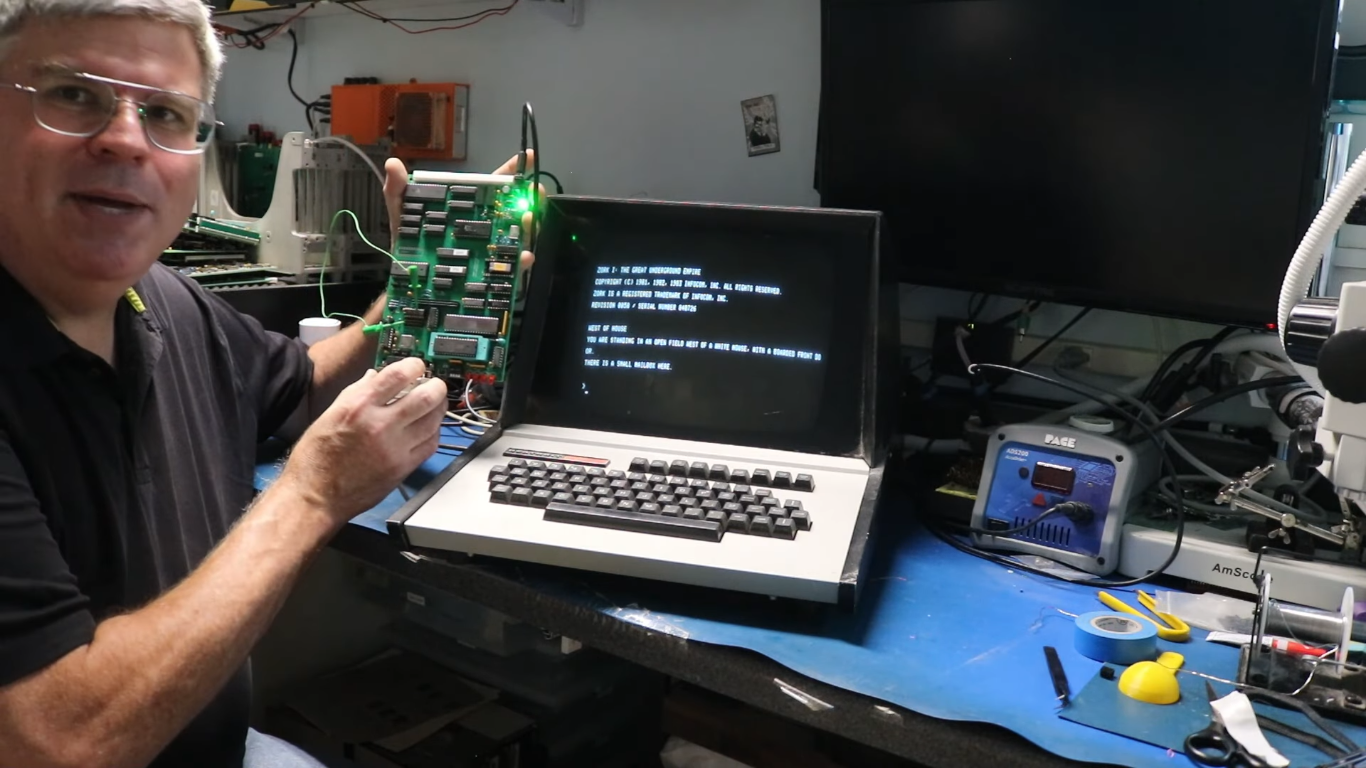
The classic text-based adventure game Zork has made headlines once again, this time running on one of the earliest computing systems, the Intel 4004 processor. This remarkable feat was achieved by a developer known as [smbakeryt], who pushed the boundaries of retro computing to demonstrate how adaptable software can be across different hardware.
Originally released in the late 1970s, Zork was designed to operate on various platforms thanks to its sophisticated virtual machine, known as the Z-machine. This approach allowed programmers to create versions of the game without needing to port the entire code for each new environment. The Intel 4004, introduced in 1971, is notable for being the first commercially available general-purpose microprocessor and operates on a four-bit architecture. It predates Zork by approximately eight years, making its successful execution a significant milestone in both gaming and computing history.
Technical Challenges and Solutions
To execute Zork on the Intel 4004, [smbakeryt] utilized a Heathkit H9 terminal. The primary obstacle encountered was the limited amount of RAM available, which is crucial for running the game. To overcome this, [smbakeryt] extended the address bus, allowing for increased memory capacity through hardware modifications.
Getting the Z-machine operational in software presented additional challenges. The process involved multiple layers of software abstraction that, while surprising for 1970s computing standards, added complexity to the project. This innovative endeavor not only showcases the flexibility of Zork but also highlights the enduring legacy of early computing technology.
Comparative Milestones in Gaming History
The achievement of running Zork on the Intel 4004 parallels other notable milestones in gaming history, particularly with games like DOOM. Over the years, DOOM has been successfully adapted to run on an array of machines that far exceed the original system requirements, including the Nintendo Entertainment System (NES). Such projects challenge perceptions of what constitutes a playable experience on older hardware and inspire developers to explore the limits of technology.
In summary, [smbakeryt]’s successful execution of Zork on the Intel 4004 not only celebrates the history of gaming but also encourages ongoing exploration in the field of retro computing. As technology continues to evolve, these nostalgic endeavors remind us of the creativity and innovation that characterized the early days of computing.