BREAKING: Afrikaners in South Africa are experiencing a dramatic shift in their relationship with U.S. officials, marking a pivotal moment in diplomatic engagement. Following a visit to Washington by prominent Afrikaner leader Theo de Jager, this newfound access indicates a significant change in U.S. foreign policy under President Donald Trump.
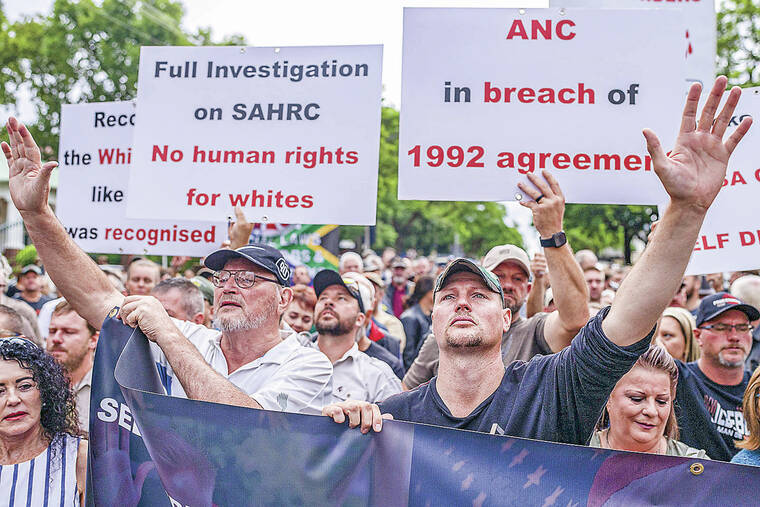
Officials from the U.S. Embassy have been actively engaging with Afrikaners, inviting them to social events and meetings that were previously inaccessible. De Jager and fellow leaders were surprised to find themselves welcomed by Vice President JD Vance’s office and U.S. State Department personnel, who have recently shown heightened interest in their concerns, particularly regarding the safety of white farmers in South Africa.
This shift comes in the wake of Trump’s implementation of strict measures against South Africa, including a halt to U.S. aid and the imposition of 30% tariffs on South African imports. Trump has justified these actions by claiming that Afrikaners face persecution, leading to an unprecedented focus on their plight within U.S. policy discussions.
The State Department has confirmed the increasing engagement with Afrikaner civil society organizations, stating, “U.S. diplomats routinely engage a variety of civil society organizations in furtherance of U.S. foreign policy priorities.” Jaco Kleynhans, an official with the Solidarity Movement, reported that their access to U.S. officials has increased significantly, noting, “The extent of our access and engagement has increased tremendously in the past 10 months.”
This growing relationship is not without controversy. Critics in South Africa have accused Afrikaner organizations of spreading misinformation, with some lawmakers calling for investigations into potential treason. Kallie Kriel, CEO of AfriForum, highlighted the precarious situation, stating that foreign missions are hesitant to publicly engage with Afrikaners due to their contentious reputation with the South African government.
At the annual Independence Day celebration at the U.S. Embassy this year, a larger-than-usual contingent of Afrikaners attended, further illustrating their rising profile. Gerhard Papenfus, an Afrikaner business leader, expressed gratitude for the Trump administration’s outreach, saying, “Here’s an administration that reaches out and says, ‘We hear you.’”
Analysts are closely watching this evolving dynamic, as it could signal a shift in U.S. relations with South Africa. Former U.S. Ambassador Patrick Gaspard remarked on the stark contrast to previous administrations, stating, “It’s astonishing to see just how much oxygen they’re getting right now with Trump world.”
As the situation develops, the implications for both Afrikaners and U.S.-South Africa relations remain significant. The increasing visibility of Afrikaners in U.S. diplomacy may influence both domestic policies in South Africa and the broader geopolitical landscape.
Stay tuned for further updates as this story continues to unfold.