The collaboration between artists and scientists is revealing the hidden world of cold-water corals, as exemplified by a recent research cruise in the North Sea. The expedition, led by marine biologist Rhian Waller aboard the R/V Skagerak, featured artist Alice Baker creating exquisite glass sculptures inspired by the unique underwater ecosystems they encountered. This initiative aims to raise public awareness about these lesser-known corals and the threats they face.
During the cruise, a robotic submarine descended over 1,600 feet into a canyon teeming with life. The underwater footage showcased a vibrant garden of sea pens, a type of cold-water octocoral resembling feather quills. Baker described the experience as akin to “flying to a different planet.” Many people associate corals primarily with tropical regions, unaware that cold-water corals constitute approximately 65 percent of all known coral species. These resilient organisms thrive in extreme conditions, providing essential habitats for various marine species.
Baker’s fascination with cold-water corals began during her studies at Design Academy Eindhoven, where she first encountered their imagery in a BBC Science Focus article. Intrigued, she reached out to Waller, who invited her to explore the University of Gothenburg’s lab. Waller’s lifelong dedication to studying these corals aligns with Baker’s mission to engage the public through her art.
For decades, a misconception persisted that the deep seafloor was largely lifeless. Recent research has disproved this notion, revealing rich ecosystems brimming with biodiversity. However, these environments are increasingly threatened by human activities, including fishing, oil and gas exploration, and potential deep-sea mining. Observing the corals in the Bratten Marine Protected Area, Baker noted that they appeared distressed, indicating existing damage.
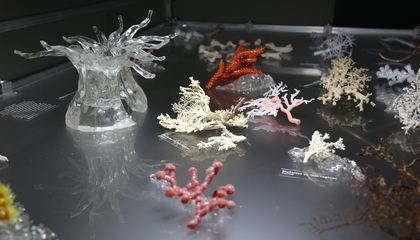
To counter these threats, scientists like Waller are increasingly collaborating with artists to foster public engagement. Baker’s glass models serve as a striking visual representation of cold-water corals, which are often overlooked due to their remote habitats. By creating lifelike sculptures of 17 coral species, Baker hopes to bridge the gap between scientific research and public awareness. Her work debuted at Dutch Design Week in October, where the glass models were displayed alongside real coral skeletons from the Royal Netherlands Institute for Sea Research (NIOZ).
Baker acknowledges that her artistic efforts do not solve the complex issues facing marine ecosystems. Instead, she aims to spark interest and dialogue around these pressing challenges. She stated, “What I can do is get people to engage with the research in the first place, and who knows what can happen from then.”
The art of glass modeling has historical significance dating back to the mid-19th century. During that era, naturalists faced challenges in preserving marine specimens brought to the surface. To address this, father-son duo Leopold and Rudolf Blaschka created intricate glass models of marine life, which remain scientifically valuable today. Baker sees her work as a continuation of this tradition, striving to honor the craftsmanship of the Blaschkas while making the beauty of cold-water corals accessible to the public.
Waller expressed enthusiasm for Baker’s dedication to scientific accuracy, as she meticulously sought details through collaboration. Baker’s attention to authenticity resulted in models that could easily be recognized by taxonomists, showcasing the potential for art to enhance scientific communication.
The intersection of art and science is not unique to Baker. Other artists, such as painter Lily Simonson, have ventured into the depths to create works that illuminate the wonders of the ocean. Deep-sea ecologist Erik Cordes has also collaborated with artists to bring awareness to marine conservation, employing innovative techniques like 3D printing and augmented reality to engage the public.
As the urgency of conservation escalates, particularly in light of recent funding cuts to scientific research in the United States, the need for public support grows. Cordes emphasized that direct engagement with the deep sea is vital for fostering appreciation and understanding of these ecosystems.
Baker envisions creating an immersive exhibition that replicates the North Sea’s underwater ecosystem, showcasing its past vibrancy before industrial impacts. She hopes to connect people, even those living near the North Sea, with the hidden life beneath the waves. “I would like to attempt to change that,” she stated, underscoring the importance of awareness and appreciation for these extraordinary yet vulnerable marine environments.