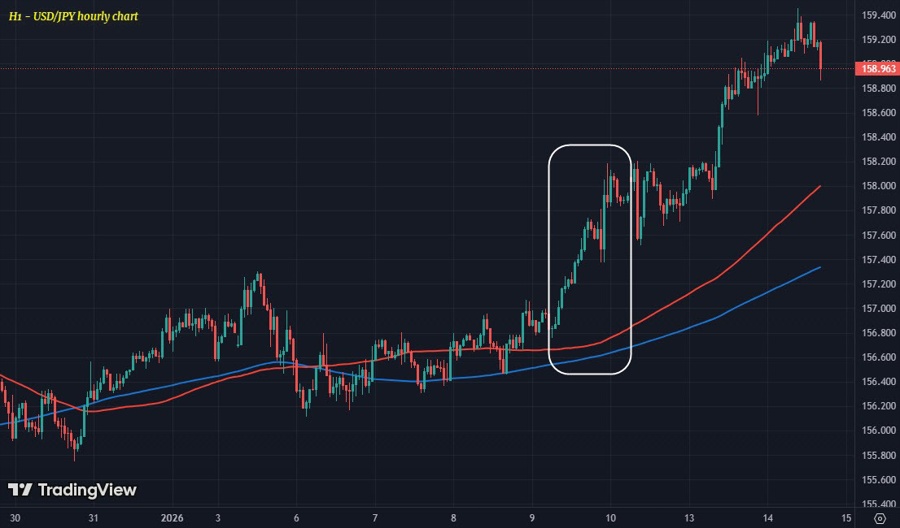
UPDATE: In a startling move, Japan’s Finance Minister Katayama has made significant remarks regarding the Japanese yen that could impact global markets. His comments come as the USD/JPY currency pair surged past 159.00 today, the highest level since July 2024, following a breach of the 158.00 threshold last Friday.
The yen’s recent rally has sparked intense discussion among market analysts. Katayama’s assertion that the price action on January 9, 2024, does not align with the “fundamentals” raises questions about the sustainability of the yen’s current trajectory. His remarks were part of a broader attempt by Tokyo officials to influence the currency’s value, a tactic often referred to as “jawboning.”
Why This Matters RIGHT NOW: The sudden spike in the yen is shaking up financial markets, prompting speculation about potential government intervention. With the yen breaking the 158.00 mark, experts are now eyeing the 160.00 level as the next critical threshold. If this upward trend continues, it could lead to significant ramifications for Japan’s economy and trade balance.
In the past three months, the USD/JPY pair has posted over 100 pips in daily gains on six separate occasions. However, the recent price breach indicates a possible shift in market dynamics that has not gone unnoticed by authorities.
Market analysts are questioning whether Katayama’s comments signal an impending intervention. The Takaichi trade dynamics, which have influenced the current rally, suggest that any government’s pain threshold regarding currency valuation is under scrutiny. If the yen continues to rise, officials may soon have to make difficult decisions to stabilize the market.
As traders monitor these developments, all eyes will be on Japan’s Ministry of Finance for any further announcements. The evolving situation underscores the volatility of foreign exchange markets and the critical role that government statements can play in shaping currency values.
In summary, with the yen’s price action reaching unprecedented highs, investors should stay alert for any official interventions or policy changes from Tokyo, as the financial landscape continues to evolve.