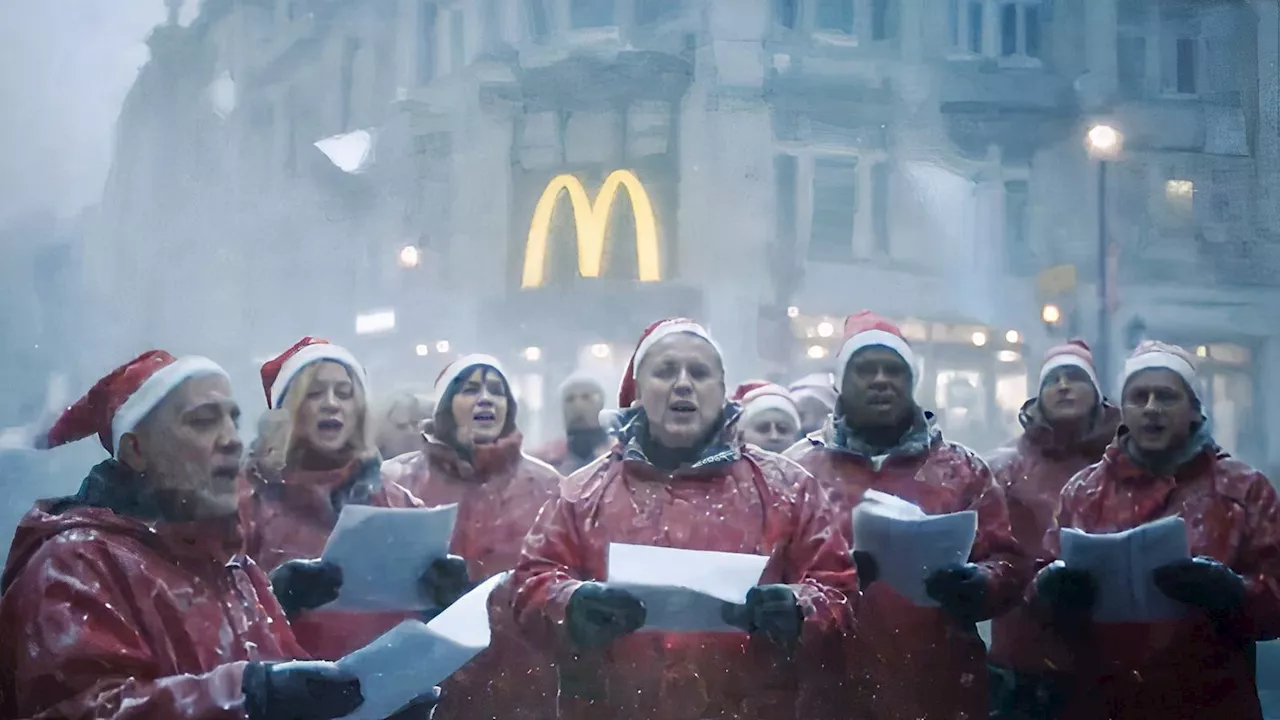
UPDATE: McDonald’s has pulled its controversial AI-generated Christmas advertisement following a fierce backlash from viewers. The ad, which was uploaded to the McDonald’s Netherlands YouTube channel on December 6, elicited overwhelming criticism, leading to its removal just three days later.
The decision comes after the ad, featuring a choir singing Christmas carols outside a McDonald’s and depicting the “bad side” of the holiday season, sparked outrage across social media. Critics labeled the ad “creepy” and “soulless,” with many expressing their discontent over the use of generative AI in its production.
The commercial was met with intense scrutiny due to its bizarre animations and unsettling aesthetic, which many viewers found reminiscent of the “uncanny valley.” The ad’s message—that Christmas is bleak unless spent at McDonald’s—did not resonate well, further fueling the fire of online criticism.
In a statement to Newsweek, a spokesperson for McDonald’s Netherlands confirmed, “We have decided to remove our AI-generated Christmas advert.” The backlash was so significant that the ad was quickly reuploaded by various users, aiming to hold the production company, The Sweetshop, accountable for the negative reception.
The Sweetshop’s CEO, Melanie Bridge, defended the ad’s creation process, stating that a team of ten in-house AI specialists worked tirelessly for seven weeks to produce what she considered a “high-craft production.” In her now-unavailable statement, she remarked, “I don’t see this spot as a novelty… it’s evidence of something much bigger: that when craft and technology meet with intention, they can create work that feels genuinely cinematic.”
Despite these defenses, the negative response continued, with social media users criticizing the ad’s concept and its execution. One critic, Theodore McKenzie, described it as “the most god-awful ad I’ve seen this year,” even worse than rival Coca-Cola’s previous AI-generated ads.
This incident is not isolated; major brands like Coca-Cola and Disney have also faced backlash for their own AI-generated content. Coca-Cola has released AI-driven holiday ads for the past two years, while Disney recently inked a $1 billion deal with OpenAI to integrate generative AI technology into their productions.
As the discourse around AI in advertising intensifies, the removal of McDonald’s ad sets a concerning precedent for future AI-generated content. Viewers are increasingly vocal about their preferences for authentic, human-driven storytelling in an age where technology continues to seep into creative domains.
The immediate fallout from this incident underscores a growing skepticism toward AI in media. Consumers are demanding transparency and authenticity, raising questions about the role of technology in the creative process.
As the situation develops, all eyes will be on McDonald’s and The Sweetshop to see how they respond to this backlash and what steps they will take in future advertising efforts. For now, the message is clear: consumers want to feel connected to the content they engage with, especially during the holiday season.