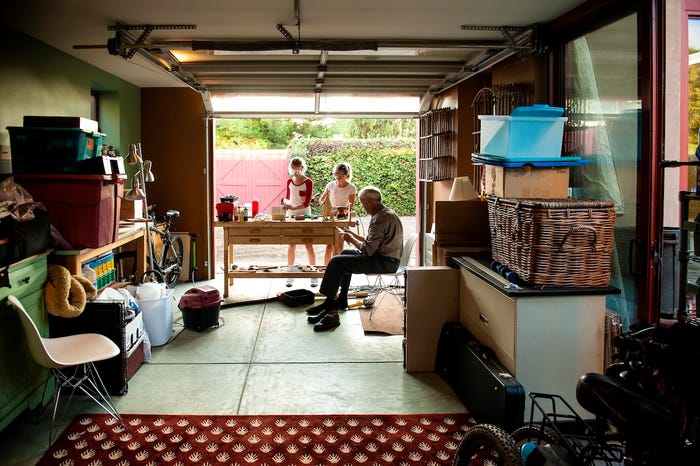
UPDATE: The trend of multigenerational living in the United States has skyrocketed, with the number of people residing in multigenerational households quadrupling from **7%** in **1971** to **18%** in **2021**, according to new data from Pew Research. As living costs continue to rise, families are increasingly opting to live together, fundamentally reshaping American household dynamics.
This urgent shift is largely influenced by soaring housing costs, which are compelling many individuals to return to their family homes or choose properties designed for multigenerational living. The National Association of Realtors reports that homebuyers are actively seeking homes suitable for multiple generations, while searches for accessory dwelling units, often referred to as granny flats, have surged nationwide.
The implications of this trend are profound. Families are able to split expenses for rent, mortgages, and childcare, alleviating financial burdens while simultaneously combating social isolation, especially among older adults. As highlighted by Bob Kramer, founder of the National Investment Center for Seniors Housing and Care, the increase in “solo-agers” — older adults without children or family support — is alarming. He states, “We have more and more solo-agers who didn’t have children or didn’t get married.”
Living arrangements that promote intergenerational connections are becoming essential. Sara Zeff Geber, a consultant specializing in solo aging, emphasizes, “The bottom line for solo-agers is that they need community.” The urgency for these arrangements cannot be overstated, as they help prevent loneliness and isolation.
Emerging solutions like purpose-built intergenerational communities are gaining traction. These developments are designed to foster interactions between older and younger residents, often featuring communal spaces for activities and support. A notable example is One Flushing in Queens, New York, which houses **231 apartments**, with **66 units** reserved for seniors and a community center that connects local youth with older residents to enhance digital literacy.
However, affordability remains a critical issue. Many middle-income individuals find themselves in a precarious situation, earning too much to qualify for government assistance but unable to afford market-rate housing. Robyn Stone, a senior vice president at LeadingAge, warns, “The thing that’s concerning to a lot of us is that we really don’t have a lot of options for modest-income folks.”
While the momentum for multigenerational and intergenerational living is evident, experts acknowledge that this model is not a one-size-fits-all solution. Individuals have diverse needs and preferences, and not everyone may find living with others appealing. As Stone notes, “I don’t think I would want to open my house to anybody if I were living alone, but I think that I would want to have more of an intentional intergenerational community as I get older.”
As these housing trends evolve, they are set to redefine what family structures look like in America. With significant implications for social connections and economic stability, the rise of multigenerational living is a development that demands attention.
Stay tuned for ongoing updates as this story continues to unfold. Are you part of a multigenerational household? Share your experiences with us at [email protected].