UPDATE: Organized crime is dramatically reshaping political landscapes across Latin America, triggering a significant shift towards right-wing governments in 2025. New reports confirm that the rise of organized crime has escalated violence and insecurity throughout the region, prompting urgent migration flows and a reevaluation of safety measures.
According to a report by the Global Initiative Against Transnational Organized Crime, as of December 19, 2025, a staggering 39 organized crime groups are now operating across Latin America. These groups have evolved to become more interconnected and sophisticated, conducting operations that span borders and continents.
Hugo Contreras, a noted expert from the School of Government at Universidad del Desarrollo, states, “Organized groups have diversified their operations, moving beyond trafficking to include extortion, contract killings, smuggling, and human trafficking.” This transformation has led to an increase in their illicit income and territorial control, with criminal organizations imposing their own rules and challenging state authority.
The report highlights that institutional weaknesses, such as collapsed prison systems, have become logistical hubs for these groups, exacerbating the problem. Contreras emphasizes that “more aggressive and sophisticated transnational criminal gangs” are leveraging massive migration flows to conceal members and recruit new operatives, further complicating the security landscape in Latin America.
Pablo Carvacho, from the Center for Justice and Society at the Pontifical Catholic University of Chile, warns that the situation is dynamic and adaptable. Migratory processes have opened avenues for human trafficking and labor exploitation, particularly affecting vulnerable migrant populations. “These flows have become entry points for criminal activities in countries like Chile,” he adds.
The impact of organized crime is evident in the rising violence, with Mexico, Ecuador, Brazil, and Haiti listed among the world’s most dangerous nations in 2025, according to the Armed Conflict Location and Event Data Project (ACLED). In Mexico, internal conflicts within the Sinaloa cartel have led to a surge in violence following the July 2024 arrest of notorious leader Ismael “El Mayo” Zambada.
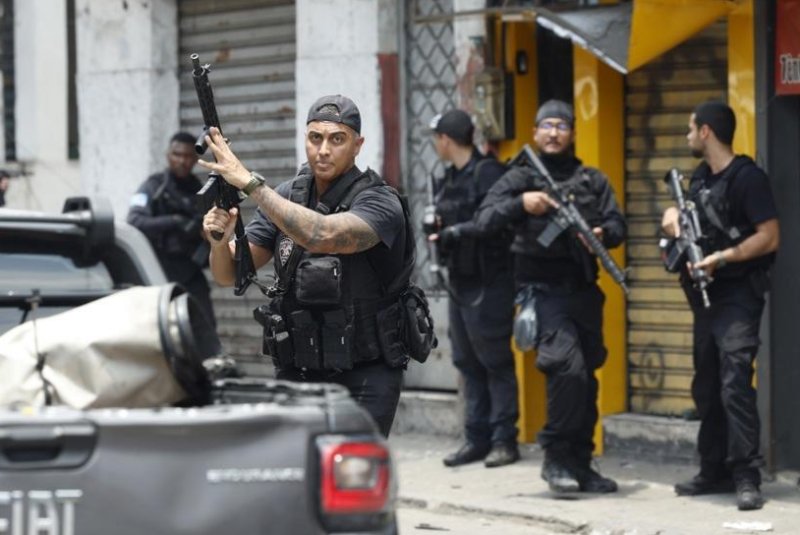
Ecuador faces an alarming trend with gang-related violence resulting in over 3,600 deaths this year alone, while Haiti’s gangs have exploited ongoing political instability, expanding their operations beyond Port-au-Prince. In Brazil, violent clashes over territorial control have escalated, with a recent police operation in Rio de Janeiro resulting in 121 fatalities.
As violence surges, at least 10 countries in the region have elected right-wing governments since 2024. Carvacho notes that conservative platforms are increasingly emphasizing public order and coercive measures, relying on military deployment and harsher penalties to combat the crisis.
“Emergency policies alone will not stop the advance of organized crime,” Carvacho warns. He advocates for a comprehensive approach that targets the financial assets of these organizations and addresses the vulnerabilities that lead to recruitment of children and adolescents. “The state must act where opportunities are lacking to prevent this cycle of violence,” he concludes.
With organized crime challenging the fabric of society, governments across Latin America are urged to adopt innovative strategies to reclaim security and stability. The need for international cooperation and reform has never been more pressing, as the clock ticks on a situation that is evolving rapidly, impacting millions across the region.