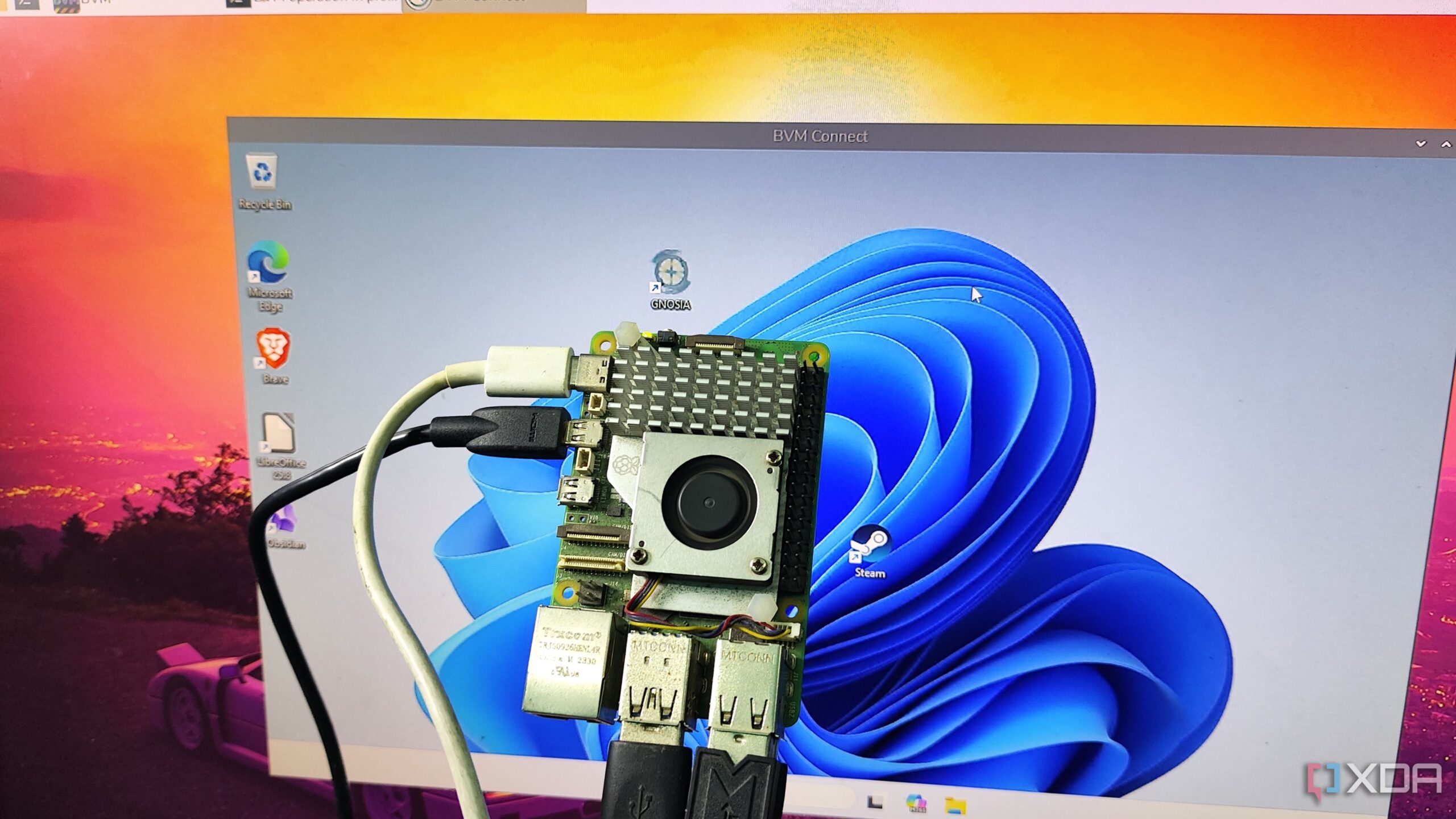
UPDATE: Exciting news in the tech world! Developers have successfully deployed Windows 11 as a virtual machine (VM) on the Raspberry Pi, showcasing its surprising capabilities. This breakthrough could change how enthusiasts and developers utilize this compact computer, making it more versatile than ever before.
Just announced, the latest tests reveal that running two lightweight VMs on a Raspberry Pi 5 can be achieved without performance hitches. This is significant for users who previously believed the device was too limited for heavy computational tasks. With the right setup, a Raspberry Pi can run Ubuntu Server and even Windows 11, expanding its functionality dramatically.
Developers have utilized Botspot VM, a tool available through Pi-Apps, to configure and run Windows 11 seamlessly. This easy-to-use application allows users to navigate the installation process with just a few clicks. The results have been impressive, with many reporting satisfactory performance levels for basic tasks, although high-intensity activities like gaming may still cause issues.
In a recent experiment, a Raspberry Pi equipped with 8GB of memory successfully operated two VMs alongside several containers, pushing the device’s capabilities to the limit. Notably, the Raspberry Pi 5 can handle up to four VMs as long as users manage their memory resources wisely. This flexibility opens doors for developers looking to run multiple applications simultaneously.
The developer community behind the Raspberry Pi has been crucial to this success, continually creating innovative projects that leverage the device’s potential. Canonical, the company behind Ubuntu, has played a significant role in this movement by offering an Arm-compatible version of its MicroCloud virtualization platform, making it accessible for Raspberry Pi users.
While running VMs on the Raspberry Pi is a groundbreaking development, many experts still recommend using containers for optimal performance. Options like Docker, Podman, and Kubernetes allow for lightweight applications that can run efficiently on this hardware, making it ideal for developers experimenting with cloud-native technologies.
As these developments unfold, tech enthusiasts worldwide are encouraged to explore the newfound possibilities of Raspberry Pi virtualization. This could redefine the boundaries of DIY computing and inspire a wave of innovative projects in the tech community.
Stay tuned for more updates as the Raspberry Pi ecosystem continues to evolve. This news is not just a technical achievement; it’s a testament to the creativity and resilience of the developer community pushing the limits of what’s possible with compact computing solutions.