URGENT UPDATE: President Donald Trump has issued a stark warning to Iran amid escalating protests and violence within the country. This alarming exchange comes just days after widespread demonstrations erupted, partially triggered by the catastrophic collapse of the Iranian rial, now valued at approximately $1 costing 1.4 million rials.
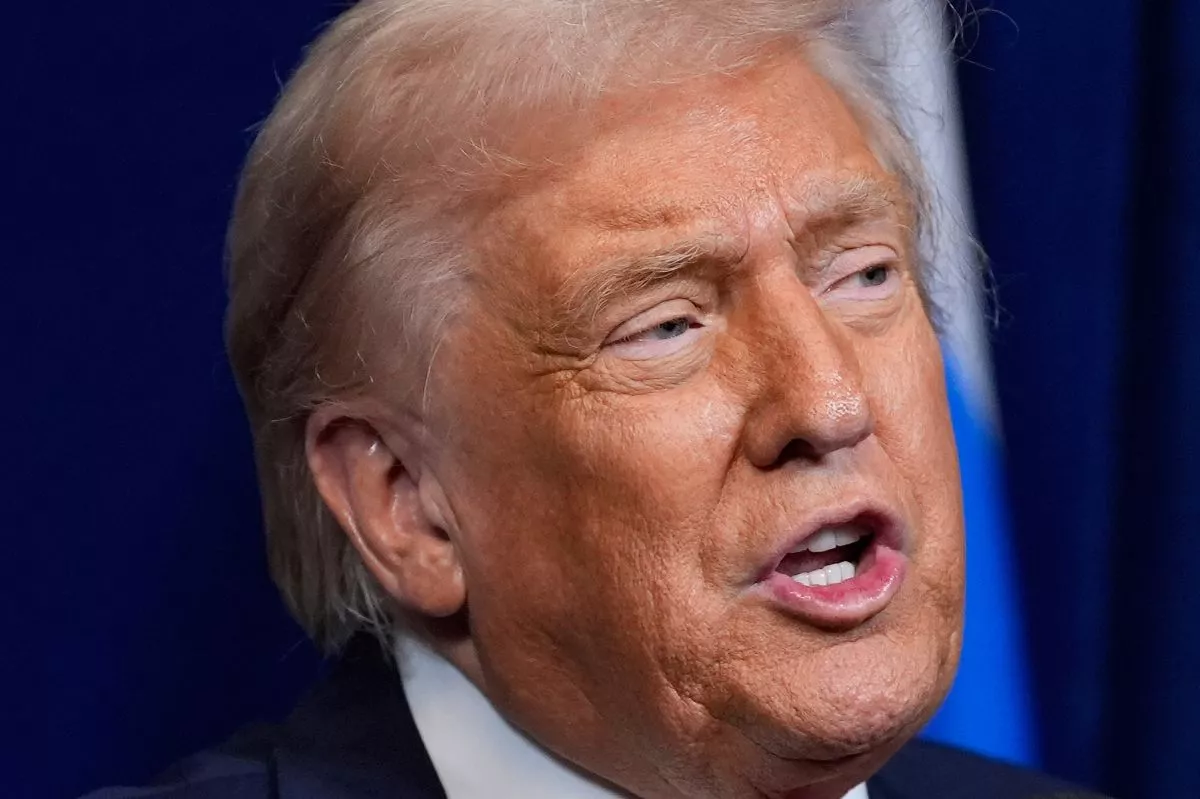
In a post on his Truth Social platform, Trump cautioned Iranian authorities that if they “violently kill peaceful protesters,” the United States “will come to their rescue.” This warning follows the reported deaths of at least seven individuals amid the unrest. The protests began as economic grievances intensified and have quickly morphed into a significant challenge for the Iranian regime.
Shortly after Trump’s remarks, Ali Larijani, a prominent Iranian official and former parliament speaker, responded with a chilling warning of his own. He claimed on social media platform X that the protests are being fueled by Israeli and U.S. interests, stating, “Trump should know that intervention by the U.S. in the domestic problem corresponds (to) chaos in the entire region.” His comments reflect a long-standing narrative from Iranian officials blaming foreign powers for domestic unrest.
The situation escalated following America’s bombing of Iranian nuclear facilities earlier this summer. In June, Iran launched an attack on Al Udeid Air Base in Qatar, marking a significant retaliation against U.S. military actions. Larijani’s statements highlight the heightened tensions and the Iranian government’s perception of U.S. involvement as a threat to regional stability.
Meanwhile, Ali Shamkhani, an adviser to Supreme Leader Ayatollah Ali Khamenei, issued a stern warning, asserting that “any interventionist hand that gets too close to the security of Iran will be cut off.” He further addressed the long history of U.S. involvement in the region, suggesting that Americans should reflect on past interventions in Iraq and Afghanistan.
As protests enter their sixth day, they represent the largest civil unrest in Iran since the 2022 demonstrations sparked by the death of Mahsa Amini, who died in police custody after being arrested for not adhering to hijab regulations. Though the current protests have not yet reached the widespread fervor seen in 2022, they signal deep-seated frustrations against Iran’s theocratic leadership and economic mismanagement.
The Iranian government, led by reformist President Masoud Pezeshkian, has attempted to negotiate with protesters but faces significant limitations as the economy continues to deteriorate. The protests, primarily fueled by economic hardship, have also seen demonstrators vocally opposing the ruling theocracy.
In a bid to ease tensions and signal a willingness to negotiate, Iran announced it had ceased uranium enrichment at its nuclear sites, hoping to re-engage Western nations in discussions about sanctions relief. However, both Trump and Israeli Prime Minister Benjamin Netanyahu have warned against any revival of Iran’s nuclear ambitions, complicating the situation further.
As this situation develops, the world watches closely. The implications of U.S. intervention or further Iranian military actions could have profound effects on regional stability. Observers are urged to stay tuned for updates on this rapidly evolving story.
The urgency of these developments cannot be overstated, as they represent a critical juncture not only for Iran but also for U.S. foreign policy and international relations in the Middle East.