UPDATE: President Donald Trump is set to meet with Israeli Prime Minister Benjamin Netanyahu today, as efforts to secure a U.S.-brokered ceasefire in Gaza face critical challenges. This urgent meeting at Mar-a-Lago comes at a pivotal moment, with the ceasefire’s future hanging in the balance just days before the second phase is expected to commence.
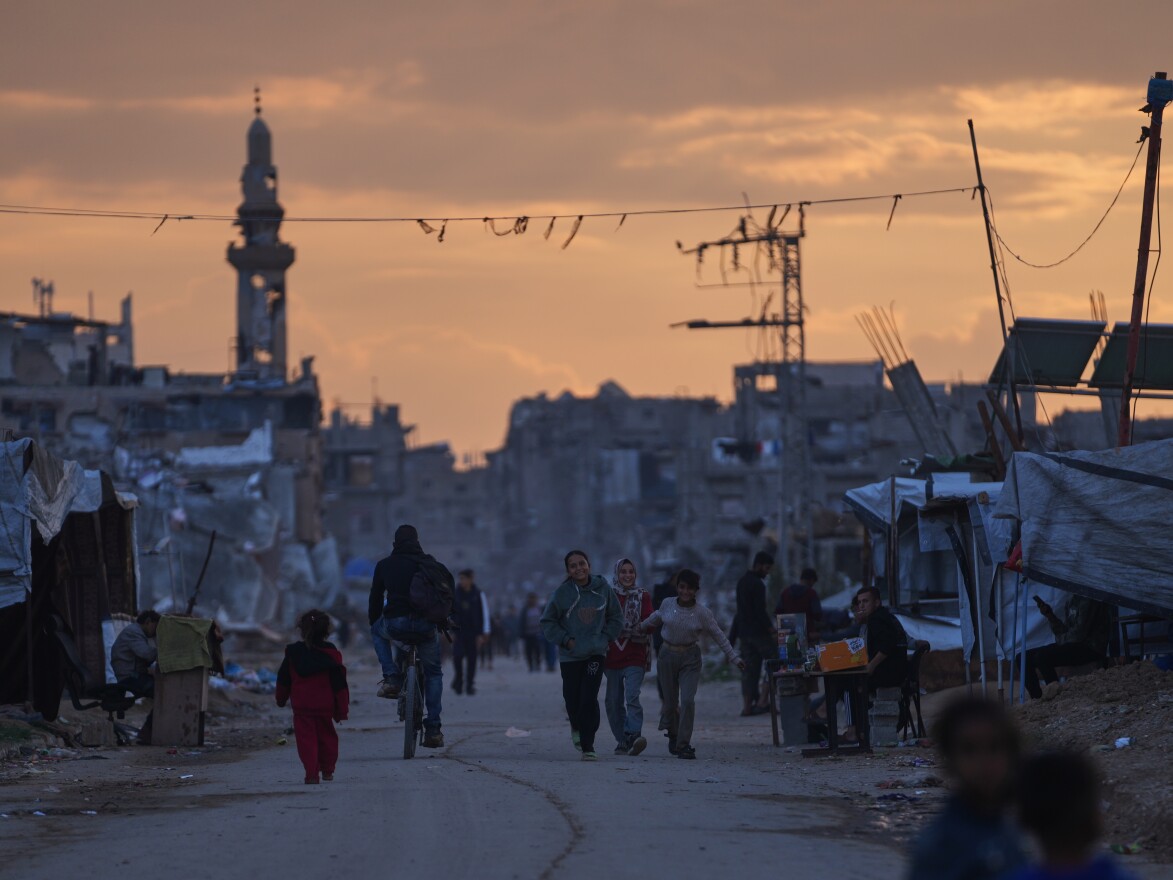
The ceasefire, which has held since its initial phase began in October 2023 after a devastating Hamas-led attack that claimed approximately 1,200 lives, is now encountering significant hurdles. Both sides have accused each other of violations, and tensions are escalating among the U.S., Israel, and Arab nations regarding the path forward.
Trump’s meeting aims to leverage his strong ties with Netanyahu to expedite the peace process, especially amid growing concerns that the Israeli leader is not moving quickly enough. Mona Yacoubian, director at the Center for Strategic and International Studies, stated, “This is going to be a really tall order for President Trump to get Netanyahu to agree.” The dynamics of their discussion could reveal deeper clashes in their regional strategies.
The upcoming phase includes an ambitious 20-point plan approved by the U.N. Security Council, which envisions a demilitarized Gaza governed by a “technocratic, apolitical” committee under international supervision. If successful, the plan could pave the way for normalized relations between Israel and Arab nations, alongside potential pathways to Palestinian independence.
However, significant obstacles remain. The reconstruction of Gaza is fraught with logistical and humanitarian challenges, including disarming Hamas and establishing the International Stabilization Force, which is yet to be formed. An unnamed U.S. official hinted at possibly offering financial incentives for weapon disarmament, echoing previous proposals.
During the meeting, discussions may also touch on Iran, with Trump asserting that its nuclear capabilities were “completely and fully obliterated” following U.S. military actions in June. The outcomes of today’s talks could have far-reaching implications for both the region and U.S. foreign policy.
Significantly, this meeting follows recent discussions between U.S. Mideast envoy Steve Witkoff and officials from Egypt, Qatar, and Turkey, who are key mediators in the ceasefire negotiations. Complications have arisen over the vetting process for the Palestinian committee and ongoing Israeli military operations.
As the world watches closely, the details emerging from this meeting could shift the landscape of the Middle East peace process. Questions remain about whether a consensus can be reached on the mandate of the International Stabilization Force and the timeline for Gaza’s reconstruction.
Today’s meeting is not just a diplomatic engagement; it symbolizes a critical juncture for the future of Gaza and the broader Middle Eastern geopolitical landscape. With so much at stake, the international community is keenly awaiting updates on the discussions.
Stay tuned for more updates as this story develops.