UPDATE: President Donald Trump has unveiled a bold new security strategy demanding that Europe prepare itself for defense by the end of 2027, a significant acceleration from the European Union’s previous target of 2030. This directive, outlined in a newly released security document, marks a pivotal shift in transatlantic relations as the U.S. steps back from its traditional role as Europe’s primary military supporter.
The strategy document, made public on April 4, 2029, emphasizes that “the days of the United States propping up the entire world order like Atlas are over.” This declaration signals a transformative approach for NATO as Europe faces increasing security challenges, particularly in light of the ongoing conflict in Ukraine.
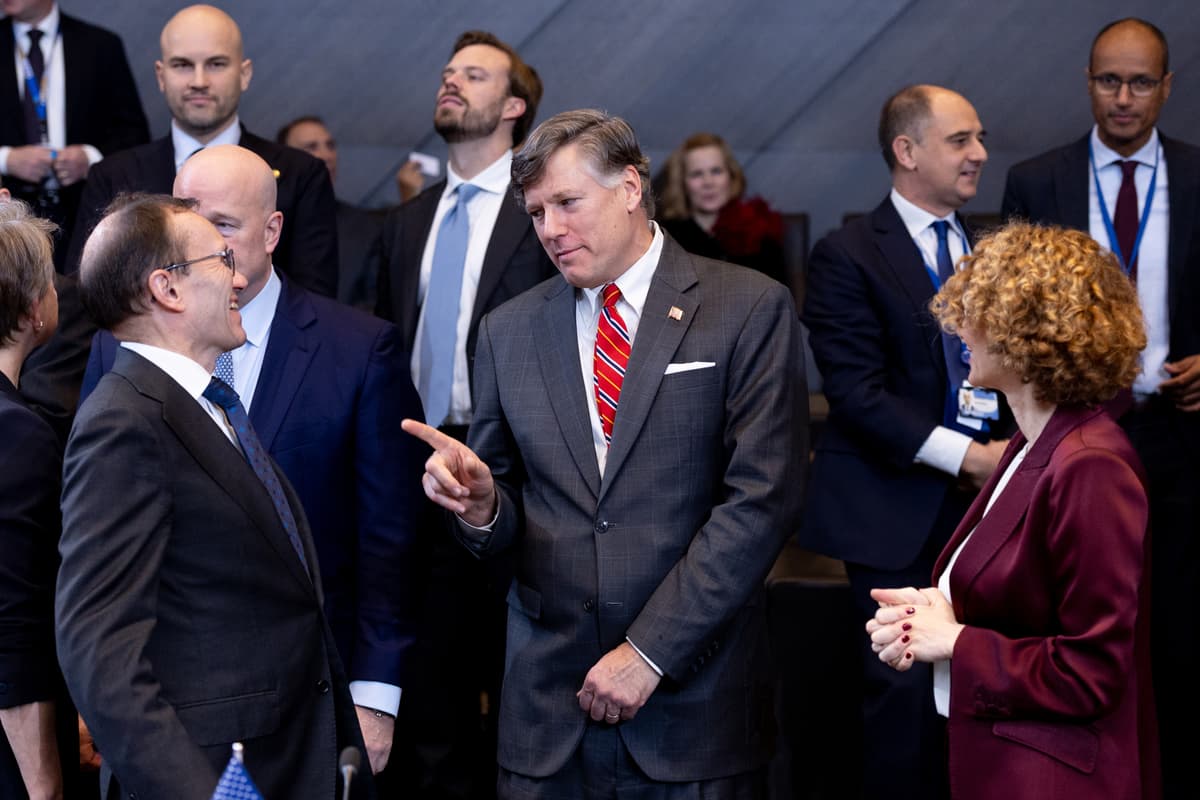
In a statement, Deputy Secretary of State Christopher Landau stressed the urgency, stating, “Europe must take primary responsibility for its own security.” This sentiment aligns with decades of U.S. administration warnings but reflects a newfound commitment to implement it during Trump’s remaining term.
Analysts warn that the ambitious timeline may be unrealistic, given Europe’s existing shortfalls in critical areas such as air defense, cyber warfare, and intelligence capabilities. As part of this strategy, the U.S. aims for Europe to assume control over NATO’s conventional defense, including intelligence and missile systems, within the next four years.
The implications of this shift could reshape the transatlantic alliance profoundly. With NATO celebrating its 80th anniversary in 2029, Trump’s call for European self-sufficiency has sparked mixed reactions. Major European leaders are voicing concerns that U.S. expectations may interfere with their domestic policies, particularly in countries like Germany, France, and Italy, where anti-immigration sentiment is on the rise.
“It’s language that one otherwise only finds coming out of some bizarre minds of the Kremlin,” tweeted former Swedish Prime Minister Carl Bildt, criticizing the report’s rhetoric.
Trump’s strategy also raises alarms regarding demographic changes in Europe, warning of what it calls “civilizational erasure” due to declining birth rates and immigration. The document cautions that if current trends continue, some NATO countries may become majority non-European within a few decades, potentially altering their commitment to the alliance.
Amidst these developments, the U.S. is being urged to rethink its approach towards Russia. The strategy calls for a halt to NATO’s expansion and criticizes European governments for not adequately representing public opinion in their policies regarding the war in Ukraine. The report asserts, “A large European majority wants peace, yet that desire is not translated into policy.”
As part of ongoing diplomatic efforts, Trump’s special envoy Steve Witkoff is currently engaging with both Ukrainian officials and Russian representatives, aiming for a swift resolution to the conflict. However, concerns are mounting that Trump’s desire for a rapid peace settlement may compromise Ukraine’s stability and security.
Financial analyst Timothy Ash voiced serious apprehensions, stating, “Trump wants a peace in Ukraine at any cost — a giveaway to Putin.” Such a move could have severe ramifications for European peace and stability.
This strategy marks a defining moment for U.S.-European relations as the continent grapples with its security challenges. As the situation develops, all eyes will be on how European leaders respond to Trump’s ultimatum and whether they can meet the ambitious defense targets set forth.
With the stakes higher than ever, the world watches closely as Europe navigates this new landscape of self-reliance and shifting alliances.