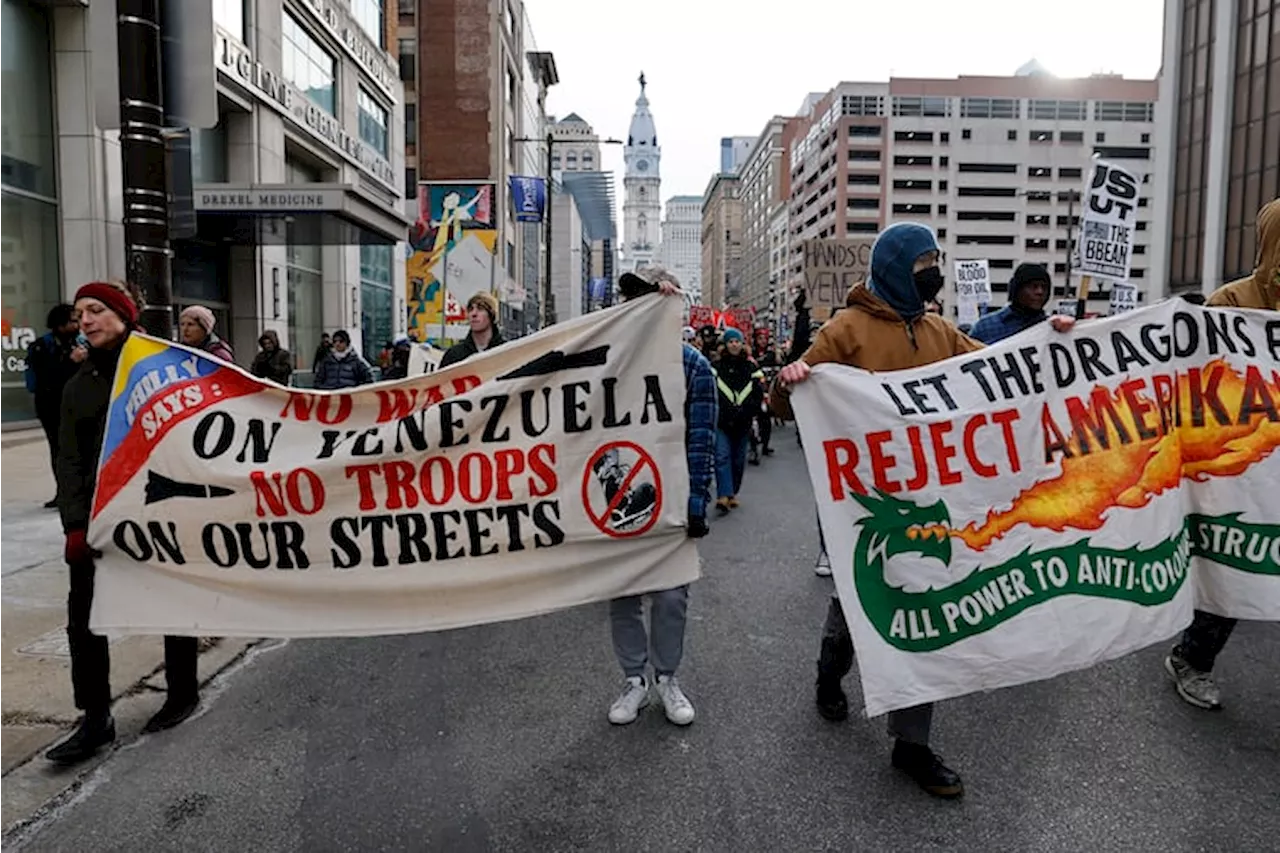
UPDATE: The U.S. military has successfully captured Venezuelan President Nicolás Maduro during a dramatic operation in Caracas early Saturday morning, January 3, 2026. This unprecedented action has ignited urgent reactions from the local Venezuelan community in Philadelphia and political leaders across the nation.
The operation involved the extraction of Maduro and his wife, Cilia Flores, from their residence at a military base in Venezuela. They were transported to New York, where they face charges related to a narco-terrorism conspiracy. Eyewitness reports from Caracas indicate that explosions were heard as the military engaged in a series of strikes, leaving the city in shock.
“We are hearing explosions in Caracas, and there’s no power in the city,” said community member Arends, expressing fear and disbelief as news broke of Maduro’s arrest. “No one wants to see their country bombed, but we have been living through this for so long. I am grateful for the help.”
In a speech from Mar-a-Lago later that day, President Trump announced plans for the U.S. to “run Venezuela” until a stable transition of power can be established. He emphasized intentions to repair the country’s oil infrastructure, indicating a significant shift in U.S. foreign policy towards Venezuela.
Local political leaders quickly condemned the military operation. U.S. Rep. Brian Fitzpatrick stated, “The future of Venezuela belongs to the Venezuelan people alone,” rejecting the notion of American control over the nation’s resources. U.S. Sen. Cory Booker criticized Congress for its lack of action, labeling Trump’s military maneuvers as a dangerous overreach of presidential authority.
Many in the Philadelphia Venezuelan community, which numbers about 7,000, reacted with mixed emotions. Organizations like Casa de Venezuela Philadelphia are urging the diaspora to respond with unity and calm during this turbulent time. A vigil for Venezuela’s future is set for noon Sunday at the Cathedral Basilica of Saints Peter and Paul, reflecting the anxiety and hope among the community.
As the situation develops, concerns grow regarding the implications for U.S.-Venezuelan relations. Critics, including New Jersey U.S. Sen. Andy Kim, argue that the raid could further isolate the U.S. from its international allies and escalate tensions in the region. “This strike doesn’t represent strength. It’s not sound foreign policy,” Kim stated, highlighting fears for American personnel in Venezuela.
With the world watching, the U.S. government remains steadfast in its position against Maduro, who has been accused of drug trafficking and corruption. As reports of military strikes continue to emerge, the community is left grappling with uncertainty about what comes next. “I’m hopeful, but it doesn’t feel like we are at the point where this is over,” Arends concluded.
Stay tuned for more updates on this developing story as the political landscape in Venezuela shifts dramatically following the U.S. military operation.