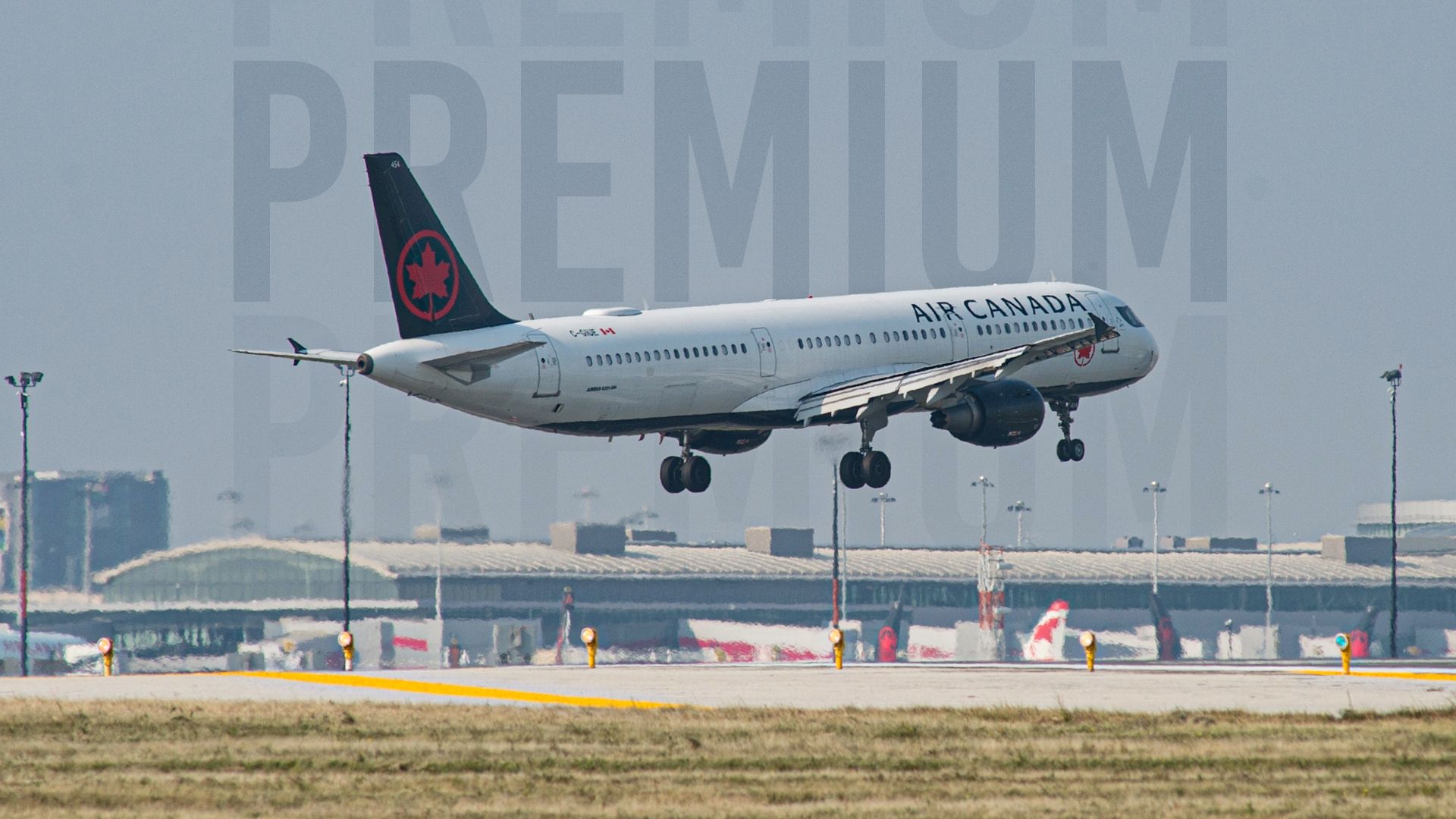
Air Canada is enhancing its fleet of Airbus A320 family aircraft, currently comprising 37 jets, as part of a strategic move to increase its capacity for premium travel. The airline operates both the A320-200 and A321-200 models, with plans to consolidate its narrowbody operations by transferring all A320-200s and A321-200s to mainline service. This transition comes as Air Canada shifts its Boeing 737 MAX 8 fleet to Air Canada Rouge, intensifying its focus on premium seating options.
As demand for premium travel continues to rise in North America, Air Canada is positioning itself to capitalize on this lucrative market. The airline’s A320 family will grow not only with the integration of former Rouge aircraft but also with the anticipated delivery of 30 Airbus A321XLRs starting in March 2026 through 2029. This expansion will bring the total number of A320 family aircraft in service to 85, elevating Air Canada’s narrowbody offerings.
A320 Fleet Overview
According to data from Planespotters.net, Air Canada’s current A320 family fleet comprises 16 A320-200s and 21 A321-200s. This segment represents the airline’s smallest narrowbody fleet, particularly when compared to its Airbus A220-300 fleet of 42 aircraft and its larger Boeing 737 MAX 8 fleet of 48. By the end of 2026, all Boeing 737 MAX 8s will be operated by Air Canada Rouge, with the A320-200s and A321-200s transferred to mainline operations. The final configuration will see Air Canada operating 21 A320-200s and 34 A321-200s.
All A320-200 and A321-200 aircraft are powered by CFM56-5 engines, with the A320-200s averaging 22.5 years of service and the A321-200s averaging 19.9 years. This aging fleet includes planes that previously operated for other airlines, such as China Southern and Alaska Airlines, which maintains their original configurations.
Seating Configurations and Premium Options
Air Canada’s A320-200 fleet features three distinct layouts. The most common configuration includes 14 business class seats and 132 economy seats, providing a total capacity of 146. In contrast, the two A320-200s acquired from China Southern have a denser layout with only 8 business class seats and 144 economy seats, allowing for a total of 152 passengers. The former Alaska Airlines A320-200s offer 12 business class seats alongside 138 economy seats, resulting in a total of 150 seats.
Air Canada also operates five A320-200s under its Rouge subsidiary, set for transfer to mainline service. These aircraft currently accommodate 12 business class seats and 156 economy seats, resulting in a total capacity of 168. While this mirrors the business class capacity of Alaska’s former A320-200s, the Rouge configuration features a larger economy section.
In the A321-200 fleet, which is expected to remain the larger of the two A320 family fleets, there are variations in premium seating. Five A321-200s retain only 8 business class seats due to their previous operation with EVA Air, alongside 176 economy seats. Meanwhile, the majority of Air Canada’s A321-200s offer 16 business class seats and 180 economy seats, totaling 196 seats. These aircraft feature the latest ‘Dream Cabin’ enhancements, including modern seatback screens and updated mood lighting.
Air Canada’s A321-200 fleet also includes 13 aircraft operating under Air Canada Rouge, which feature a denser layout. The A321-200 with the ‘Dream Cabin’ configuration stands out as the most premium option within the A320 family, particularly for those seeking an upgrade.
Future Developments with A321XLRs
Air Canada is set to welcome its first Airbus A321XLR, designated as C-GXLR, to its fleet in the coming months. This aircraft will enter service in June, operating on the route from Montreal to Palma de Mallorca. The A321XLR will be configured with 182 seats, including 14 business class seats and 168 economy seats. While specific details on the interior have not been officially confirmed, seating maps suggest a herringbone layout, which has become popular for its efficient use of space.
As airlines continue to adjust their fleets to meet the growing demand for premium travel, Air Canada’s strategic expansion of its Airbus A320 family positions it well within the competitive landscape. The upcoming arrivals of the A321XLRs, coupled with the consolidation of existing aircraft, will enhance the premium travel experience for passengers across its network.