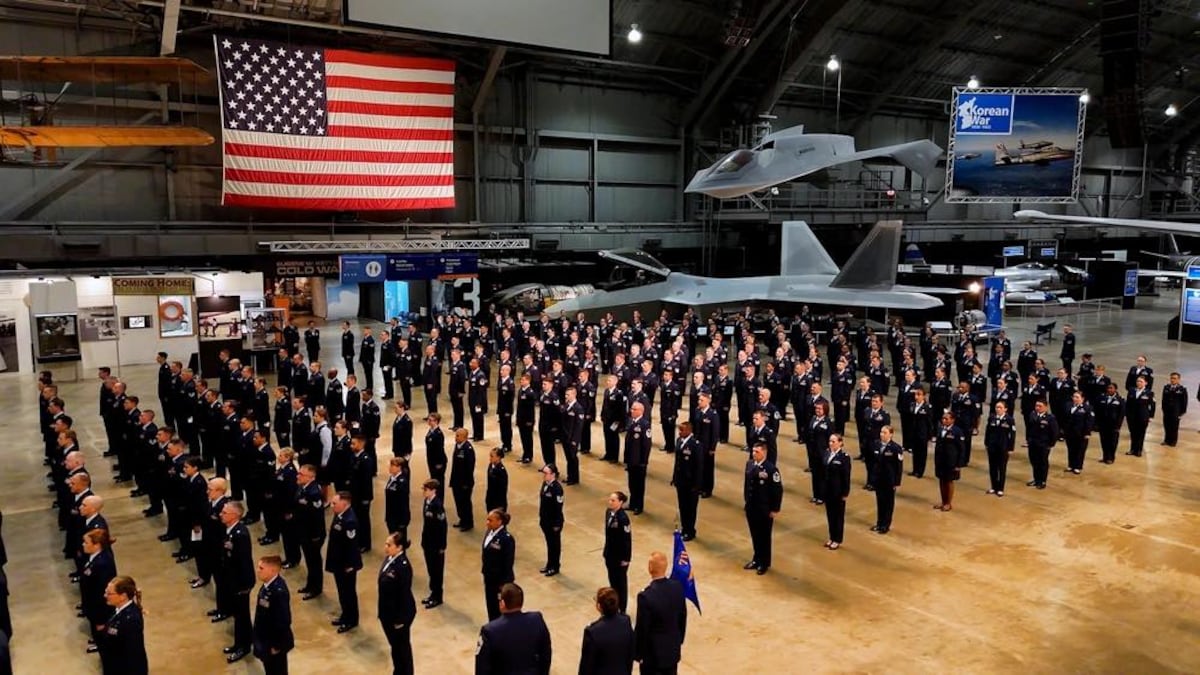
Top leaders within the United States Air Force announced a significant change this week regarding readiness reviews for airmen. Starting in 2026, airmen will now undergo these evaluations once a year, instead of the previously mandated quarterly assessments. This decision reflects a shift in strategy to enhance operational effectiveness while addressing concerns from personnel about the frequency of reviews.
In a memo released on Wednesday by Acting Vice Chief of Staff Lt. Gen. Scott Pleus, confirmed by the Air Force, unit commanders will be responsible for conducting these annual reviews. The memo was shared on the unofficial Facebook page, Air Force amn/nco/snco. During these reviews, commanders will have the discretion to determine which uniform airmen will wear, allowing for flexibility in the evaluation process.
The review will assess an airman’s overall readiness, including compliance with required physical fitness evaluations and adherence to dress and personal appearance standards. This change comes after a prior directive issued by Pleus on January 30, 2025, which mandated quarterly reviews. At that time, it was specified that at least one review would require airmen to wear full service dress uniforms while another would necessitate operational camouflage pattern uniforms.
Defense Secretary Pete Hegseth has consistently emphasized the importance of maintaining military grooming and fitness standards since taking office in January. Following the announcement of the annual reviews, Chief Master Sergeant of the Air Force David Wolfe confirmed the change through a social media post on Thursday. In his statement, Wolfe acknowledged feedback from airmen regarding the burdens of frequent reviews.
“We’ve heard your feedback from the field, and we listened,” Wolfe stated. He expressed that the shift to annual evaluations reflects confidence in unit leaders to manage their personnel effectively. “This change reflects confidence in our leaders to know their airmen, manage readiness, and address issues on the daily, not just during a scheduled review,” he added.
Wolfe further articulated that annual reviews would allow service members to focus on what is most important: fulfilling their mission and supporting their colleagues. By reducing the frequency of these evaluations, the Air Force aims to enhance overall morale and reduce unnecessary administrative burdens.
As the Air Force prepares for this transition, the leadership’s decision to streamline readiness assessments underscores a commitment to adaptability and responsiveness to the needs of airmen. The upcoming annual reviews promise to balance operational requirements with the well-being of personnel, ensuring that the Air Force remains poised for success in its mission.