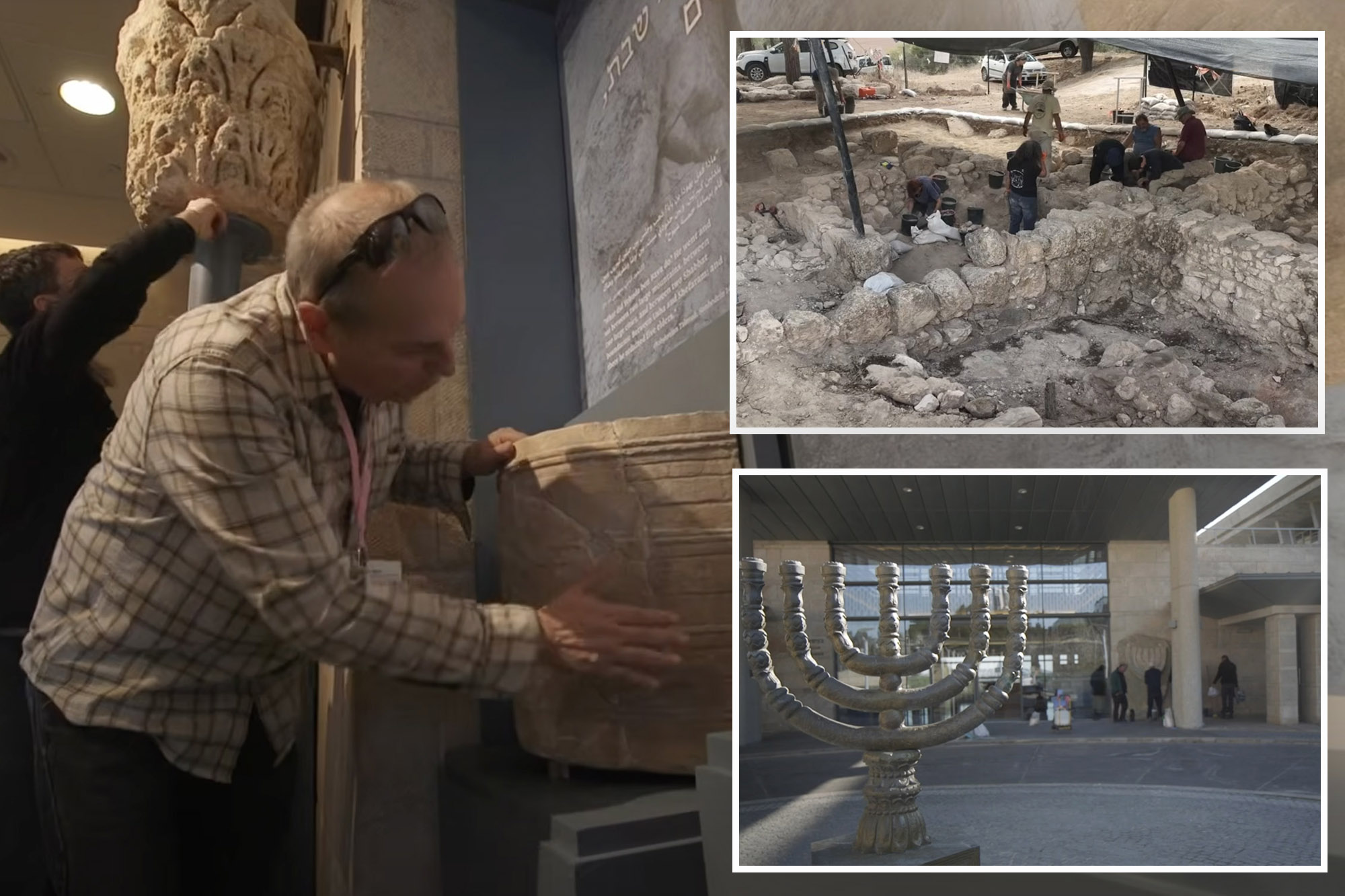
A significant artifact from ancient Jewish history is now on display at the Knesset in Israel as part of an exhibition celebrating the building’s 60th anniversary. The exhibition features a large stone storage vessel, used by Jews in the Galilee during the Roman period nearly 1,800 years ago. This remarkable piece, measuring approximately 80 centimeters (31.5 inches) in height and 50 centimeters (19.5 inches) in diameter, was recently uncovered at the Pundaka de Lavi site, located in the Lavi Forest near the Golani Junction.
The excavation was conducted by the Israel Antiquities Authority in collaboration with KKL-JNF. According to excavation director Noam Zilberberg, stone vessels held great importance in ancient Jewish culture because they could not become ritually impure under Jewish law, unlike pottery. Zilberberg described these types of large vessels as “quite rare,” underscoring their historical significance.
Exhibition Highlights Jewish Governance History
The exhibition, which opened on Monday coinciding with the Knesset’s annual Tu B’Shevat celebration, explores the evolution of Jewish leadership institutions, from the Great Assembly and the Sanhedrin to the contemporary Israeli parliament. It features a range of artifacts, including a rare Hebrew inscription referencing the Sanhedrin, coins from the ancient Jewish city of Sepphoris/Tzipori, and an 1,800-year-old basalt door adorned with a menorah from Tiberias.
Organizers of the exhibition emphasized the connection between the archaeological findings and the continuity of Jewish governance and democratic traditions throughout history. Knesset Speaker Amir Ohana remarked on the significance of the Knesset building’s milestone, stating, “Marking 60 years is another link in a long chain of sovereign Jewish leadership, which was severed in exile and renewed with the establishment of the State of Israel.” He highlighted the enduring dream of Jewish sovereignty, which was realized with the founding of modern Israel.
Heritage Minister Rabbi Amichai Eliyahu also praised the exhibition, noting that it “bridges in a deeply moving manner our ancient past and our present of regained sovereignty.” He emphasized that the unique archaeological findings provide testament to the deep roots of the Jewish people in their land and the continuity of their heritage. Eliyahu encouraged the citizens of Israel to visit the exhibition and engage with the profound connections between their historical legacy and the vibrant culture being built in the State of Israel.
This exhibition not only commemorates the Knesset’s history but also serves as a reminder of the rich tapestry of Jewish heritage, connecting the past with the present and future. The display remains open to the public, inviting visitors to explore the artifacts that have shaped Jewish identity and governance over the centuries.