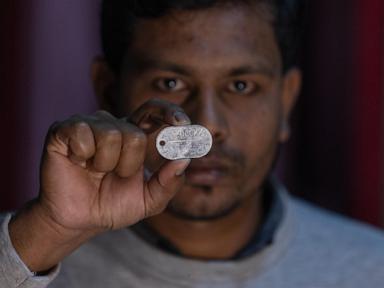
In a troubling revelation, Bangladeshi workers were lured to Russia under false pretenses, only to find themselves compelled to fight in the ongoing conflict in Ukraine. An investigation by the Associated Press uncovered that labor recruiters promised these individuals jobs in civilian roles, but instead, many were coerced into military service.
Maksudur Rahman, a resident of Lakshmipur, Bangladesh, was encouraged by a labor recruiter to travel to Russia, believing he would work as a janitor for a monthly salary of between $1,000 and $1,500. Shortly after arriving in December 2024, he and other Bangladeshi workers were presented with documents written in Russian, which they believed to be employment contracts. Instead, they signed military agreements, leading them to a military camp where they trained in combat skills and drone warfare.
Rahman, alongside several other men, faced threats of violence and imprisonment for refusing to comply with military orders. “Your agent sent you here. We bought you,” a Russian commander reportedly told him through a translation app, highlighting the exploitation faced by these workers.
Many of these Bangladeshi men were forced to perform dangerous tasks, including advancing on the front lines, transporting supplies, and evacuating wounded soldiers. Documents reviewed by the Associated Press, including travel papers and military contracts, corroborate the workers’ accounts, revealing the extent of their deception and the injuries they sustained during combat.
The total number of Bangladeshi workers deceived into military service remains unclear. However, Rahman and others noted seeing hundreds of compatriots alongside Russian forces in Ukraine. Concerns have also been raised about men from other South Asian and African countries being similarly targeted, including individuals from India and Nepal.
Desperate Circumstances and Dangerous Promises
In Lakshmipur, where many families rely on overseas employment, the search for work can lead to desperation. Rahman had returned from a contract in Malaysia when he encountered a labor recruiter who claimed to offer a lucrative job in Russia. To secure this opportunity, he took out a loan of 1.2 million Bangladeshi taka, approximately $9,800, to pay the broker’s fee.
Once in Russia, Rahman was quickly disillusioned. After three days of combat training, he and his fellow workers were dispatched to the front lines, where they experienced the harsh realities of war. “The Russians would take a group of five Bangladeshis. They would send us in front and stay at the back themselves,” he recounted, illustrating the dangerous dynamics at play.
Mohan Miajee, another victim of this deception, had initially intended to work as an electrician in a remote gas-processing facility. However, after a recruiter from the Russian army approached him online, promising electronic warfare opportunities far from combat, he was misled into signing military contracts. Miajee faced severe consequences for refusing orders, including physical abuse and torture.
Families of missing Bangladeshi men are now desperate for answers. Ajgar Hussein, who sought work as a laundry attendant, communicated with his wife about the harsh training he was subjected to, expressing his fear and desperation. His last message indicated he had been sold to the Russian army, after which all communication ceased.
Support and Investigations
In response to the alarming situation, families began reaching out to organizations like BRAC, which advocates for migrant workers. This prompted investigations uncovering a trafficking network involving Bangladeshi intermediaries facilitating the relocation of workers to Russia.
Bangladeshi police have reported at least 10 missing individuals who were lured into combat. Investigators suspect connections between local agents and a central agent associated with a company named SP Global. The organization, which did not respond to inquiries, reportedly ceased operations in 2025.
The families of these workers have not seen any of the money their loved ones were promised. Many, like Rahman, who eventually escaped and sought refuge in the Bangladeshi embassy, are left with the trauma of their experiences. “I just want my children’s father back,” one grieving family member stated, reflecting the overwhelming desire for closure and justice.
As the investigation continues, it highlights a disturbing trend of exploitation of vulnerable workers seeking better opportunities abroad. The consequences of such deception extend beyond individual families, affecting entire communities reliant on remittances from migrant labor.