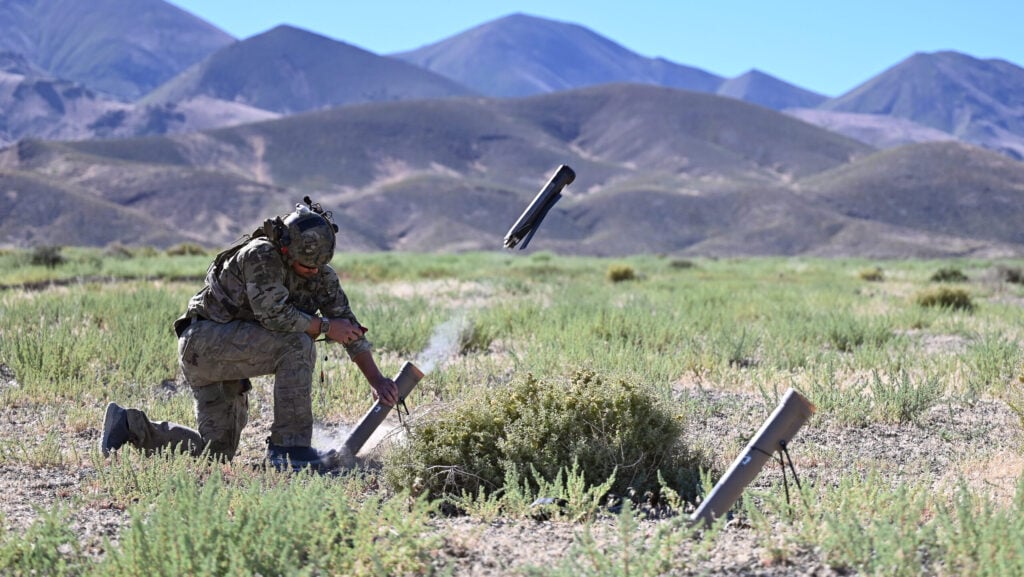
The Defense Autonomous Working Group (DAWG) has taken over the drone initiative originally launched during the administration of President Joe Biden. This initiative is now focused on developing larger and longer-range unmanned aerial systems (UAS) as part of ongoing military wargames. High-ranking officials, including Adm. Sam Paparo and Emil Michael, the Pentagon’s Chief Technology Officer, confirmed the continuation and expansion of this program.
The DAWG aims to enhance the United States military’s capabilities by exploring advanced drone technologies. During a briefing on March 15, 2024, Adm. Paparo highlighted that the group is not only conducting wargames but is also working on the integration of more sophisticated drone systems that could significantly alter operational strategies. The focus on larger drones aligns with a broader military strategy to improve surveillance and strike capabilities.
This evolution in drone technology comes at a time when the Pentagon is prioritizing modernization efforts. The shift from smaller reconnaissance drones to larger, longer-range attack drones reflects a strategic response to emerging threats in various global theaters. The increased range and payload capacity of these advanced systems are designed to enhance the U.S. military’s deterrent capabilities.
According to Adm. Paparo, the DAWG initiative embodies the Pentagon’s commitment to leveraging innovative technologies. “Our goal is to ensure that we remain at the forefront of military capabilities,” he stated. The development of larger UAS is seen as critical to maintaining strategic advantages over potential adversaries.
The drone initiative is part of a larger trend within military operations to integrate autonomous systems. These systems are intended to reduce human risk during missions while also providing enhanced operational efficiency. The DAWG’s work will likely influence future military engagements, particularly in environments where traditional piloted aircraft may be at risk.
As the DAWG continues its work, it remains to be seen how these new drone systems will be deployed in real-world scenarios. The potential impact on military strategy and operations is significant, with implications for both national security and international relations.
In summary, the Defense Autonomous Working Group is poised to redefine the landscape of military drone technology. With a focus on larger, longer-range attack systems, this initiative reflects a broader commitment to innovation in U.S. defense operations. As the program progresses, its developments will be closely monitored for their strategic implications.