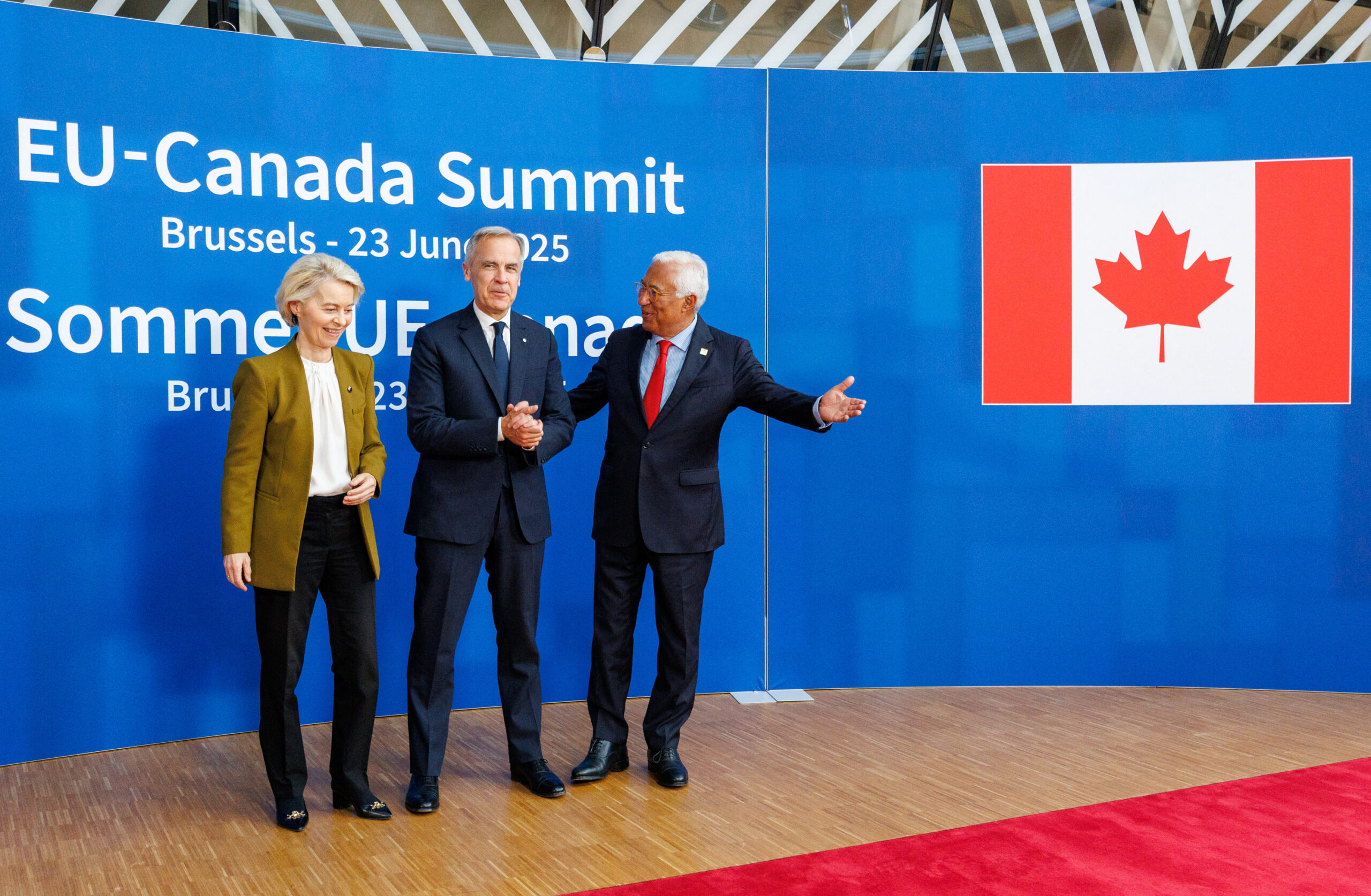
Canada has officially become the first non-European Union (EU) country to join the bloc’s significant rearmament program, known as the Security Action for Europe (SAFE). This initiative, valued at €150 billion, aims to enhance military readiness through collaborative procurement and financing. Prime Minister Mark Carney announced the partnership this week, highlighting its potential benefits for Canadian defense procurement.
In a statement, Carney emphasized that participation in SAFE could unlock billions in defense opportunities for Canadian businesses. He noted, “Participation in SAFE will unlock billions of dollars in potential defense opportunities for Canadian businesses, attract new reliable suppliers for our Armed Forces, and open massive new opportunities for national manufacturers to build and export Canadian-made capabilities.”
Implications for Canada’s Military Procurement
As Canada reviews its next-generation fighter jet procurement, the government has committed to acquiring 16 initial F-35s. However, it is also exploring the option of a mixed fleet, with the Swedish-made Gripen aircraft emerging as a strong contender. The precise details of Canada’s engagement in the SAFE program are still being finalized, with ongoing discussions focused on ratifying a bilateral agreement that could streamline the procurement process and potentially exempt Canada from certain regulations.
Under SAFE regulations, to qualify for funding, no more than 35% of a project’s component costs can originate from outside the EU, the European Economic Area, or Ukraine. This presents a challenge; however, countries can make financial contributions to gain access to the program. It remains uncertain how much Canada has agreed to contribute and whether this entry fee will be a one-time payment or linked to future procurement commitments.
Discussions around financial commitments have previously stalled negotiations for the United Kingdom’s participation in SAFE. The UK found it challenging to agree on the proposed contribution, which the EU estimated to be between €4 billion and €6.5 billion, while the UK was only prepared to commit approximately €200 million to €300 million.
Future Defense Projects and Collaborations
As Canada embarks on significant procurement projects, Roger Hilton, a defense fellow at the Bratislava-based think tank GLOBSEC, suggests that SAFE funding could be pivotal for various initiatives. These may include next-generation fighter aircraft, conventional submarines, and maritime domain awareness systems. Hilton believes that Canada will likely explore SAFE options for drones, anti-submarine warfare platforms, and secure satellite communications as well.
SAFE projects require at least two partners, typically including member states or a combination of a member country with Ukraine or an EFTA/EEA nation. Hilton indicates that Canada is likely to collaborate with European nations that share strategic priorities, particularly regarding Arctic security and North Atlantic defense. He highlights that Canada may gravitate towards countries with robust aerospace and naval industries, such as France, Germany, Italy, Sweden, and Spain, which possess the necessary industrial capacity and design authority favored by SAFE.
As negotiations continue, the implications of Canada’s participation in the SAFE program could reshape its defense landscape, opening new avenues for collaboration and enhancing its military capabilities on the global stage.