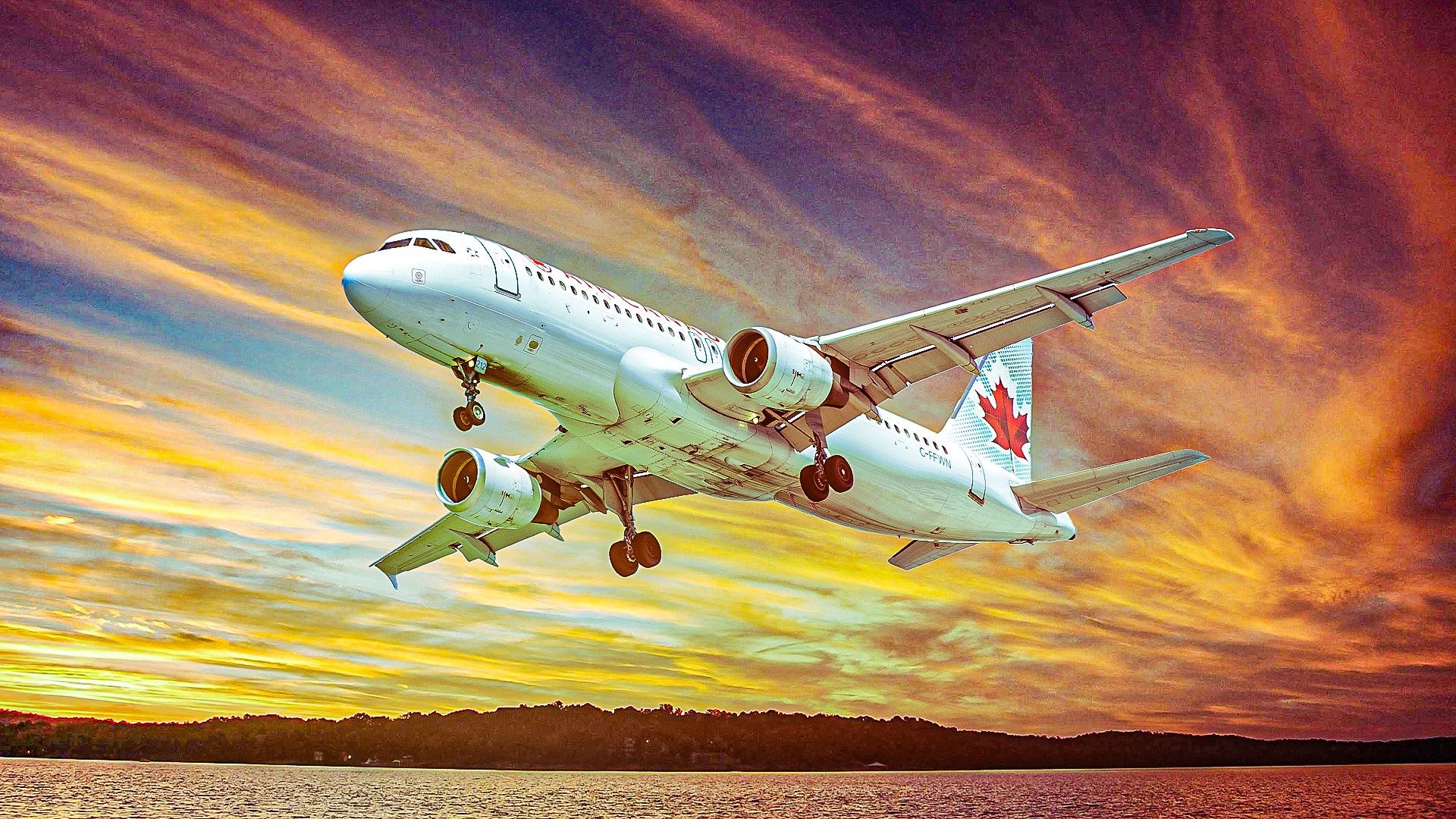
Travel between Canada and the United States is undergoing significant changes as Canadian airlines reduce their flight capacity to the U.S. by approximately 10% for the first quarter of 2026. This decline follows a notable rise in anti-American sentiment among Canadian travelers, according to a report by The Globe and Mail. The reduction translates to about 450,000 fewer seats available, indicating a shift in travel preferences influenced by political and economic factors.
Impact on Capacity and Travel Trends
The overall cut of 10% in capacity represents a daily reduction of roughly 5,000 seats. This adjustment is most evident in popular leisure destinations such as Florida and Las Vegas, which have traditionally drawn large numbers of Canadian tourists. While leisure travel is notably volatile, even cities with strong business travel, like New York and Los Angeles, are experiencing capacity reductions.
Leading the cuts, Air Canada, the country’s flag carrier, has decreased its U.S. capacity by about 7%. This figure is relatively modest compared to WestJet, which has reduced its U.S. capacity by 20%. Notably, Flair Airlines, an ultra-low-cost carrier focused on leisure travel, has made the most substantial cut, slashing its capacity by nearly 60%.
Shifting Demand and Reallocation of Resources
Despite the decrease in demand for U.S. travel, there is a marked increase in interest towards other destinations. Latin American countries, particularly Costa Rica, and popular Mexican cities like Cancun are witnessing a surge in bookings from Canadian travelers. Domestic travel is also becoming more favorable, although Canada lacks warm-weather destinations similar to those in the U.S.
Canadian airlines are well-positioned to adapt to these changing demands, as flights to the U.S. are typically short and serviced by narrowbody aircraft. This flexibility allows airlines to reallocate aircraft and crew to regions experiencing higher demand. As a result, ticket prices to the U.S. are likely to increase while options for scheduling diminish. Conversely, the rise in capacity to Latin America and domestic routes may keep fares stable or even lower them.
The airline industry landscape in North America is evolving. While U.S. legacy carriers have seen strong international travel performance, Canadian airlines are grappling with declining tourism to the U.S. and reduced business travel due to ongoing economic uncertainty. Notably, in 2025, more Americans traveled to Canada than vice versa, marking a significant shift in historical travel trends.
As political relations between the U.S. and Canada continue to strain, the implications for the airline industry and travelers remain significant. Adjustments in capacity and travel preferences reflect broader economic and social dynamics affecting cross-border travel, with Canadian carriers now navigating a landscape that demands agility and responsiveness.