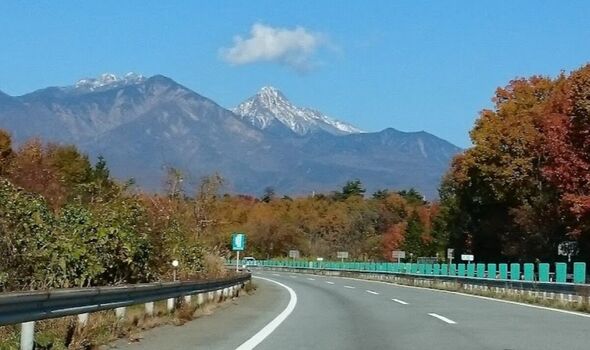
The Chūō Expressway is a vital transportation route in Japan, connecting Tokyo and Nagoya over a distance of 367 kilometres (228 miles). This major expressway not only serves as a travel artery but also offers breathtaking views of the country’s mountainous regions. Built in stages starting from the late 1960s, the expressway is estimated to have cost around ¥11 trillion (approximately £52 billion).
Although Japan is renowned for its efficient public transport, including bullet trains that can reach speeds of up to 320 km/h, the Chūō Expressway provides a unique opportunity for road trips. Travellers can experience panoramic vistas of mountain peaks and serene lakes like Lake Sagami and Lake Suwa while traversing the road. One of its highlights is the close proximity to Mount Fuji, allowing for convenient detours to this iconic landmark.
Infrastructure and Safety Concerns
The expressway consists of four lanes for nearly its entire length and reaches altitudes of up to 1,015 metres above sea level. While the expressway facilitates impressive travel experiences, it has not been without its challenges. A significant engineering feature, the Sasago Tunnel, located about 80 kilometres (50 miles) west of Tokyo, was the site of a tragic incident in December 2021.
During that event, parts of the tunnel’s roof collapsed, resulting in the deaths of nine individuals and injuries to two others. The accident involved falling concrete panels that struck vehicles passing through the tunnel, causing a fire. A memorial service for the victims took place in December, attended by approximately 50 people, including grieving families and representatives from Nexco Central, the company responsible for managing the expressway.
At the ceremony, Tadashi Nawata, President of Nexco Central, expressed his condolences, stating, “We pledge to address the constant challenge of improving expressway safety.” He acknowledged the profound impact of the incident on the victims’ families and reiterated the company’s commitment to preventing future tragedies.
Tolling System and Economic Impact
To use the Chūō Expressway, drivers are required to pay a toll. This typically includes a ¥150 (approximately 71 pence) entry fee, along with an additional ¥25 (about 12 pence) for every kilometre driven. The tolling system is designed to maintain the expressway and ensure that it remains safe and accessible for all users.
The expressway plays a crucial role in Japan’s economy by facilitating the movement of goods and people between major urban centres. Its scenic routes not only attract tourists but also enhance regional connectivity, contributing to the broader economic landscape of the country.
In summary, while the Chūō Expressway serves as a vital link between Tokyo and Nagoya, it also embodies the dual challenges of infrastructure investment and safety management. As Japan continues to develop and maintain its transportation networks, the lessons learned from incidents like the Sasago Tunnel collapse will be essential in shaping future road safety policies.