Jimmy Lai, a prominent pro-democracy advocate and former media tycoon, has been sentenced to 20 years in prison in Hong Kong, making it the longest penalty issued under the national security law imposed by Beijing. Lai, 78, was convicted in December 2023 of conspiring to collude with foreign forces and publishing seditious material. His conviction has raised serious concerns regarding the diminishing state of press freedom in Hong Kong, a city once revered for its media independence.
Details of the Sentencing
The sentence was delivered on January 22, 2024, following a trial that has drawn significant international attention. Alongside Lai, six former employees of his now-defunct newspaper, Apple Daily, and two activists received prison terms ranging from 3 years and 3 months to 10 years for charges related to collusion. The maximum sentence for Lai’s charges could have been life imprisonment, underscoring the severity of the national security law’s application in Hong Kong.
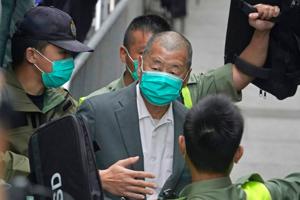
Upon his arrival at the courtroom, Lai smiled and waved at supporters, but his demeanor shifted as he left, reflecting the emotional toll of the proceedings. When asked about the possibility of an appeal, his lawyer, Robert Pang, declined to comment.
International Reactions and Implications
The international community has reacted strongly to Lai’s sentencing. U.S. President Donald Trump, who is expected to visit China in April, expressed his deep concern over the verdict, indicating he had discussed Lai’s situation with Chinese leader Xi Jinping. Similarly, British Prime Minister Keir Starmer and Foreign Secretary Yvette Cooper have condemned the prosecution as politically motivated, asserting that the sentence equates to a life sentence for Lai, who holds British citizenship.
Australian Foreign Minister Penny Wong also voiced grave concerns, highlighting the implications for freedom and human rights in Hong Kong. Lai’s son, Sebastien Lai, described the ruling as “draconian” and devastating for their family, stating it signifies the “total destruction” of Hong Kong’s legal system.
In contrast, Hong Kong leader John Lee defended the ruling, asserting that it exemplifies the rule of law and serves as a warning against serious crimes. Lee claimed the sentence has brought satisfaction to the populace.
Lai’s case stands as a critical test of press freedom. Since the enactment of the national security law in 2020, many journalists and activists have faced similar crackdowns. Lai was among the first high-profile figures arrested under the law, which has effectively muted dissent in the region.
Judicial Findings and Ongoing Impact
The judges in Lai’s case emphasized his role as the mastermind of the conspiracies, justifying the heavy sentence despite recognizing his age and health issues, which they acknowledged would worsen his prison experience. Lai has been in custody for over five years and is currently serving an additional sentence of five years and nine months for a separate fraud case.
Legal experts, including Urania Chiu from Oxford Brookes University, warn that the broad interpretation of “collusion with foreign forces” poses severe risks for journalists. Chiu stated that the act of criticizing the state could now be construed as collusion, raising alarm among media professionals and academics alike.
The former Apple Daily staff members who pleaded guilty helped reduce their sentences by cooperating with the prosecution. They admitted to conspiring with Lai to solicit foreign intervention against the Hong Kong government, showcasing the precarious position of media personnel in the current legal landscape.
The case has also resulted in asset confiscation related to Lai’s alleged crimes, further illustrating the government’s commitment to enforcing the national security law. Human Rights Watch has condemned the sentence, labeling it a “death sentence” for Lai and calling it cruel and unjust.
As the legal and political ramifications of this case continue to unfold, the implications for Hong Kong’s media landscape and civil liberties remain profound. The sentencing of Jimmy Lai reflects the ongoing struggle for free expression in a city undergoing significant transformation under the influence of Beijing.