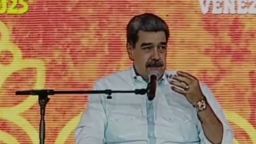
Venezuelan President Nicolás Maduro has experienced a significant setback this week, losing two key allies in Latin America. Following elections in Honduras and St. Vincent and the Grenadines, Maduro now finds himself increasingly isolated as regional political dynamics shift against his government.
In Honduras, preliminary results from the elections held on November 5, 2023, indicate that Rixi Moncada, a candidate backed by leftist President Xiomara Castro, has fallen to a distant third place. The race has narrowed to two right-leaning candidates, Salvador Nasralla and Nasry Asfura, both of whom have pledged to sever ties with Maduro’s administration. Notably, Asfura received an endorsement from former U.S. President Donald Trump just days before the election.
Meanwhile, in St. Vincent and the Grenadines, Prime Minister Ralph Gonsalves, a long-time supporter of Maduro, lost his position after nearly 25 years in power. The center-right opposition leader Godwin Friday led his party to a resounding victory, winning 14 out of 15 parliamentary seats. This change in leadership signals a broader regional trend, distancing from the once-popular populist movement known as Chavismo, initiated by Maduro’s predecessor, Hugo Chávez.
Shifting Alliances in Latin America
As Venezuela remains entrenched in its political and economic challenges, many Latin American nations have pivoted away from Maduro’s governance. Countries such as Brazil, Chile, and Colombia have limited their engagement with Caracas, particularly following Venezuela’s disputed 2024 elections, in which Maduro was declared the winner despite widespread allegations of electoral fraud.
Colombia’s relationship with Venezuela has historically been fraught, marked by tensions due to drug trafficking and border issues. Under the presidency of Gustavo Petro, diplomatic ties were briefly restored, but Petro has since distanced himself from Maduro, criticizing the Venezuelan leader for a “lack of democracy and dialogue.”
In Argentina, relations have soured significantly since the election of Javier Milei, a right-leaning libertarian who opposes socialism and has effectively halted diplomatic engagement with Venezuela, contrasting sharply with the more supportive stance under previous leftist administrations.
Further south, countries like Ecuador and El Salvador have also shifted politically, moving away from Maduro. The relationship with Brazil has fluctuated over the years; however, ties have not returned to their former strength since the election of Lula da Silva, who currently leads a more cautious approach to Venezuela.
Limited Support from Remaining Allies
As Maduro’s influence wanes in the region, he is left with only a few allies to rely upon. Cuba, a steadfast supporter since the Chávez era, stands as one of the few nations still openly backing Maduro. Cuban Foreign Minister Bruno Rodríguez recently reaffirmed this support, stating that Cuba “fully and completely supports” the Venezuelan government. However, with Cuba grappling with its own severe economic crisis, it lacks the resources to offer tangible military support to Venezuela.
Another remaining ally is Nicaragua, led by President Daniel Ortega, who has largely remained silent amid escalating tensions in the Caribbean. Ortega has condemned U.S. military actions but has not provided any substantial support to Maduro during this critical time.
As Maduro faces increasing isolation and the potential for conflict, the geopolitical landscape of Latin America remains unpredictable. With the U.S. military conducting operations in the region, including “Operation Southern Spear,” the implications for Venezuela could be profound.
In response to mounting pressure from Washington, Maduro expressed defiance, stating, “It’s been sanctions, threats, blockades, economic war, and Venezuelans did not cower.” His administration, accustomed to navigating crises, appears to be bracing for further challenges ahead.
As the situation unfolds, Maduro’s diplomatic strategies and alliances will be critical in determining the future of his presidency and Venezuela’s place within the region.