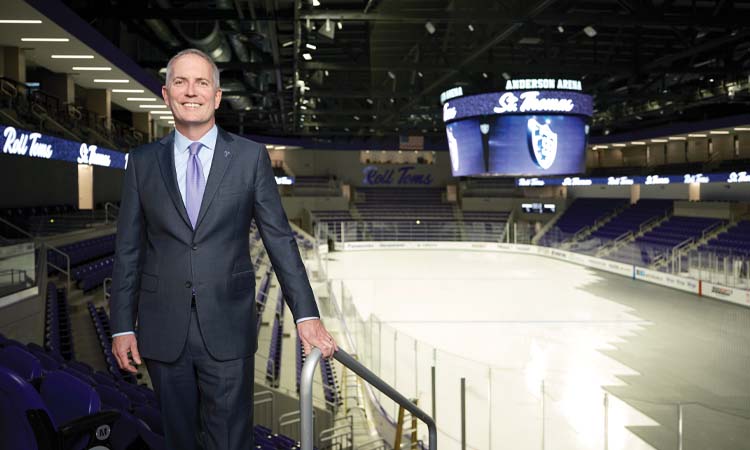
Rob Vischer has taken the helm of the University of St. Thomas, steering the institution into a period of unprecedented growth and transformation. As president since January 1, 2023, Vischer has overseen a significant increase in student enrollment, with the fall of 2025 witnessing its largest freshman class in history, comprising 1,677 students. Overall enrollment has risen by 4.6% to 9,876 students, reflecting a robust demand for higher education in a competitive landscape.
Vischer, who previously earned a degree from Harvard Law School and served as the dean of the law school at St. Thomas, understands the evolving needs of students. Under his leadership, the university is not only expanding its academic offerings but also enhancing its facilities. In October, the university inaugurated a new $183.4 million arena in St. Paul, marking a milestone in its transition from NCAA Division III to Division I athletics. This change is expected to elevate St. Thomas’s profile nationally and attract a more diverse student body.
Emphasizing Holistic Education
Vischer’s vision extends beyond traditional academic success. He emphasizes the importance of personal growth and character development for students. “What you find with high-achieving students is they’re picking up cues from the broader culture that they should always be thinking about what’s next,” Vischer explains. He encourages students to reflect not only on their career trajectories but also on their personal development, asking them to consider, “Who am I becoming?”
Pat Ryan, chairman of Ryan Companies and a member of the St. Thomas board of trustees, supports Vischer’s approach. He highlights Vischer’s ability to lead a high-quality university while instilling values of compassion and community engagement. Ryan describes the university’s mission as one that embraces Catholic social teaching, aiming to cultivate students who are not only well-educated but also committed to contributing positively to society.
Vischer’s commitment to nurturing well-rounded individuals is evident in the university’s programs. The Dougherty Family College, launched in 2017, aims to support students in earning associate degrees and preparing for bachelor’s programs, particularly for those who have historically been underrepresented in higher education.
Navigating a Competitive Landscape
As higher education faces demographic challenges with a declining number of high school graduates, Vischer acknowledges the increasing competition among private colleges. “Higher ed is now entering a winner-takes-most market,” he states. St. Thomas positions itself strategically in this environment, balancing the advantages of being neither too large nor too small, which allows for a supportive learning atmosphere while providing ample opportunities for student engagement.
The university’s reputation for graduating a significant number of business students remains strong, but Vischer is keen to maintain the liberal arts foundation that characterizes St. Thomas’s identity. The recent opening of the Schoenecker Center, which houses STEAM academic programs, underscores this commitment to a well-rounded education.
Vischer also recognizes the importance of athletics in enhancing the university’s appeal. The transition to Division I sports is not merely about competition; it is part of a broader strategy to raise the institution’s profile and attract students from across the nation. Currently, around 79% of students hail from Minnesota, but Vischer aims to diversify the student population further.
Phil Esten, the university’s athletics director, highlights Vischer’s foresight in recognizing the potential impact of athletics on institutional priorities. “It isn’t just winning games at a Division I level. It’s how we can leverage the platform of Division I athletics to share the great things happening on campus,” Esten notes.
As Vischer continues to steer St. Thomas through this transformative period, he remains focused on fostering a culture of connection and community engagement. By prioritizing authentic relationships among students, faculty, and alumni, he seeks to create an environment where everyone feels valued and included.
Vischer’s leadership style is characterized by introspection and a willingness to learn from others. He actively engages with students and faculty, posing questions that foster dialogue and promote deeper understanding. “We are made for connection, authentic connection,” he asserts, emphasizing the importance of building respectful relationships in a time of division.
In conclusion, Rob Vischer’s presidency at the University of St. Thomas marks a significant chapter in the institution’s history. With record enrollment, ambitious goals for the future, and a commitment to holistic education, Vischer is positioning St. Thomas as a leader in shaping the next generation of professionals and community leaders.