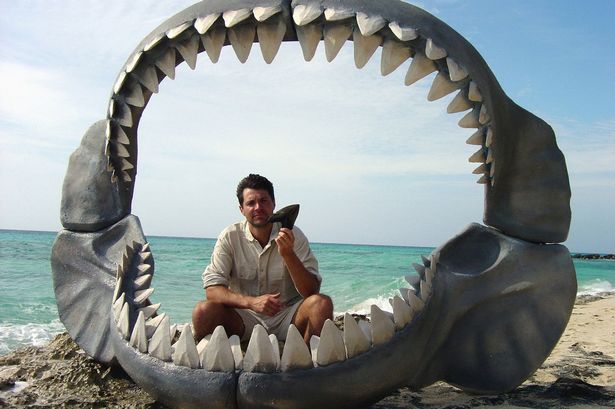
A peculiar noise, dubbed the “bloop,” was detected off the coast of Florida, leading to widespread speculation about its origins. Initially, some scientists believed this sound could indicate the presence of an undiscovered species, such as the legendary Megalodon or other mysterious marine life. As excitement grew, the truth behind the bloop emerged as something far less dramatic.
According to Discovery UK, initial hypotheses suggested that the bloop was produced by a living organism, with some researchers noting its resemblance to whale calls. Yet, the sheer volume of the sound far exceeded that of any known marine animal, prompting theories about previously unknown leviathans lurking in the depths of the ocean. The internet buzzed with fantastical ideas, including references to H. P. Lovecraft’s fictional creature, Cthulhu.
Geographers offered more grounded explanations, proposing that underwater volcanic activity or tectonic shifts could be responsible for the noise. The characteristics of the bloop mirrored seismic events, where tectonic plates create unsettling sounds. In subsequent years, the National Oceanic and Atmospheric Administration (NOAA) deployed hydrophones to monitor seafloor volcanoes and earthquakes. Their research eventually identified the source of the bloop.
In 2005, NOAA researchers discovered that the bloop originated from an icequake, specifically an iceberg breaking away from an Antarctic glacier. Their findings indicated that the sound arose from shifting ice rather than any unknown creature. As stated in their report, “As the years passed, PMEL researchers continued to deploy hydrophones ever closer to Antarctica in an ongoing effort to study the sounds of seafloor volcanoes and earthquakes. It was there, on Earth’s lonely southernmost land mass, that they finally discovered the source of those thunderous rumbles from the deep.”
The report highlighted how global warming has led to an increase in icequakes, with more icebergs cracking and melting into the ocean annually. This scientific revelation, while enlightening, disappointed some who had hoped for a thrilling discovery. One Reddit user expressed frustration, stating, “I was looking forward to scientists discovering a new, previously unknown life form in the deep ocean. I know there are many species down there we haven’t discovered, but they’re probably all going to be tiny or not much bigger than a small dog.”
Others were skeptical about the NOAA’s findings, questioning why it took so long to attribute the bloop to iceberg activity. One commenter remarked, “Wasn’t there a bunch of experts saying that it was almost certainly organic in nature? Is there any explanation as to why this instance of iceberg cracking was so loud? Not saying it’s Cthulu or anything, just desperately hoping.”
The bloop serves as a reminder of the mysteries of our oceans and the limits of current scientific understanding, even as researchers work diligently to explore the depths of the sea. The fascination with the unknown continues, even if the reality may not align with our imaginative narratives.