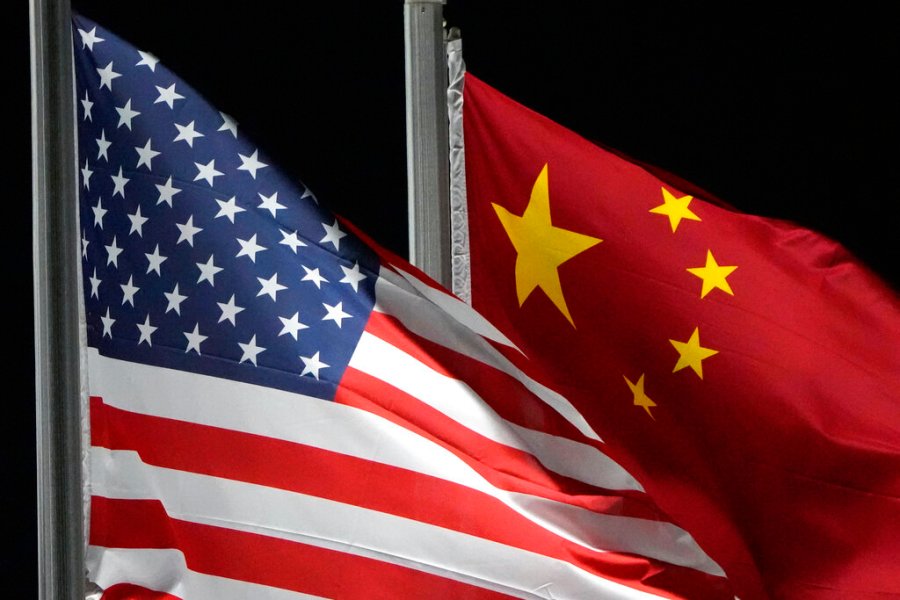
The United States’ policy of strategic decoupling from China is not yielding the intended results, leading to significant financial losses for American businesses and a sense of uncertainty among allies. This shift in strategy is inadvertently fostering greater technological independence for China, raising concerns about the long-term implications for U.S. innovation and global competitiveness.
The strategic decoupling initiative aimed to reduce reliance on Chinese technology and manufacturing, particularly in sensitive sectors like telecommunications and artificial intelligence. However, according to a recent analysis by the U.S. Chamber of Commerce, the policy has instead hindered American companies, causing them to incur an estimated $350 billion in losses over the past year. These losses stem from increased tariffs, supply chain disruptions, and a decline in exports.
Financial Consequences for American Firms
Many American firms that have invested heavily in their operations in China are now facing challenges. The National Association of Manufacturers reported that nearly 60% of its members have experienced negative financial impacts due to the decoupling policy. Companies in the technology sector, which rely on China for sourcing components, are especially vulnerable.
In response to these challenges, some businesses are reevaluating their supply chains and considering alternative markets. However, the transition is not straightforward. The Brookings Institution highlights that shifting operations to other countries could take years and requires substantial investment, which many companies may not be able to afford.
The confusion among U.S. allies is also apparent. European nations, for instance, are uncertain about how to align their trade policies with the United States while maintaining their economic ties with China. Many European companies continue to engage with Chinese markets, which complicates the collaboration between the U.S. and its allies on technological standards and national security.
China’s Accelerated Technological Independence
Simultaneously, China is capitalizing on the situation to bolster its technological independence. With increased funding and support from the government, Chinese firms are rapidly advancing in sectors previously dominated by American technology. The China Academy of Information and Communications Technology reported that Chinese investment in artificial intelligence and semiconductor production reached $150 billion in 2023, highlighting a strategic pivot towards self-sufficiency.
This trend poses a significant threat to U.S. innovation. As Chinese companies develop their technologies, they create competitive products that challenge American firms in global markets. The U.S. Department of Commerce has acknowledged this shift, indicating that maintaining a competitive edge in technology will require a reevaluation of existing policies and a renewed focus on domestic innovation.
In conclusion, the U.S. approach to decoupling from China is proving to be more complex than initially anticipated. The financial strain on American businesses, coupled with the accelerated growth of Chinese technological capabilities, suggests that a more nuanced strategy may be necessary. Policymakers will need to consider the broader implications of these actions, not only for national security but also for the future of American innovation and its position in the global economy.