Recent revelations from previously classified documents indicate that the UK military took significant steps in the 1990s to investigate and potentially acquire extraterrestrial technology. These documents, now available in the National Archives in Kew, London, suggest that intelligence officers believed that advancements from unidentified aerial phenomena (UAP) could enhance the nation’s defense capabilities.
The Defence Intelligence Staff, now known simply as Defence Intelligence, received directives to explore reports of UAP following a surge of sightings across Belgium from November 1989 to April 1990. An internal memo from March 1997 expresses the concern that with numerous reports of strange objects in the sky, there might be a factual basis for these phenomena. It stated, “Logic would indicate that if significant numbers are reporting seeing strange objects in the sky then there may be a basis in fact. It could be argued that UAPs pose a potential threat to the defence of the realm since we have no idea what they are.”
The documents reveal that earlier in the 1990s, numerous sightings of “large, silent, low-flying black triangles” were reported. These objects exhibited propulsion capabilities that seemed far superior to any known technology. One report noted, “A supplementary issue is the possibility of technology acquisition,” highlighting the potential for harnessing these advancements for national defense.
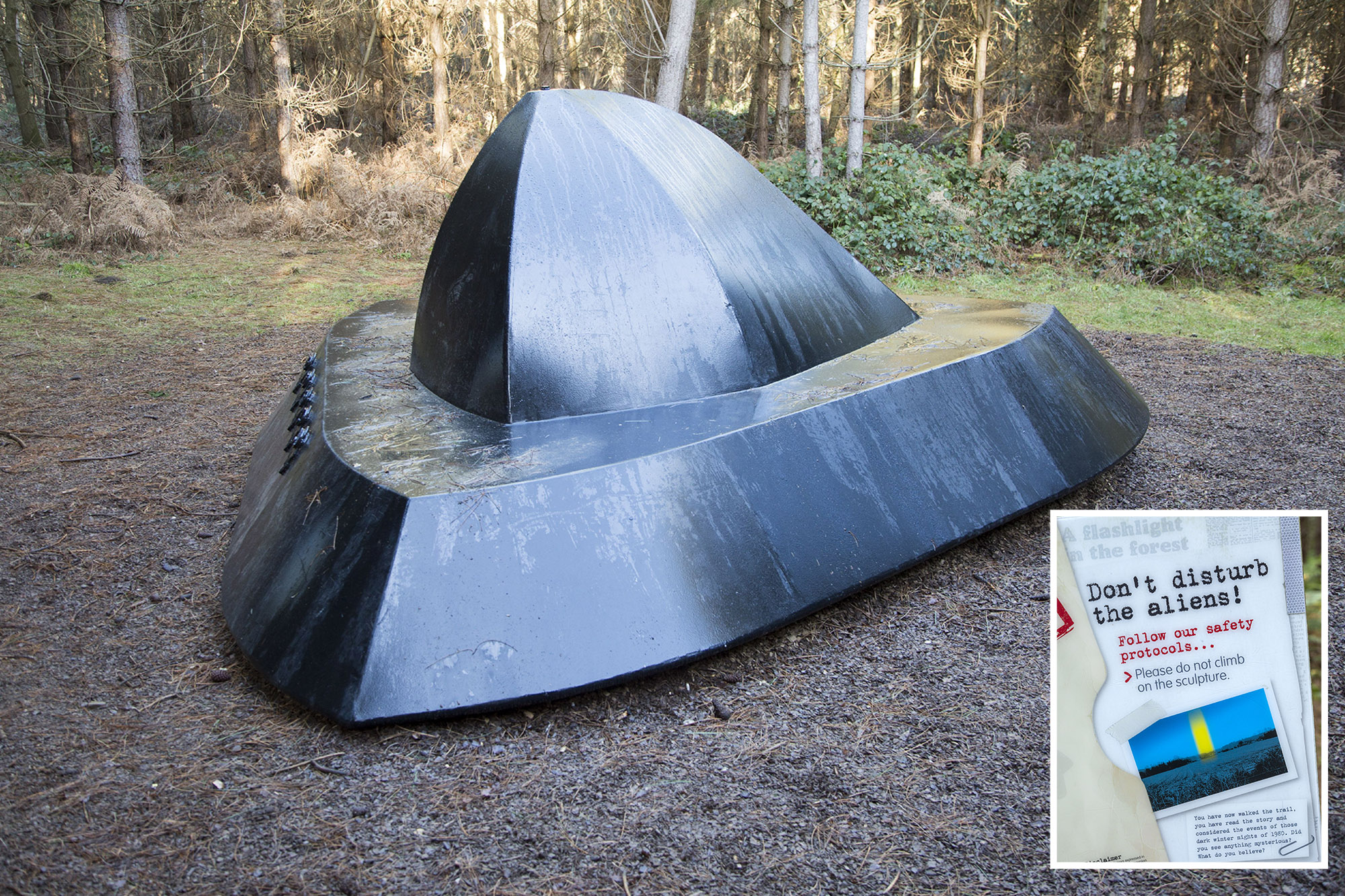
Among the notable incidents referenced in the documents is the Rendlesham Forest incident, which occurred near the US Air Force base in Woodbridge, Suffolk, in 1980. The report claimed that a glowing craft of unknown origin briefly landed before ascending rapidly into the sky. This event was supposedly corroborated by the US unit commander and other military personnel.
The documents also acknowledged that while many UFO sightings lacked credibility, some could not be explained by conventional science. “Some reports described objects in terms of manoeuvre, speed and shape which lie beyond our engineering knowledge and that which could be reasonably expected from hostile powers,” the memo stated. It emphasized the challenges in assessing such reports swiftly enough to allow for a coordinated response, necessitating potential collaboration on a national or international level.
Acknowledging the controversial nature of these investigations, the correspondence advised keeping an open mind. It noted that discussions around UAPs could lead to ridicule, with references to “Little Green Men” jokes often stemming from the fringe aspects of the topic. Despite the serious nature of the inquiries, officials recognized the need to address both terrestrial and extraterrestrial concerns.
In a statement made in December 2024, Luke Pollard, the UK’s Minister for Defence Readiness, confirmed that the Ministry of Defence had ceased investigations into UFOs or UAPs in 2009. He emphasized that there are “no current plans” to allocate resources for investigating any alleged sightings in the future.
The release of these documents sheds light on a previously hidden chapter of the UK military’s history and raises questions about the extent to which governments have sought to understand and potentially exploit unidentified aerial phenomena. As interest in UAPs continues to grow globally, the implications for national security and defense strategy remain a topic of significant intrigue.