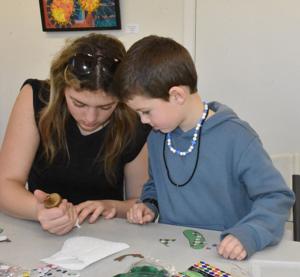
Children at the Arts Council of Livingston Parish in Denham Springs, Louisiana, participated in a festive workshop on December 20, 2023, where they crafted unique pickle ornaments. This event introduced them to a lesser-known aspect of holiday traditions, allowing young participants to engage in a creative activity while learning about the origins of the Christmas pickle.
Led by Arts Council board member Mary Felder, the workshop aimed to share the story behind the pickle ornament, a tradition said to have its roots in German American culture dating back to the late 19th century. Felder became intrigued by the concept after discovering that a survey conducted by the New York Times found that 91% of Germans were unaware of the ornament’s existence, highlighting its obscure nature.
As children like Luke Hopkins, a 6-year-old participant, immersed themselves in the activity, they found joy in creating their own distinctive ornaments. “I am excited and enjoying it,” Luke expressed, noting that he particularly liked choosing the colors for the ornament’s eyes, which he painted red and blue—his favorite colors. His cousin, Laila Altazan, also joined the creative fun, captivated by the story behind the tradition.
The pickle ornaments crafted during the workshop were not typical glass decorations found in stores. Instead, they were handmade and hand-painted, showcasing the artistic flair of the young creators. “The story is fascinating,” Altazan remarked, echoing the enthusiasm shared by many participants.
The origins of the Christmas pickle are varied, with one popular legend suggesting it was introduced in Germany, although this has been largely discredited. According to tradition, the hidden pickle ornament on the Christmas tree is discovered on Christmas morning. The first person to find it is believed to receive an extra present from Santa or, alternatively, a year filled with good luck.
The small town of Berrien Springs, Michigan, claims the title of the “Christmas pickle capital of the world,” hosting an annual pickle festival that features a parade, further celebrating this quirky holiday tradition.
Felder emphasized that the workshop was free of charge, with all materials provided by the Arts Council. Local volunteers also contributed their time to assist the children. “I wanted to do something that would show the community what we are doing,” Felder explained. “We just wanted to give back to the community.”
As the workshop concluded, little Luke left the Arts Council with a confident smile, ready to display his handmade ornament among the holiday decorations. The event not only fostered creativity but also connected families to a unique aspect of Christmas lore, ensuring that the tradition of the Christmas pickle continues to thrive.