The latest film from acclaimed director Park Chan-wook, titled “No Other Choice,” explores the fragile dynamics of a family grappling with the pressures of modern life. Centered on Mansu, portrayed by Lee Byung-hun, the narrative unfolds as he loses his job at a paper company, revealing a troubled past and a present filled with mounting pressures.
Set against the backdrop of South Korea, Mansu appears to lead an enviable life complete with a beautiful wife, children, and a home he fought hard to reclaim after losing it. However, the film quickly delves deeper, exposing the cracks in his seemingly perfect life. His family’s struggles mirror the broader themes of late-stage capitalism, automation, and personal failure. Mansu’s home is a poignant symbol, as it was once the site of his father’s tragic suicide following the collapse of their pig farm due to disease.
Mansu’s character is further complicated by his history of alcoholism and the impact it has had on his family. He faces immense pressure from his wife, Miri, played by Son Ye-Jin, who takes on the role of the family’s emotional anchor amid their deteriorating financial and mental health. The film’s early moments are filled with subtlety, particularly through Mansu’s interactions in his greenhouse, where he meticulously tends to a bonsai plant. This imagery serves as a metaphor for his struggle to control his life, with the plant ultimately cracking in his hands, foreshadowing his eventual descent into desperation.
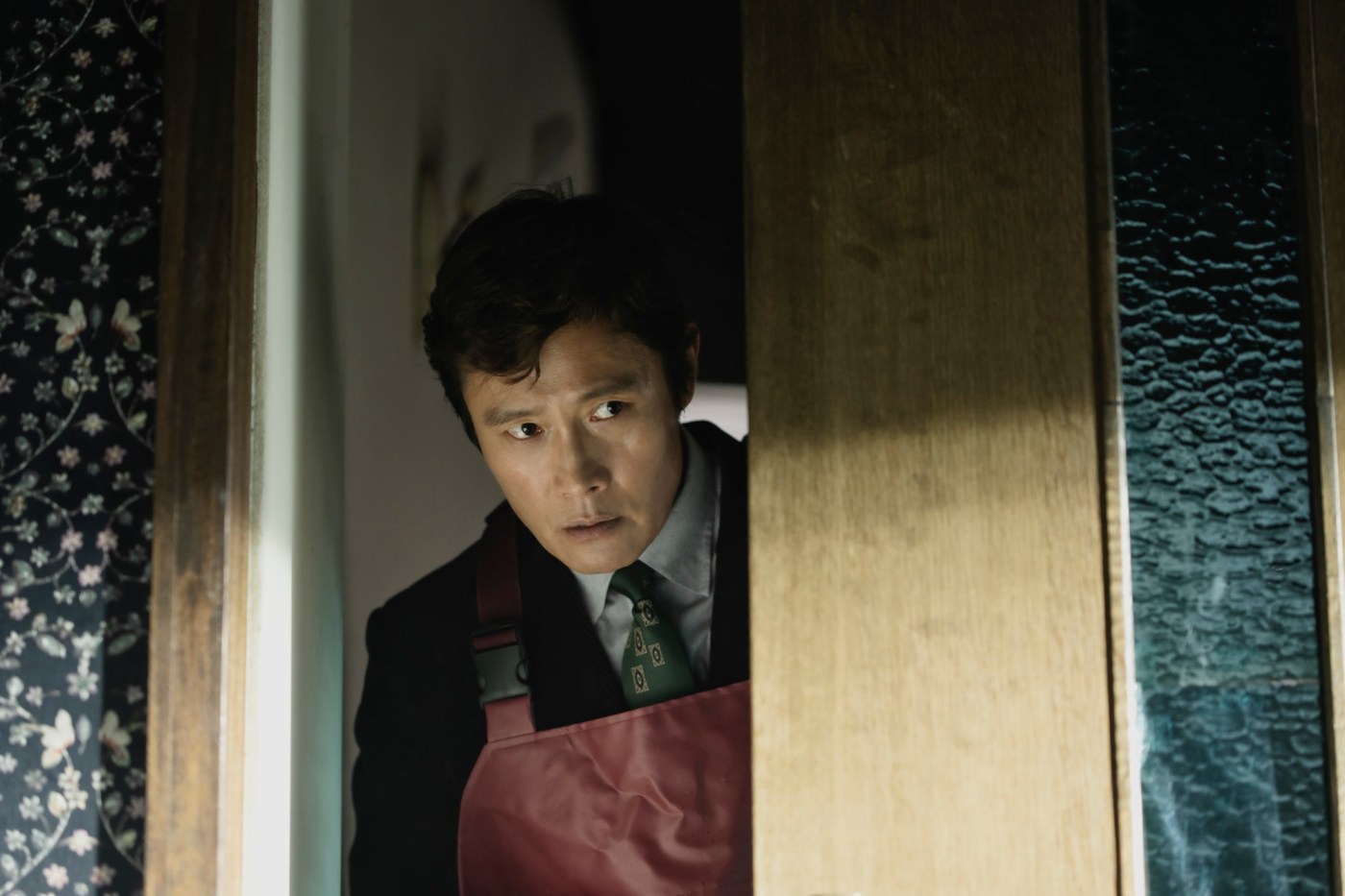
As Mansu’s situation deteriorates, he resorts to increasingly drastic measures to secure a future for his family. His attempts at becoming a hitman are often laced with dark humor, showcasing Park Chan-wook’s unique ability to blend suspense with comedic elements. One notable scene captures the chaos of a botched murder attempt, highlighting both the absurdity and gravity of Mansu’s plight.
The film’s commentary on societal pressures is further enriched by its origins. Park Chan-wook adapted the screenplay from Donald Westlake’s 1997 novel “The Ax.” Despite initial plans to produce the film in the US, he ultimately reimagined it for a Korean audience. In a recent interview, he noted that while the setting changed, the core themes remained universal and relatable: “Mansu feels a sense of responsibility to work; as a man, he’s trapped in a box by his own prejudice of what a father and husband should be doing.”
Critics have lauded “No Other Choice” for its layered storytelling and depth of character. The film earned the prestigious Golden Lion at the Venice Film Festival and received a nomination for Best Picture at the Golden Globe Awards. Park Chan-wook emphasized the importance of developing Mansu’s character and family dynamics before delving into the film’s darker themes: “For the murders to matter, I really had to take time to give this detailed portrayal of this family.”
As audiences engage with the film, questions arise about Mansu’s moral compass. Will viewers see him as a tragic figure fighting against societal constraints or a man blinded by his pride? Park Chan-wook encourages personal interpretation, revealing that he intended to create a narrative that provokes thought about the future of Mansu and his family. He believes that while some viewers may find hope in the film, there lies a “very dark and dirty secret” beneath the surface.
In an age increasingly defined by automation and economic uncertainty, “No Other Choice” resonates with viewers worldwide. The film captures not only the struggles of its characters but also the broader societal challenges that many face today. The journey of Mansu and his family serves as a stark reflection of the human condition, inviting audiences to contemplate their own lives and the choices that define them.