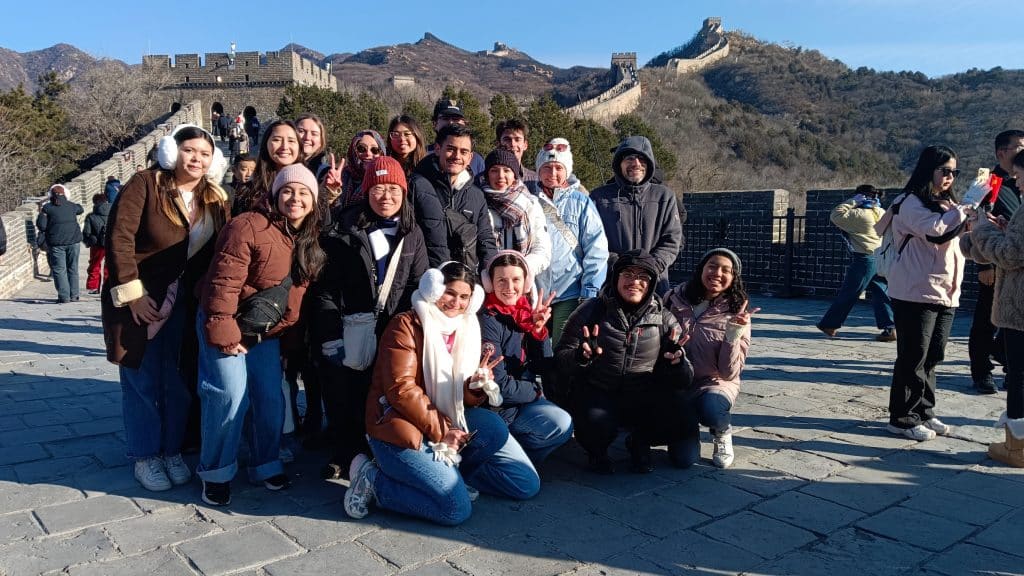
Students at Northern Arizona University (NAU) are gaining transformative experiences through innovative study abroad programs that extend beyond traditional classroom settings. These programs, led by NAU faculty, immerse students in diverse cultural environments, enhancing their academic journey while fostering global perspectives.
Expanding Global Learning Opportunities
Programs offered by NAU’s Center for International Education (CIE) are tailored to meet the needs of students at various academic levels. According to Melanie Caron, program manager at CIE, “Our programs are designed with our NAU students in mind, and we offer a wide variety of programs suited for freshmen, sophomores, juniors, and seniors.” This summer alone, NAU has initiated 40 faculty-led programs across numerous disciplines, from biology to art, in locations as diverse as Rwanda, Malawi, and Vietnam.
These programs allow students to complete major and minor requirements as well as general studies credits while exploring new countries. The distinction between faculty-led programs and traditional study abroad is significant; while faculty-led programs earn NAU credits directly, students in typical study abroad programs usually take courses at foreign universities with credits transferable to NAU.
Accessible Learning and Community Engagement
In an effort to make international education more accessible, NAU has expanded its offerings in Mexico, Costa Rica, and Honduras. These initiatives include engaging Indigenous communities and providing volunteer opportunities for students who wish to make a positive impact while learning about different cultures. Angelina Palumbo, director of Education Abroad, highlighted the importance of these programs, stating, “We have done this through programs like the Global Citizens Project Scholars and other faculty-led programs that focus on volunteering, global citizenry, language learning, and community engagement.”
Recently, NAU has increased its focus on African programs, featuring initiatives such as a study on the genocide in Rwanda and a course on understanding Apartheid in South Africa. Additionally, a global health program in Malawi allows students to connect with communities in ways that go beyond textbooks and films.
The faculty-led programs are primarily conducted in the countries the students visit, although some may require an online component before departure or a project upon return. Caron noted, “We have faculty members who have reached out to us with amazing ideas on programs they have dreamed about doing abroad, and we work with them to help create them.”
NAU also offers programs that have gained popularity over the years, such as the Integrated Curriculum and Place-Based Education in Italy and the Tropical Ecology Field School in Belize, focusing on wildlife conservation and management.
The flexibility of NAU-led programs makes them appealing to students who may not be able to commit to a full semester abroad. “Students who would like an international experience while they’re in college can take advantage of these shorter opportunities,” Palumbo explained. These programs allow for structured interactions with peers and faculty, fostering a safe and familiar environment for participants.
The CIE website lists detailed descriptions and costs for each program, providing students with clear information on what to expect and how to budget for their international experience.
“The benefits students gain by participating in NAU-led programs abroad are endless,” Caron added. Participants receive academic credits, cultural immersion, and opportunities for professional growth that can enhance their resumes and expand their networks within their fields of interest.
Students interested in these programs must complete an application and possess a valid passport, which they can obtain through CIE if needed. For additional information, students can visit the CIE website or contact an advisor directly.
As NAU continues to expand its global reach, students are encouraged to consider how these enriching experiences can shape their futures. Through immersion in new cultures and communities, NAU’s study abroad programs are not just fulfilling academic requirements—they are transforming students’ understanding of the world and their place in it.