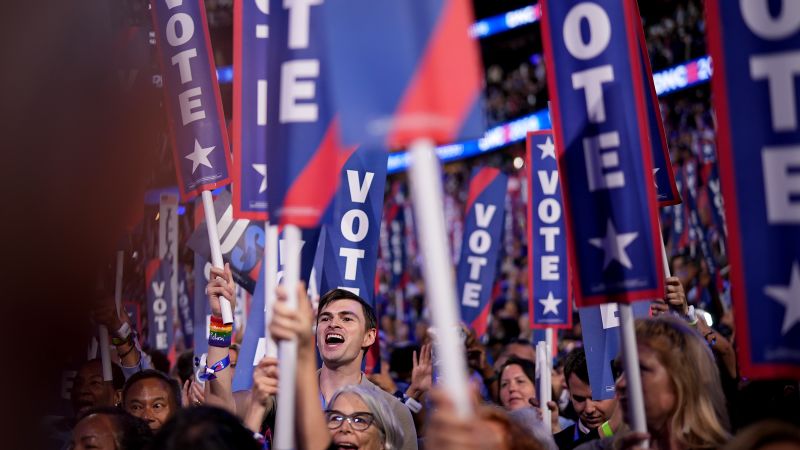
A recent poll by CNN, conducted by SSRS, reveals that the Democratic Party’s base remains highly motivated for the upcoming midterm elections, despite widespread dissatisfaction with its current Congressional leaders. The poll indicates that Democratic registered voters are significantly more enthusiastic about voting than their Republican counterparts.
Democrats hold a narrow advantage of 5 points on the generic congressional ballot, which measures voter preference for candidates from either major party in the upcoming elections. Among those expressing a strong motivation to vote, this lead expands dramatically to 16 points. This enthusiasm could allow Democrats to leverage public discontent with President Donald Trump and the Republican-controlled government in Washington as they approach the elections in November 2026.
The poll highlights that a majority of Americans view the first year of Trump’s second term as a failure, with only 29% of independents approving of his performance. Although the generic ballot does not account for specific candidates, it serves as an early indicator of party preference nationwide. A similar scenario occurred in 2018, when Democrats regained control of the House during Trump’s first term, also with a 5-point advantage at a comparable point in the election cycle.
Dissatisfaction with Democratic leadership has reached concerning levels, with only 28% of respondents approving of their Congressional leaders, compared to 35% for Republican leaders. This sentiment has remained consistent since April. Many voters, particularly Democrats and Democratic-leaning independents, believe that Congress has not done enough to oppose Trump, with 71% expressing that Democrats have been ineffective in resisting Republican policies. This figure marks a notable increase from 51% earlier in the year.
The level of motivation among Democratic voters correlates with their discontent. Those who are deeply motivated to participate in the elections are more likely to feel that their party is not adequately opposing Trump and are increasingly frustrated with their representation in Washington. This discontent may influence upcoming primary challenges to incumbent members of Congress.
Public sentiment regarding the political climate remains generally bleak. Many Americans describe the economy as poor, with a significant portion of the electorate advocating for a change in leadership as a solution to economic challenges. Among Republicans, approval of Congressional leaders is notably higher, with roughly 75% expressing confidence in the GOP’s leadership. In contrast, only 48% of Democrats share similar sentiments regarding their leaders.
Voter perceptions of potential outcomes from a Democratic victory in Congress are mixed. While 84% of Republicans believe that the country would be worse off under Democratic control, 79% of Democrats think it would be better. Independents show some ambivalence, with 35% believing the country would improve and 27% fearing it would decline, but a notable 37% see no difference.
Despite this ambivalence, many voters who are uncertain about the impact of Democratic control still lean towards favoring them on the generic ballot, with a roughly 2-to-1 margin in favor of Democrats among those who are undecided about the effects of a party shift.
In assessing Republican leadership, the poll indicates that 61% of Americans find Republicans somewhat effective in passing new legislation, a decrease from 76% a year ago. While a substantial portion of the public believes that Congressional Republicans are overly supportive of Trump, this view is not shared within the Republican base. Approximately 56% of Republican-aligned individuals feel the GOP is supporting Trump appropriately, whereas only 11% think they are too supportive.
Despite recent challenges to Trump from some within the party, the perception of the GOP’s support for him has increased, with two-thirds of Republicans believing Trump has positively influenced the party. Among self-identified members of the “Make America Great Again” movement, 90% view Trump’s impact favorably.
The CNN poll was conducted online and by phone from January 9-12, involving a random national sample of 1,209 adults, including 968 registered voters. The margin of error for the full sample is ±3.1 percentage points; it is ±3.5 points for registered voters.