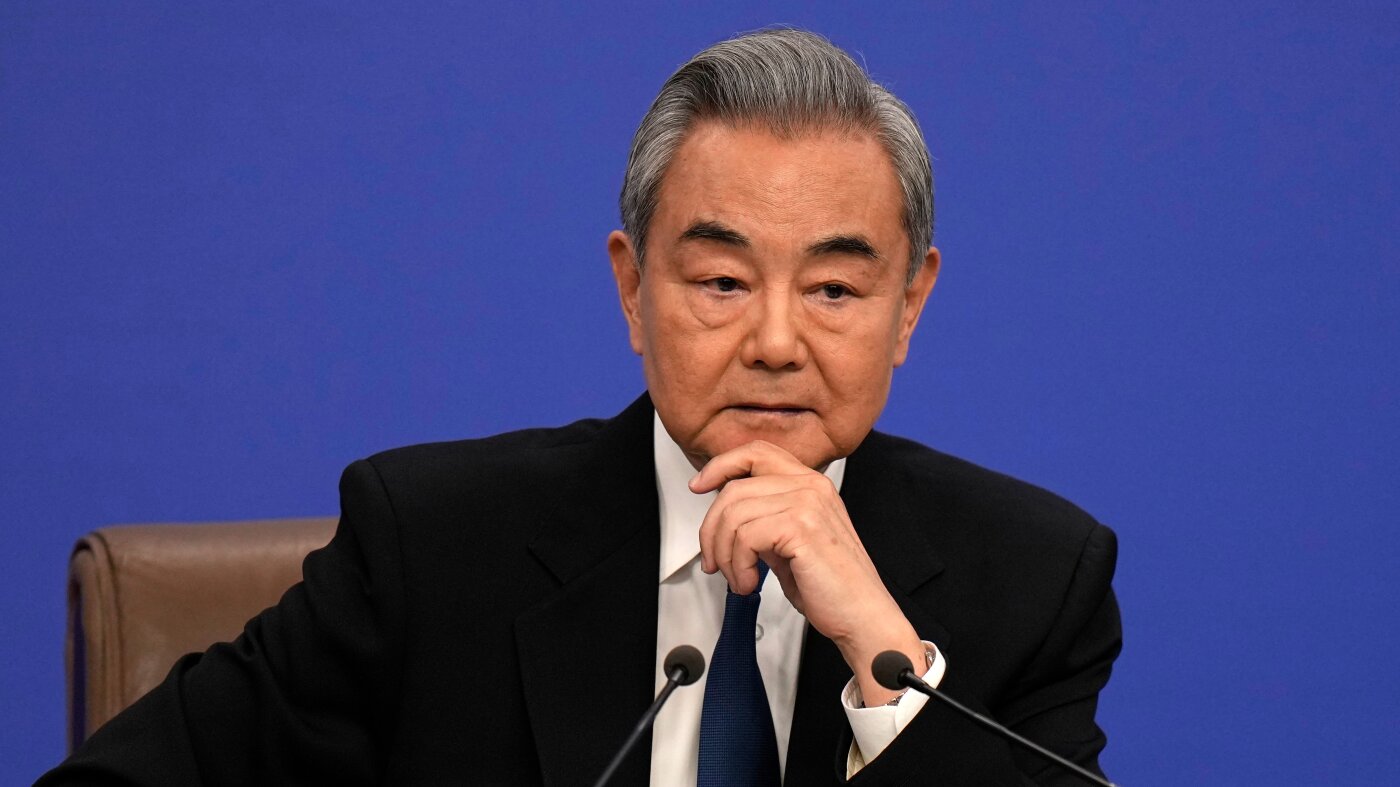
China’s Foreign Minister, Wang Yi, addressed several pressing international issues during an annual briefing in Beijing on Sunday, emphasizing the need for dialogue and cooperation. Wang criticized the ongoing conflict involving the United States and Israel with Iran, stating that such a situation “should not have happened” and “does no one any good.” While expressing dissatisfaction with the U.S. stance, he hinted that a potential meeting between President Donald Trump and Chinese leader Xi Jinping could still occur by the end of March 2024.
Wang called for an immediate cessation of hostilities in the Iran conflict, urging all involved parties to return to the negotiating table. He remarked, “Might doesn’t make right, and the world cannot revert to the law of the jungle.” Stressing respect for the sovereignty and territorial integrity of Iran and its neighbors, he noted that China plans to send an envoy to the region for mediation. Despite this diplomatic initiative, it is essential to recognize China’s strategic alignment with Iran, given its substantial oil imports from the nation and the broader Middle Eastern region.
U.S.-China Relations and Global Trade
On the topic of China-U.S. relations, Wang underscored the significance of “peaceful coexistence” and “win-win cooperation.” He remarked that both nations, as major global players, have the option to choose their engagement strategies. Wang’s comments reflect a deep-seated concern among Chinese officials that the U.S. is intent on suppressing China’s ascent on the world stage.
In addressing European perceptions of China, Wang attempted to mitigate fears regarding competition. He argued that Europe should view China as a “global partner” rather than an adversary. “We are glad to see European friends stepping out of the ‘small attic’ of protectionism and walking into the ‘fitness club’ of the Chinese market,” he stated, emphasizing the mutual benefits of collaboration.
Wang also criticized the trade protectionism associated with President Trump’s global tariffs, likening it to “locking oneself in a dark room.” He advocated for openness, highlighting that China plans to eliminate tariffs on imports from most African countries starting May 1, 2024, to facilitate access to the Chinese market.
Regional Security and Global Peace Initiatives
Relations between China and Japan have recently become strained, especially following remarks by Japanese Prime Minister Sanae Takaichi suggesting Japan might intervene if China attempts to assert control over Taiwan. Wang responded firmly, asserting that “Taiwan never was, is not, and will never be a country,” and emphasized that Taiwan’s status is an internal Chinese matter, dismissing any foreign interference.
Regarding the Middle East, Wang reiterated China’s support for a two-state solution to the Israeli-Palestinian conflict. He remarked, “Any other arrangements or new mechanisms must reinforce – rather than undermine – the two-state solution.” While acknowledging international efforts towards achieving a ceasefire, he noted that significant challenges remain ahead.
Wang’s comments reflect China’s ongoing diplomatic efforts to position itself as a mediator in global conflicts while navigating complex relationships with major powers. As the world’s second-largest economy, China continues to advocate for dialogue and cooperation in an increasingly polarized international landscape.