Huawei and GAC Reveal Porsche-Like Aistaland GT7 EV with Cutting-Edge Tech
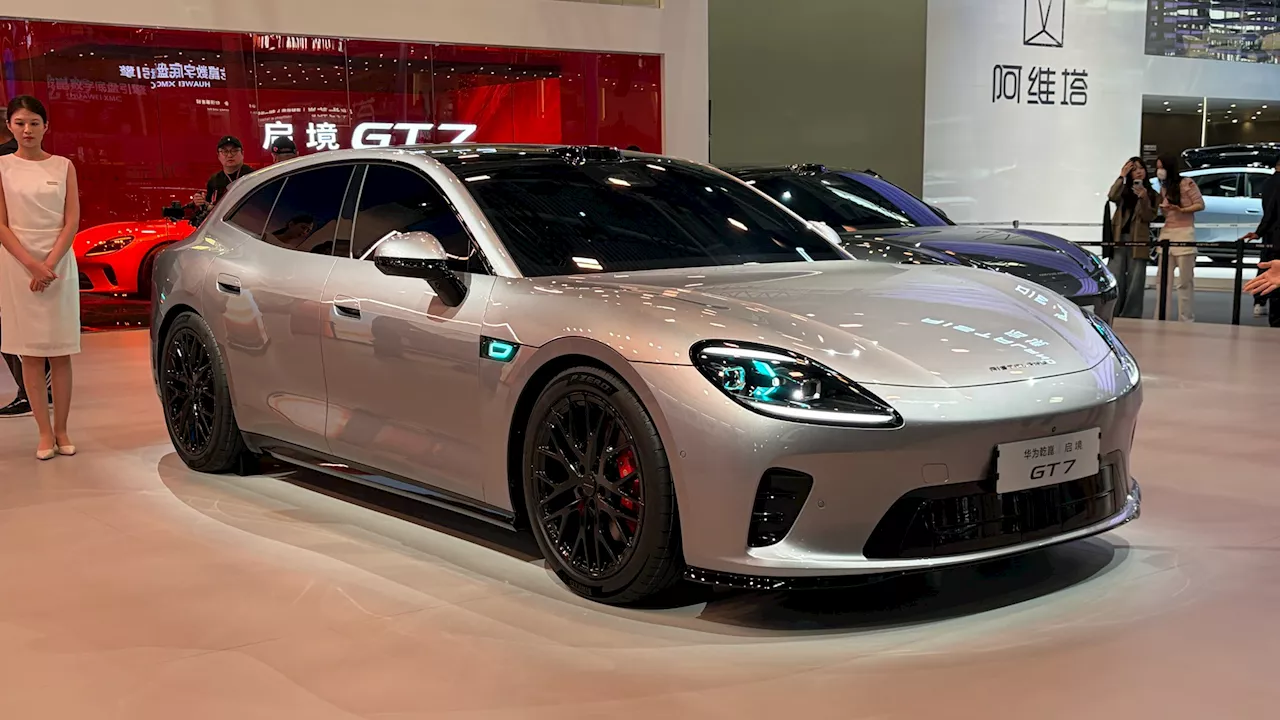
Huawei and Chinese automaker GAC have unveiled the Aistaland GT7, an electric vehicle strikingly similar to the Porsche Panamera in both size and design, creating a buzz at the Beijing Auto Show this year.
The new EV will launch in the Chinese market within about a month, featuring an impressive combination of performance and advanced technology from Huawei. With dimensions closely mirroring the Panamera — boasting a length of 5050mm, width of 1980mm, height of 1470mm, and a wheelbase of 3000mm — the GT7 clearly positions itself as a luxury sports sedan competitor.
High-Tech Features Promise Enhanced Safety and Performance
The GT7 incorporates an array of cutting-edge innovations from Huawei, highlighted by intelligent projection Xpixel headlights. These headlights can project real-time warnings and road information ahead, akin to Mercedes’ advanced lighting systems, boosting night-time driving safety.
Even more remarkable is the vehicle’s onboard high-definition 896-line Lidar system. This lidar can detect tiny objects as small as 14cm from a distance of 122 meters in low-light conditions, offering a significant safety edge over conventional 192-line lidar units used by many competitors. This system enhances the car’s driving assistance features, especially at night, raising the bar for smart vehicle sensors in EVs.
Performance Specs and Powertrain Options
The GT7 will be offered in two powertrain versions: a pure battery electric vehicle (BEV) and a range extender (REX) model, which remains popular in China. Reports indicate a dual-motor all-wheel-drive setup powered by Chinese battery giant CATL cells. The internal combustion engine in the REX version will be positioned above the front axle, optimizing weight distribution and handling. Supporting this setup is an 800-volt electrical architecture paired with active suspension for a dynamic yet comfortable ride.
While the vehicle’s official name abroad has yet to be revealed, it will be marketed as Qijing in China, a name that car insiders believe better suits its innovative spirit than the clunky “AI Start New Land” full name, from which the GT7 acronym derives.
What This Means for U.S. and Nevada EV Markets
Though the Aistaland GT7 is not confirmed for sale outside China yet, its launch signals the intensifying competition in electric vehicle development, particularly for luxury models. Huawei’s integration of advanced tech such as smart headlights and high-res lidar could soon influence U.S. offerings, where companies scramble to improve safety and driver-assist suites amid growing EV demand.
For Nevada, a state rapidly expanding its EV infrastructure and consumer base, breakthroughs like the GT7 demonstrate how global tech and automotive alliances are racing toward smarter, safer electric mobility solutions. Nevada consumers may soon see trickle-down effects as American EV brands adopt or challenge these innovations.
Industry Expert Weighs In
Curtis Moldrich, Digital Editor of CAR Magazine, said, “The Aistaland GT7 is a prime example of how tech giants like Huawei are reshaping car design and functionality with cutting-edge sensors and lighting technology that could redefine safety standards worldwide.”
Next Steps and Market Watch
Set to hit Chinese roads very soon, the Aistaland GT7’s reception will be a key industry event to watch. Its success or failure could influence future joint ventures between technology firms and automakers across the globe, including potential moves into the lucrative U.S. electric sedan market.
Stay tuned for updates on whether Huawei and GAC will bring the GT7—or a U.S-tailored version—to American consumers, and how its advanced safety features compare with existing industry leaders in Nevada and beyond.