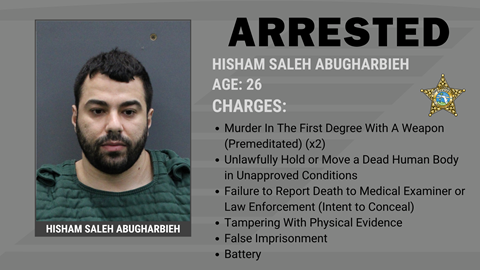
HILLSBOROUGH COUNTY — Prosecutors are demanding that a man accused of killing two University of South Florida doctoral students be held without bond, revealing a disturbing trail of premeditated planning, cleanup efforts, and forensic evidence tying him to the brutal double homicide.
The motion for pretrial detention filed this week outlines a timeline of suspicious purchases, digital searches, and forensic findings all pointing to extensive efforts by the suspect to conceal the crimes involving victims Zamil Limon and Nahida Bristy.
Timeline of Crimes and Cover-Up Uncovered
Authorities traced purchases of cleaning supplies—including Lysol wipes, Febreze, body wash, heavy-duty black trash bags, fire starters, charcoal, lighter fluid, and duct tape—delivered and picked up from a CVS near their Tampa apartment complex on the night of April 16, 2026, days corresponding with the victims’ disappearance.
Investigators recovered many of these items in a dumpster tied to the complex shared by the suspect and one victim. Among them were clothing, socks, slides, and a floor mat that tested presumptively positive for blood. Personal belongings, including a wallet, were also found discarded suspiciously.
Inside the victim’s apartment, investigators detected significant blood evidence in multiple areas like the hallway, kitchen, and suspect’s bedroom, with patterns showing smearing and cleaning attempts consistent with trying to erase the crime scene.
Digital Searches Reveal Dark Planning
Digital evidence further implicates the suspect. Prosecutors disclosed that the man conducted multiple internet searches related to body disposal tactics, such as “what happens if a body is placed in a garbage bag and thrown into a dumpster,” and queries about cleaning or altering a car, firearms ownership, and location data matching key crime scene sites.
Cell phone data and vehicle tracking place the suspect’s movements between Tampa and Clearwater along routes monitored by surveillance and license plate readers, tracing areas consistent with where evidence and victims’ remains were found.
Chilling Victim Discovery and Ongoing Investigation
One victim’s body was discovered near the Howard Frankland Bridge, wrapped inside multiple trash bags. The autopsy confirmed homicide by multiple sharp force injuries. The second victim remains missing, but blood evidence strongly indicates she was also killed.
Recently, human remains were recovered near I-275 and 4th Street N. The Pinellas County Medical Examiner’s Office has not yet confirmed identification of these remains.
Prosecutors Argue No Bond for Public Safety
State attorneys argue the suspect’s deliberate use of blades, meticulous cleanup, and attempts to hide evidence prove a “substantial probability of guilt” and a clear danger to the community. The motion insists there is no condition of release that could guarantee public safety or preserve the integrity of the judicial process.
The prosecution is pushing the court to deny bond entirely given the severity of the charges—two counts of first-degree murder—and the weight of the forensic and digital evidence.
Next Steps in High-Profile Case
A judge will soon decide if the suspect remains in custody without bond. This case, unfolding in the Tampa Bay area, has captured national attention for its chilling details and the stark evidence unveiled so far.
For readers in Nevada and across the United States, this case highlights the growing role of digital footprints and forensic science in unraveling violent crimes and mounting charges with profound implications for justice and community safety.