Missouri S&T Theatre Students Overcome Power Outage by Moving Play Outdoors
ROLLA, Missouri — A sudden power outage on Sunday afternoon April 19 cut the technical support during Missouri University of Science and Technology’s production of Race’s End, forcing theatre students and faculty to make a dramatic pivot that kept the show alive — outside, under clear skies.
About 20 minutes into the second act, Castleman Hall’s lights, sound, and projection systems failed, shutting down the high-tech elements that were critical to the new play written specifically for Missouri S&T students.
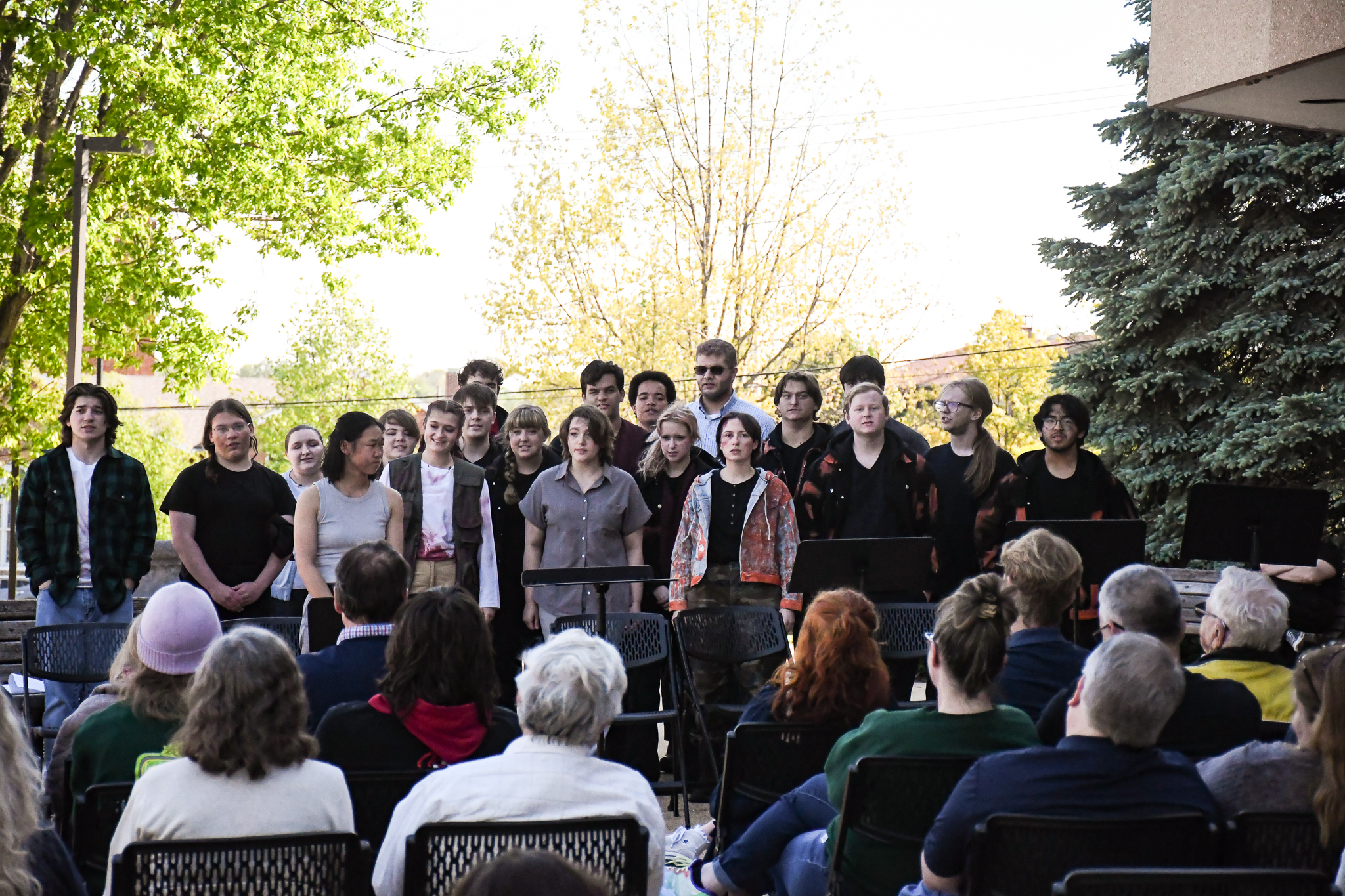
Faced with stopping the performance or adapting, cast and crew chose the latter. Within minutes, they relocated the entire audience outdoors, transforming the tech-heavy production into a minimalist, “reader’s theatre” style display, using just natural light and their voices.
Students Turn Crisis Into Creative Triumph
Taylor Gruenloh, assistant professor of theatre, described the switch as “like tripping back in time,” going from “state-of-the-art technical theatre special effects” to just sunlight and spoken word — an almost Shakespearean moment.
Stage manager Abigail Lebar, an engineering management major who helped direct the quick shift, narrated stage directions and visual cues for the audience since the technical visual aids were lost. “We spent months preparing a show built on big effects and bold spectacle,” she said, “but it was rewarding to feel the emotional impact even without those.”
The play explores themes of humanity’s increasing reliance on technology and how people respond to existential uncertainty — an ironic twist given the real-world technology failure.
Performer Josie Schnelten, also an engineering management major, called the outage “deeply ironic” but grounding. “The show’s message on tech reliance was literally halted by the tech failing, and yet we kept the story going.”
Adaptability in Action Reflects Larger Lessons
The audience remained engaged throughout the outdoor portion, witnessing a raw and resilient storytelling experience. The unscripted change underscored the core message of Race’s End — even when systems fail, people carry the story forward.
This experience highlights a crucial skill emphasized both in the performing arts and STEM fields at Missouri S&T: adaptability under pressure. With technology sometimes unpredictable, human determination and creativity remain indispensable.
Theatre professionals and engineering students alike showed how disruption can lead to innovation and connection, echoing an urgent message for audiences everywhere in a tech-dependent world.
What’s Next
Theatre faculty plan to reflect on this experience in future productions, possibly incorporating the lessons of flexibility and simplicity into their artistic and technical planning. For now, Missouri S&T’s cast and crew celebrate a performance that proved storytelling lives beyond technology.
Audiences and students across the US watching this story can take note: resilience and adaptation remain vital in education, the arts, and beyond, especially when technology fails unexpectedly.