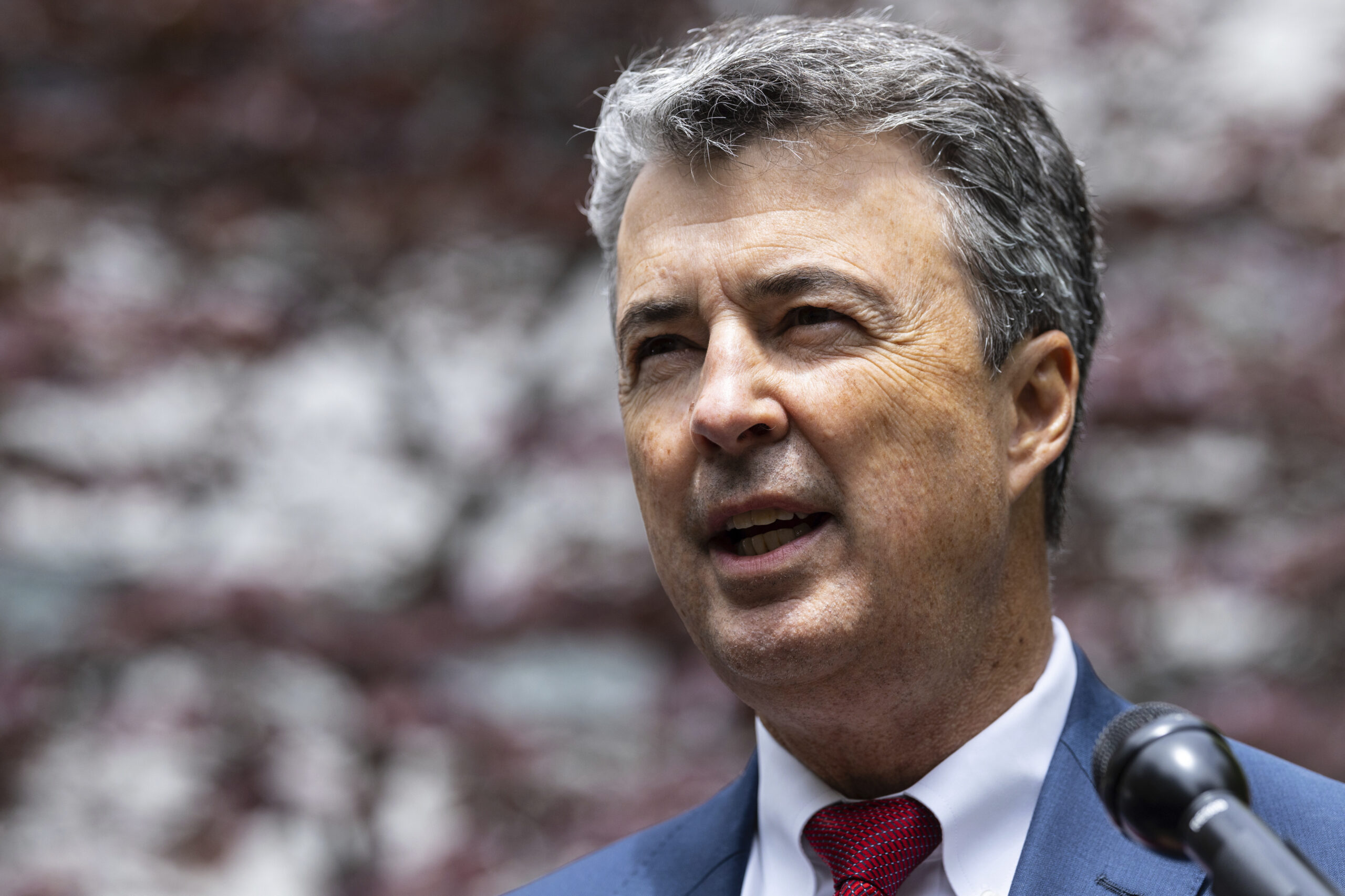
Alabama Attorney General Pushes to Reinstate Congressional Map After Supreme Court Decision
Alabama Attorney General Steve Marshall has filed motions asking federal courts to lift injunctions that block the state from implementing its newly drawn congressional map. This move follows a U.S. Supreme Court ruling that struck down Louisiana’s attempt to add a second majority-Black congressional district, marking a significant shift in how racial gerrymandering cases are assessed.
The Supreme Court’s decision, delivered this week, declared Louisiana’s expansion of a majority-Black district an unconstitutional racial gerrymander. The ruling sharply limits how courts interpret the Voting Rights Act, particularly its protections around race-based districting. For Alabama, the ruling provides a legal basis to challenge ongoing federal court orders preventing use of its 2023 congressional map.
Key Legal Motions Filed to Lift Map Restrictions
Marshall filed motions in three major redistricting lawsuits—Allen v. Singleton, Allen v. Milligan, and Allen v. Caster—which have halted Alabama from implementing its state-drawn congressional boundaries. The state aims to return to its original 2023 map instead of the federally imposed version that created a second district with a near-majority Black voting population.
“Because the lower court’s injunction cannot stand in light of the Supreme Court’s ruling, we have asked the court to lift the injunction. Alabama deserves the right to use its own maps, just like every other state,” said Attorney General Marshall.
Marshall emphasized the court’s clarification that race and political affiliation cannot automatically be deemed the same, requiring courts to demonstrate when and how they differ legally. This nuanced distinction underpins Alabama’s case for lifting the map injunctions now.
Gov. Ivey Voices Support for State’s Court Challenge
Governor Kay Ivey issued a statement soon after the motions were filed, underscoring confidence in Alabama’s ability to manage its own congressional districts without federal intervention. “Alabama knows our state, our people and our districts better than the federal courts or activist groups. I remain hopeful that Alabama receives a favorable ruling,” Ivey said.
Alabama’s struggle over its congressional map has centered on the Voting Rights Act and the federal judiciary’s efforts to ensure fair Black representation in the state’s congressional delegation. A three-judge panel previously ruled the state’s map likely violated the Voting Rights Act and demanded creation of a second majority-Black district.
Background: Supreme Court Decision Shifts Redistricting Landscape
Though the Supreme Court agreed in a 5-4 ruling that Alabama’s previous districting likely violated the law, the state’s subsequent redrawn lines were still rejected by the lower court as insufficient in creating a second Black-majority district. The federal panel then selected a new map that expanded Alabama’s District 2 to a 48.7% Black voting-age population.
With Wednesday’s Supreme Court decision involving Louisiana’s map, Alabama sees a pathway to undo the court-imposed changes. The state argues it should have the same latitude as other states, no longer constrained by court injunctions that were based on now-weakened legal standards.
What’s Next for Alabama’s Congressional Map
The federal courts will now consider Alabama’s motion to lift the injunctions that currently prevent the implementation of the state’s 2023 congressional boundaries. This case could reshape redistricting battles nationwide as the Supreme Court’s Callais decision redefines Voting Rights Act protections.
For voters and political observers across the United States, including Nevada, the outcome signals a potential shift in redistricting standards. States may gain more control over how they draw congressional maps in compliance with the Supreme Court’s refined stance on race and political considerations.
Stay tuned as this legal fight develops and potentially alters the balance of congressional representation across multiple states.