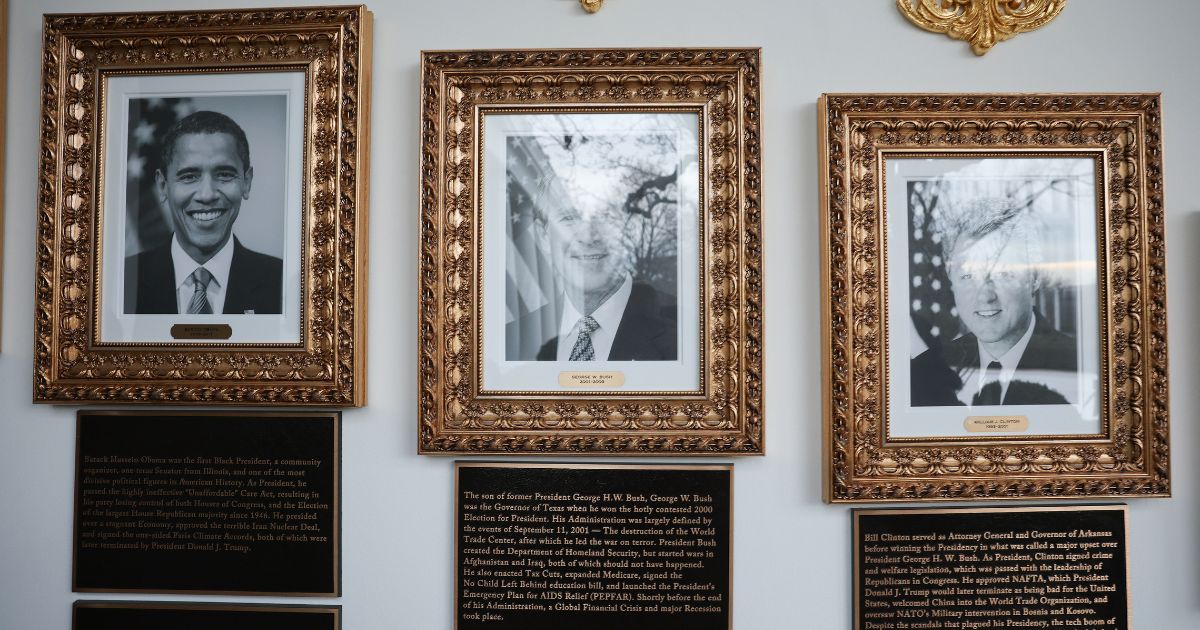
The White House has recently unveiled a series of controversial plaques in the newly established Presidential Walk of Fame, a project initiated by former President Donald Trump. This initiative, which aims to reshape the public perception of previous administrations, includes strikingly candid descriptions of former presidents, sparking debate and intrigue among political observers and the public alike.
The plaques feature a mix of praise and criticism for the former occupants of the Oval Office. For example, the plaque honoring the 42nd president, Bill Clinton, describes him as a notable figure but concludes with a pointed remark that has captured significant attention. This unexpected wording has drawn reactions on social media, with users highlighting the bluntness of the description and its implications for Clinton’s legacy.
In addition to Clinton, the plaques also address other former presidents in equally direct terms. The description for Barack Obama states he was “the first Black President, a community organizer, one-term Senator from Illinois, and one of the most divisive political figures in American history.” This characterization has raised eyebrows, particularly among Obama’s supporters, who argue that it oversimplifies his contributions to the nation.
The plaque for current President Joe Biden has also generated controversy. It labels him as “the worst President in American History” and claims he has “oversaw a series of unprecedented disasters.” Such a stark assessment reflects Trump’s ongoing criticism of Biden’s presidency and has led to discussions about the nature of political discourse in the United States.
The plaques are positioned in a prominent area of the White House, facing the Rose Garden, allowing visitors to engage with these interpretations of presidential history. This move is seen as part of Trump’s broader effort to personalize the White House environment to reflect his political ideology and preferences.
Critics have pointed out that these descriptions may serve to deepen political divides rather than promote a nuanced understanding of presidential legacies. The approach taken by Trump contrasts sharply with traditional historical interpretations that often aim for a balanced view, acknowledging both accomplishments and shortcomings.
The unveiling of the Presidential Walk of Fame highlights the evolving nature of political narrative in contemporary America. As Trump continues to shape public discourse through unconventional methods, the implications for future political engagement and historical reflection remain to be seen.
While these new plaques may be considered provocative, they have undeniably sparked conversations about the legacies of past presidents and the current political climate. As the nation navigates through a complex political landscape, the impact of these descriptions may resonate far beyond the walls of the White House.