The Sunnyvale Department of Public Safety in California sets itself apart by training all its police officers to also serve as firefighters and emergency medical technicians (EMTs). This innovative approach has led some city leaders to credit it as a contributing factor to Sunnyvale being one of the safest cities in the United States.
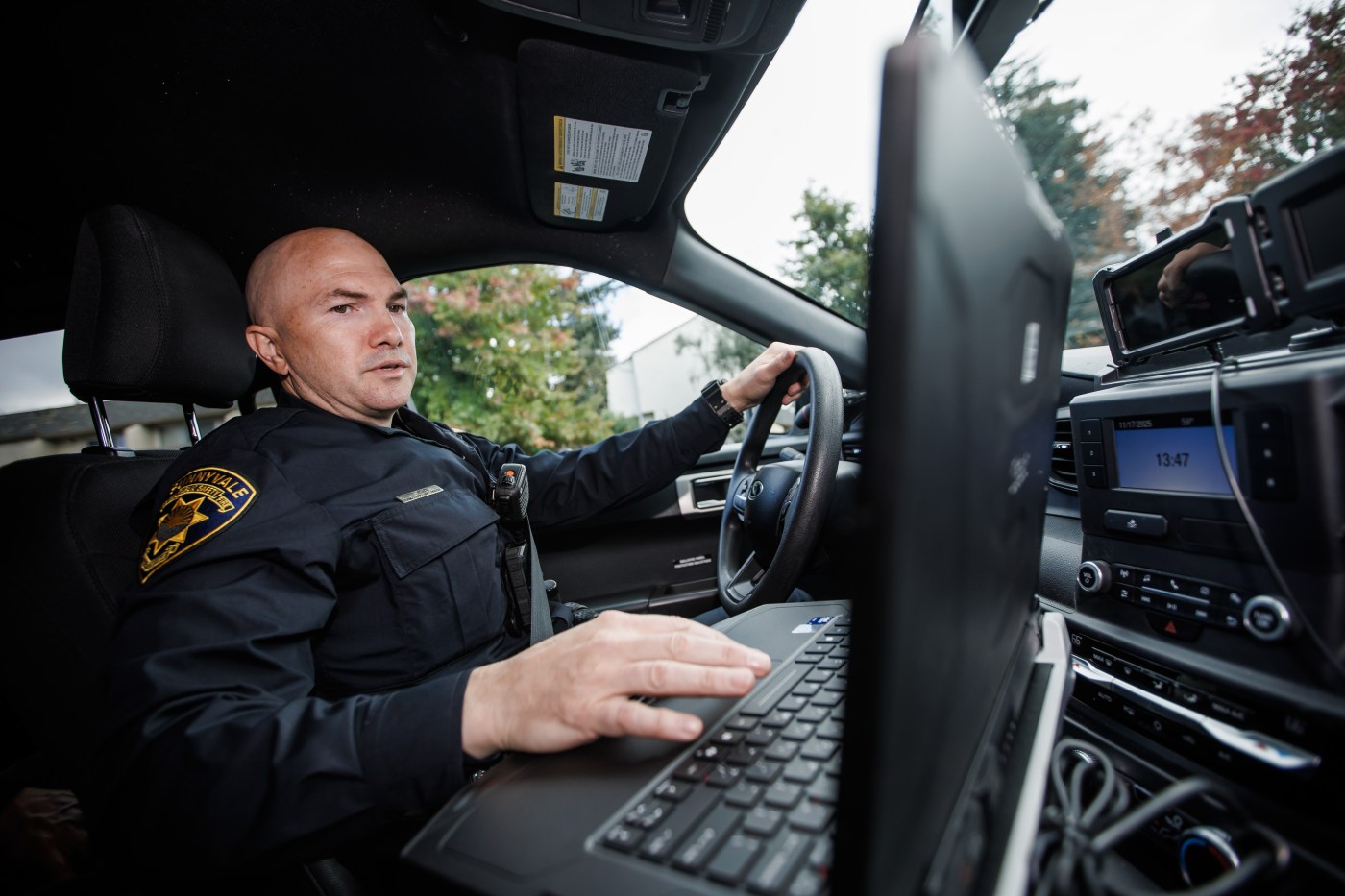
On a bright November day, Officer Andrew Tara organized equipment in his patrol car, which included not only standard police gear but also a defibrillator and firefighting uniform. In Sunnyvale, every officer is equipped to handle various emergencies, from crime to medical situations and fires. This cross-training is a hallmark of the department, which celebrates its 75th anniversary this year.
Founded in 1950, the department originally sought to optimize resources in a growing city. At that time, Sunnyvale had a population of fewer than 10,000 residents and was transitioning from agriculture to a technology hub, now home to major companies like Google and Apple. City Manager Kenneth Hunter envisioned a merged department that would effectively utilize city funds for public safety.
Today, the department has expanded significantly, encompassing a combined approach that includes police, fire, and emergency medical services. According to Chief Dan Pistor, this model allows for unique flexibility in service delivery. “We do three jobs all in one,” he stated, emphasizing that officers can transition between roles as needed.
The training process for officers is extensive, lasting nearly two years, during which they become certified in all three functions. Officers rotate between police and fire duties annually, with opportunities to specialize in areas like crime scene investigation. This structure has resulted in a high retention rate of about 90 percent after training, indicating job satisfaction among officers.
Financially, the department stands out as well. Public safety officers in Sunnyvale are among the highest-paid in the region, with salaries reaching up to $247,069. Despite these competitive wages, a Mercury News analysis revealed that Sunnyvale spends less per capita on public safety compared to similar cities in the Bay Area, while maintaining a comprehensive service structure.
Sunnyvale consistently ranks among the safest large cities in the country, with lower rates of violent crime compared to other cities of similar size and income levels. While crime rates do not vary significantly when compared to cities with similar median household incomes, city leaders assert that their integrated model contributes positively to public safety.
Mayor Larry Klein acknowledged that multiple factors contribute to the city’s safety, including its community dynamics and socioeconomic status. He believes the department’s model plays a role in fostering trust and cooperation within the community. “It helps break down barriers,” he noted, highlighting the integrated approach as a key element of Sunnyvale’s unique identity.
Furthermore, the department’s model enables quick responses to emergencies. Officers trained in medical response can begin treatment before firefighters or ambulances arrive, ensuring that victims receive timely care. This coordination is enhanced by a shared radio and dispatch system, facilitating seamless communication during emergencies.
Experts like Brian Higgins, a lecturer at John Jay College of Criminal Justice, recognize the advantages of such an integrated model. He asserts that having police and fire services under a single command improves communication and operational efficiency. “There’s a real advantage to having this mixed model,” he explained.
Despite the benefits, transitioning to this model may not be feasible for every community. Higgins cautions that each department must consider its unique circumstances. For Sunnyvale, however, the combined approach has proven effective, and as Chief Pistor remarked, “If it ain’t broke, don’t fix it.”
As the Sunnyvale Department of Public Safety looks toward the future, it remains a pioneering example of how integrated public safety services can enhance community safety and operational efficiency. The department’s continued success may very well serve as a model for other cities aiming to improve their public safety systems.