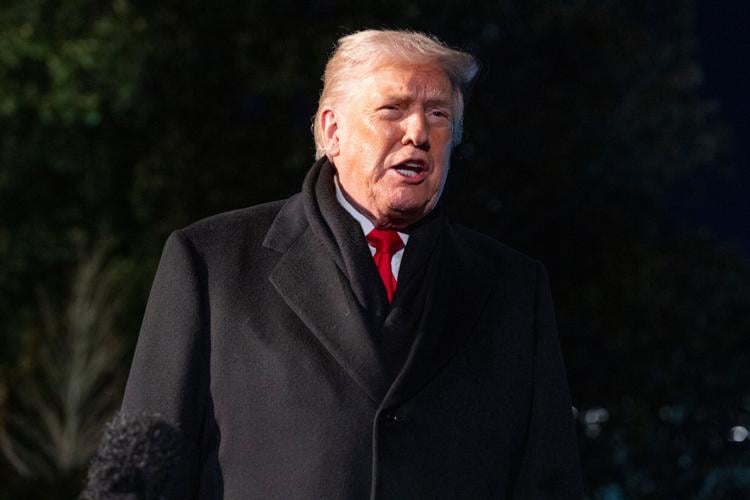
President Donald Trump made headlines on January 22, 2020, during his address at the World Economic Forum in Davos, Switzerland, by expressing a desire for the United States to acquire Greenland. Trump emphasized his interest in “getting Greenland, including right, title and ownership,” while making it clear that he would not resort to force to achieve this goal. His comments sparked significant debate about U.S. foreign policy and its implications for international relations.
In a speech that included criticism of European allies, Trump asserted that the U.S. has historically provided substantial support to Europe, particularly during World War II. He pointed out that Greenland is “cold and poorly located,” suggesting that his interest was more strategic than sentimental. “It’s a very small ask compared to what we have given them for many, many decades,” he stated, referring to the support the U.S. has extended to NATO allies.
Trump’s comments regarding NATO were particularly striking. He indicated that NATO should not interfere with U.S. aspirations for territorial expansion. This statement raised eyebrows among international observers, as it signals a potential shift in the longstanding alliance dynamics. The president’s focus on territorial claims reflects a broader trend in U.S. foreign policy, prioritizing national interests in global negotiations.
The response from international leaders varied, with many questioning the implications of Trump’s remarks. Critics argue that such statements could further strain U.S.-European relations and undermine the collaborative spirit that NATO has fostered since its inception. As the world watches, Trump’s declarations at Davos serve as a reminder of the complexities involved in international diplomacy and territorial discussions.
In the wake of the speech, discussions about Greenland’s strategic significance intensified. The island, which is an autonomous territory of Denmark, is rich in natural resources and holds potential geopolitical importance, especially in the context of global climate change and shifting trade routes. Trump’s interest in Greenland is not entirely new; it follows a previous attempt to purchase the territory, which was met with ridicule and rejection from Danish officials.
The World Economic Forum has historically been a platform for leaders to address global challenges and foster cooperation. Trump’s statements, however, have shifted the focus to nationalistic ambitions, raising questions about future engagements at such forums. As the international community reflects on the implications of Trump’s comments, the interplay between U.S. interests and global alliances remains a critical issue.
In conclusion, President Trump’s remarks at the World Economic Forum underscore a renewed focus on national interests amidst complex international relationships. With his insistence on acquiring Greenland, the president has reignited discussions about U.S. territorial ambitions and their potential impact on global diplomacy.