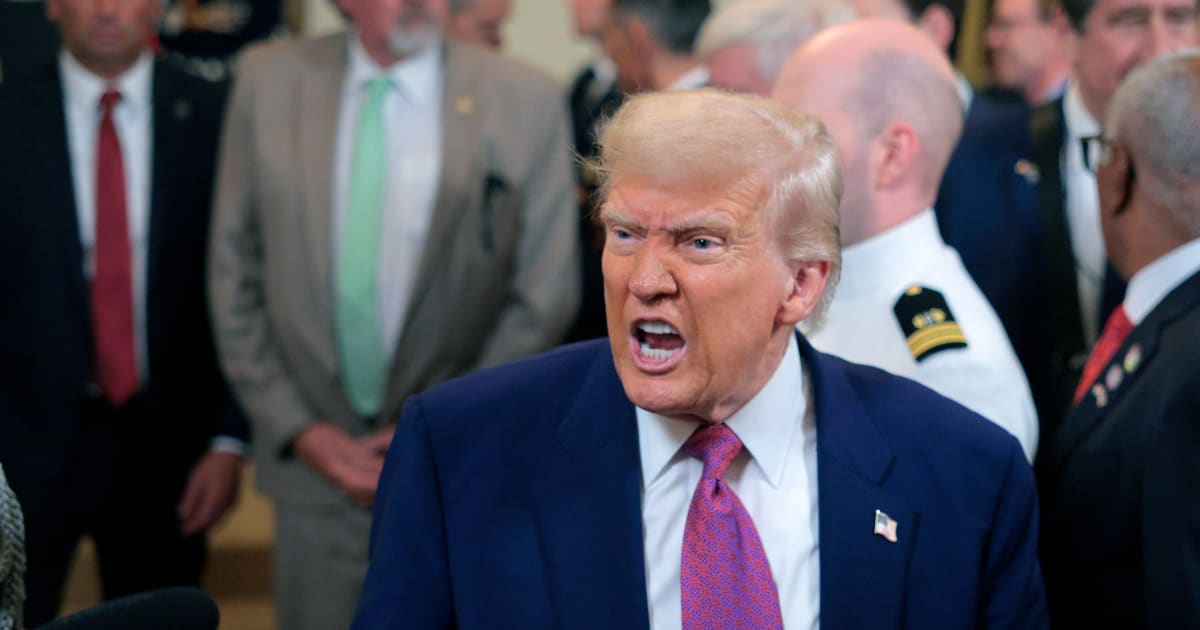
President Donald Trump has issued a stark warning to Indiana Senate Republicans who opposed his proposed congressional redistricting plan. In a post on Truth Social on March 15, 2024, Trump expressed discontent with the decision, stating that the Republicans who voted against him should “be ashamed of themselves.” He specifically called out Indiana Senate Republican leader Rodric Bray, labeling him a “total loser” and announcing his intention to support primary challenges against those who defied his wishes.
The controversy erupted after a majority of Indiana Senate Republicans sided with Democrats to reject a new congressional map that would have potentially provided Republicans a competitive advantage in two U.S. House seats currently held by Democrats. This decision marks a significant rebuke to Trump, who had previously exerted considerable pressure on the senators to support the redistricting efforts. Despite this pressure, Trump later claimed that he “wasn’t very much involved” in the redistricting process.
Trump has actively advocated for Republican-led states to redraw their congressional maps in a bid to maintain or expand the GOP’s slim majority in the U.S. House. A notable example of this occurred in Texas, where Republicans successfully passed a gerrymandered map in August 2023, which was subsequently approved by the Supreme Court earlier this month.
Responses from Indiana Republicans
In the wake of the Indiana Senate vote, several Republican lawmakers cited various reasons for their opposition to the proposed map. Among these were concerns regarding violent threats directed at them and their families over the vote. This atmosphere of intimidation has raised questions about the pressures faced by lawmakers in their decision-making processes.
Trump’s discontent with the Indiana Republicans is not new. Prior to the Senate vote, he had already threatened to support primary challengers against any Republicans who did not align with his agenda. In his Truth Social post, he criticized Bray specifically, accusing him of being “the only person in the United States of America who is against Republicans picking up extra seats.”
Democratic lawmakers, on the other hand, have initiated their own efforts regarding redistricting in response to Republican actions. In California, voters recently approved a proposal from Governor Gavin Newsom to redraw the state’s district map, a move currently under challenge by the Justice Department.
As the political landscape evolves, the fallout from the Indiana Senate vote and Trump’s threats may shape the strategies of both parties as they prepare for upcoming elections. The implications of gerrymandering and electoral redistricting remain critical issues in American politics, with significant consequences for representation in Congress.
The dynamics in Indiana highlight a broader trend, where party loyalty and voter pressures increasingly influence legislative decisions, raising concerns about the integrity of the electoral process.