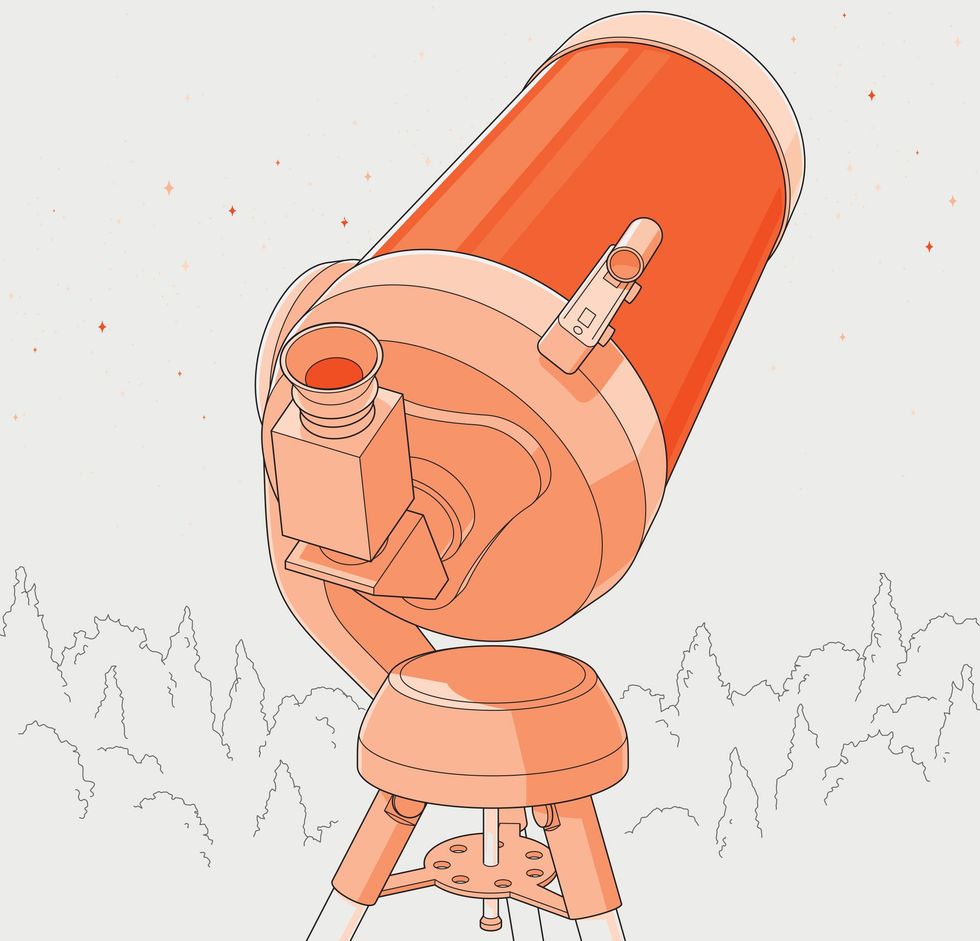
Amateur astronomers seeking a more vivid experience of deep-sky objects can now turn to a low-cost, DIY amplifying eyepiece developed by community organizer James Provost. This innovative device allows users to view celestial wonders such as nebulae and galaxies with greater clarity than traditional methods.
Many enthusiasts face a dilemma when gazing into the night sky: they can either observe through a telescope, which often presents these stellar wonders as faint smudges, or rely on lengthy exposure images captured with astrocameras, which detracts from the spontaneity of stargazing. Commercial options for real-time viewing, while effective, can be prohibitively expensive, often costing hundreds or thousands of dollars. Provost’s solution sought to bridge this gap by creating an affordable eyepiece for public astronomy nights.
Leveraging Security Technology for Astronomy
Provost discovered that the security-camera industry had already developed components suitable for low-light conditions. The technology behind closed-circuit television (CCTV) cameras, particularly their ability to transmit high-definition analog signals over coaxial cables, became a key inspiration. By utilizing the Analog High Definition (AHD) transmission standard, users can connect new cameras to existing long cable runs without sacrificing image quality.
The heart of Provost’s eyepiece is a module featuring a 2-megapixel Sony IMX307 sensor paired with the NVP2441 chipset. This combination supports a feature known as Starlight or Sens-Up mode, enhancing the camera’s sensitivity to light. Although this mode requires about 1.2 seconds of exposure time, it proves effective in capturing the dim light of astronomical objects without noticeable delays during observations.
Finding the right camera module posed a significant challenge. Provost experimented with multiple options before successfully integrating one that met his needs. The output from the camera is sent to a digital viewfinder, where users can navigate settings using a joystick. Additionally, a capture card converts the analog signal to digital, allowing images to be viewed on a smartphone via a USB-C connection.
Affordable Innovation Enhances Stargazing Experience
The entire assembly fits within a custom enclosure made from 3D-printed parts designed to fit the standard 32-millimeter diameter of most telescope eyepieces. Remarkably, the total cost of this innovative eyepiece is under US $250, making it an accessible option for amateur astronomers.
Testing the device with a Celestron C11 telescope, Provost observed the Dumbbell Nebula (Messier 27), which typically presents challenges during observation due to its faintness. The eyepiece significantly enhanced visibility compared to unaided viewing. While not as refined as high-end commercial systems featuring noise-reducing cooling, the difference was substantial for the fraction of the cost.
The versatility of this amplifying eyepiece extends beyond astronomy. By attaching a 2.8-mm HD lens to the camera module, users can repurpose it as a night-vision camera. This feature is particularly useful for navigating dark outdoor settings during stargazing events.
Provost’s DIY eyepiece represents a significant step forward for the amateur astronomy community, offering an affordable and effective means to explore the night sky. By merging technology from unrelated fields, he has created a tool that enhances the stargazing experience without the hefty price tag typically associated with advanced astronomical equipment.