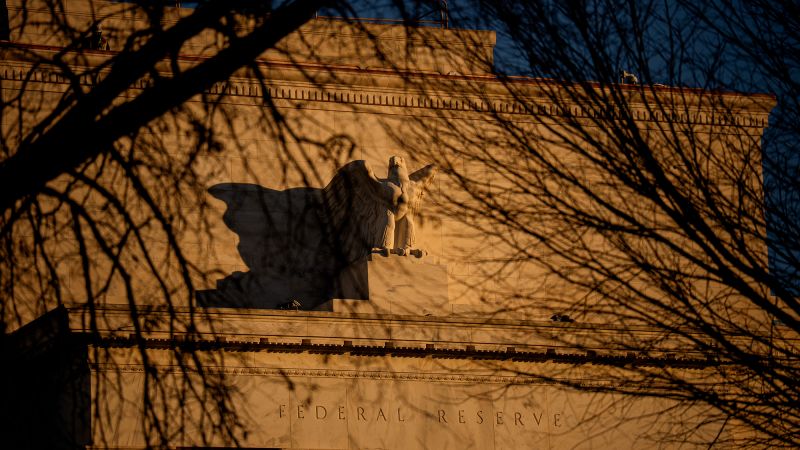
The Federal Reserve is confronting a significant challenge as it navigates the implications of the most severe global oil crisis in decades. Rising tensions due to President Donald Trump’s policies towards Iran have led to a sharp increase in oil prices, with West Texas Intermediate (WTI) crude briefly reaching $120 per barrel last week. This surge threatens to elevate costs for consumers and businesses alike, posing risks to both inflation and job growth.
Impact of Rising Oil Prices
As the Fed’s policymakers prepare for their upcoming meeting, they face a complex scenario where higher energy costs could impact economic hiring and growth. The dual threat of inflation and a potentially weakening job market places the central bank in a difficult position, especially as Kevin Warsh, Trump’s nominee to lead the Fed, awaits Senate confirmation. The current economic landscape is markedly different from the 1970s, when the last major oil shock occurred during the 1973 Arab-Israeli War.
At that time, the United States was heavily reliant on imported oil, but today it stands as the world’s largest oil producer, reducing its vulnerability to foreign oil disruptions. Nonetheless, experts indicate that the current crisis could be more severe due to the scale of production affected. According to Nicholas Mulder, a history professor at Cornell University, “The total amount of Gulf oil production that’s currently locked up due to this war is much bigger than it was back then. We’re talking about 20 million barrels versus about four and a half million in 1973.”
Lessons from the Past
The Fed’s response to past oil shocks has been criticized, particularly the approach taken during the 1973 crisis under then-Fed Chair Arthur Burns. Policymakers were hesitant to raise interest rates, viewing the inflationary pressures as largely beyond their control. While they did eventually increase rates, the intermittent nature of these hikes allowed inflation to become ingrained in the economy.
Current Fed officials appear to have learned from these historical missteps. They now recognize that monetary policy can play a crucial role in mitigating economic shocks. Yet, the ongoing situation is complicated by physical damage to oil facilities from Iranian attacks, which may take time to repair. Josh Freed, senior vice president for the climate and energy program at Third Way, noted, “That’s physical damage that could take a while to repair, so this makes it potentially worse than the oil embargo of the 1970s. There’s just a ton of uncertainty around all this.”
As the situation unfolds, Americans are already feeling the financial strain at the gas pump. The University of Michigan’s latest consumer survey indicated a 2% decline in consumer sentiment this month, with many citing the war as a concern. The economic landscape is further complicated by job statistics from the Bureau of Labor Statistics, which reported a loss of 92,000 jobs in February, increasing the unemployment rate from 4.3% to 4.4%.
Despite a rise in job openings, the labor market remains tight, with more unemployed individuals seeking work than available positions. Tani Fukui, senior director of economic and market strategy at MetLife Investment Management, stated, “There’s very little question that there is going to be an inflation effect from the war with Iran, but how big it will be is still very much an open question.”
As the Federal Reserve approaches its decision-making meeting, the pressing question remains: Can historical lessons guide policymakers in addressing the current oil crisis without derailing the economy?