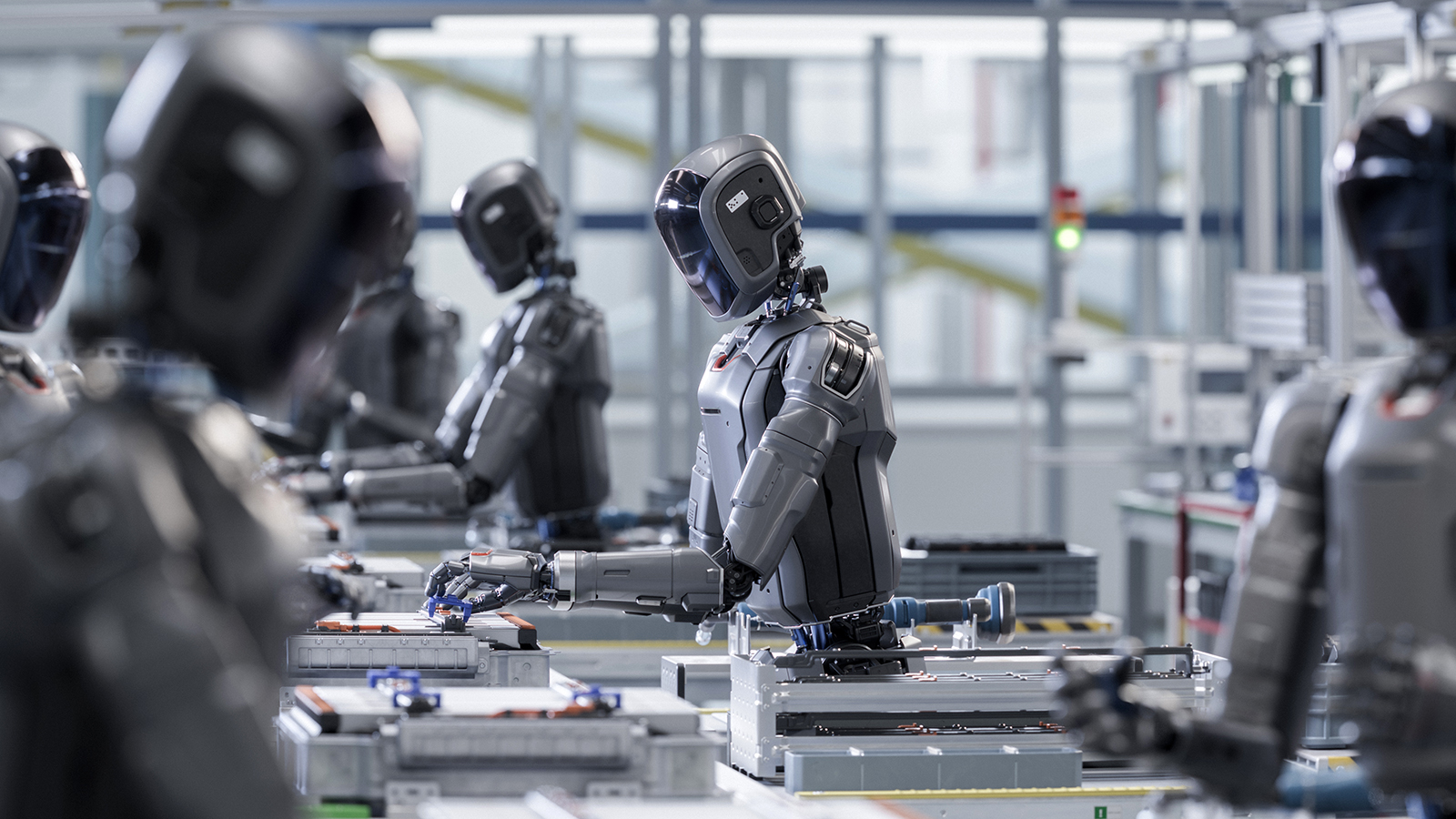
Humanoid robots are advancing rapidly, transitioning from theoretical concepts to practical applications in various environments. Designed to resemble the human body, these machines are equipped to replicate human abilities, aiming to enhance productivity in workplaces and homes. As of 2023, engineers are testing sophisticated humanoid robots in settings that include offices and public spaces, marking a significant leap forward in robotics.
Design and Functionality of Humanoid Robots
Humanoid robots typically mimic the human body structure, featuring a torso, head, robotic arms, and bipedal legs that facilitate humanlike movement. With intricate mechanical components and motors, these machines boast a wide range of motion, allowing them to perform tasks that require dexterity, such as using tools or navigating complex environments. Advanced sensors including cameras and tactile systems enable these robots to detect objects, adjust their grip, and maintain balance while interacting with their surroundings.
The integration of artificial intelligence (AI) is crucial for the functionality of modern humanoid robots. AI models empower these robots to interpret their environment, track objects, and make decisions based on real-time data. Developers employ machine learning techniques, such as imitation learning and reinforcement learning, to help robots learn new skills by observing human actions or through trial and error. This capability is essential for navigating unstructured environments and ensuring safe interactions with human operators.
Companies Leading the Humanoid Robotics Revolution
A variety of organizations are at the forefront of humanoid robotics development. For instance, Boston Dynamics has focused on creating agile robots capable of traversing challenging terrains. Agility Robotics introduced the Digit robot, designed for tasks like carrying packages and moving items in warehouses. Pal Robotics specializes in humanoid service robots that serve as platforms for research and development.
Other notable contributors in the field include SoftBank Robotics, Hanson Robotics, and Engineered Arts. These companies often develop robots for social engagement, customer service, and public demonstrations, showcasing their ability to express emotions and communicate effectively.
Humanoid robots are beginning to take over manual tasks that were traditionally performed by human workers. Their robotic arms and motor control systems enable them to manipulate tools and handle objects with precision. In domestic settings, developers are training robots to assist with chores such as cleaning and organizing. In industrial contexts, autonomous robots can aid in assembling components, transporting materials, or monitoring equipment.
The potential for remote operation further enhances the utility of humanoid robots. Human operators can guide these machines from a distance, allowing them to perform tasks in hazardous or hard-to-reach areas.
Many experts anticipate that the initial wave of humanoid robots will emerge in sectors facing labor shortages, effectively tackling repetitive or physically demanding tasks while collaborating with human workers. Researchers are focused on refining aspects such as balance, autonomous navigation, and humanlike motion, which will enable robots to operate effectively in diverse settings.
Continuous advancements in dexterity and machine perception are expected to facilitate more natural interactions between robots and people. While fully autonomous humanoid robots remain in the early stages of development, ongoing research, as highlighted in publications such as IEEE Spectrum, indicates significant progress.
As artificial intelligence continues to evolve, humanoid robots could soon become valuable assistants across homes, hospitals, and workplaces worldwide. The journey from concept to reality is well underway, suggesting a future where these machines play an integral role in daily life.