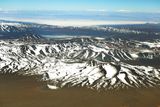
A rare snowstorm has forced the shutdown of the Atacama Large Millimeter/submillimeter Array (ALMA) telescope, one of the most advanced astronomical observatories located in the Atacama Desert of northern Chile. This unexpected weather event, which occurred in late June and early July 2025, led the ALMA research team to implement emergency procedures to protect the telescope’s sensitive equipment.
The Atacama Desert is renowned for its dry climate, making it an ideal location for astronomical observations. Averaging just 0.5 millimeters of rainfall per year, certain regions of the desert experience minimal moisture due to a combination of geographic factors, such as its high altitude and proximity to cold ocean currents. The Chajnantor Plateau, where ALMA is situated, is approximately 4,850 meters (16,000 feet) above sea level and is one of the sunniest places on the planet.
When the snowstorm struck, ALMA’s 66 antenna dishes were repositioned to prevent snow accumulation, temporarily halting their observations. Fortunately, the storm was localized, and nearby telescopes, including the Southern Astrophysical Research (SOAR) Telescope and the Vera C. Rubin Observatory, remained operational.
NASA Earth Observatory notes that the intense solar radiation typical of the Atacama rapidly melted the snow within weeks, although some of it may have sublimated, converting directly from solid to gas due to the area’s arid conditions.
Changing Climate Patterns in the Atacama
The Atacama Desert’s climate, historically one of the driest on Earth, appears to be undergoing subtle changes. Between October 1903 and January 1918, no rainfall was recorded, yet snow has fallen in the region multiple times in recent years, including in 2011, 2013, and 2021. This shift highlights the desert’s complex ecosystem, where hardy microbes and plants exist just beneath the surface.
Unseasonal rains can cause spectacular blooms of desert flowers, but such moisture can also lead to severe weather events. In March 2015, heavy rainfall resulted in devastating floods in coastal areas, particularly in the city of Chañaral, where the Salado River reached a depth of approximately 4.5 meters (14.76 feet). This disaster caused significant damage to infrastructure and resulted in the loss of 31 lives.
As climate change continues to influence weather patterns globally, the occurrence of snow in the Atacama Desert may become a more frequent challenge for ALMA and other observatories in the region. Researchers are closely monitoring these developments, as such extreme weather events could impact future astronomical studies.
The implications of these climatic shifts extend beyond astronomy; they reflect broader trends associated with the ongoing anthropogenic climate crisis. Understanding the effects of changing weather patterns in one of the world’s driest regions may provide insights into global climate dynamics.
As scientists evaluate the consequences of these unusual weather events, it becomes increasingly clear that the Atacama Desert, while known for its aridity, is not immune to the complexities of climate change. Moving forward, the scientific community will need to address the potential challenges posed by these evolving environmental conditions.