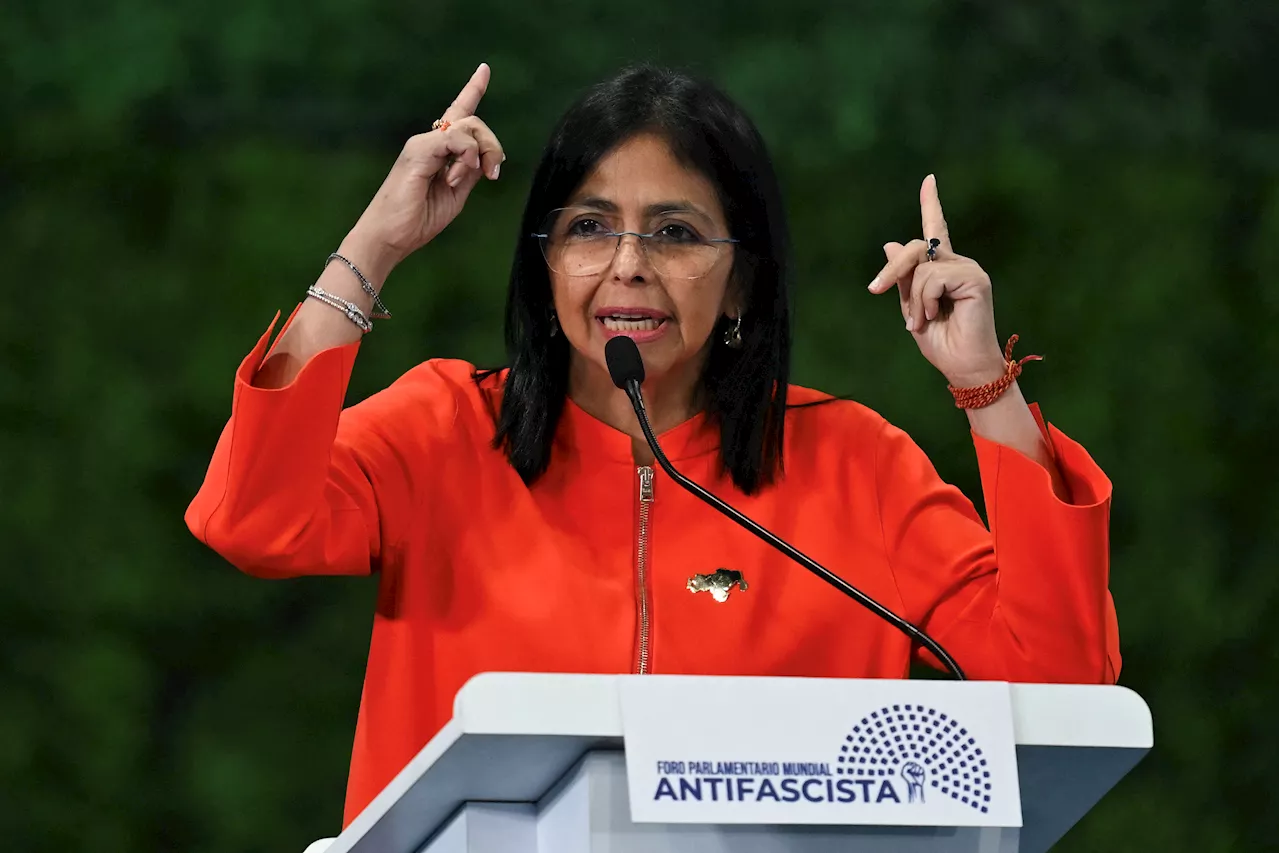
BREAKING: Delcy Rodríguez has officially stepped in as Venezuela’s interim leader after President Nicolás Maduro was reportedly captured in a dramatic U.S. military operation in Caracas. This shocking turn of events marks a profound shift in Venezuela’s political landscape, with immediate implications for both the country and international relations.
President Donald Trump confirmed Rodríguez’s ascension, stating she has been “sworn in” and is “willing to do what we think is necessary to make Venezuela great again.” However, Rodríguez has sent mixed messages, asserting that Maduro remains the “only president” while also indicating a willingness to collaborate with the U.S. government. This duality raises questions about her stability and authority in the role.
Rodríguez, aged 56, is a seasoned political figure, having served in various high-profile positions under both the late socialist leader Hugo Chávez and Maduro himself. Her rise included roles as communication minister and foreign minister before being appointed vice president in 2018, a position she held until this pivotal moment.
Born in Caracas on May 18, 1969, Rodríguez’s political roots run deep. She is the daughter of a Marxist guerrilla fighter, a legacy that has shaped her political ambitions and alliances. Analysts note that her close ties with her brother, Jorge Rodríguez, who presides over the National Assembly, have bolstered her influence within the government.
As the newly appointed interim leader, Rodríguez faces significant challenges. Maduro’s recent capture has left a power vacuum, and her statements reflect a complex balancing act between asserting authority and navigating U.S. relations. In a televised address, she condemned the “atrocities” against Venezuela, framing the U.S. actions as violations of international law.
Following Trump’s comments, Secretary of State Marco Rubio has reportedly engaged with Rodríguez, describing her as “gracious” and open to cooperation. However, skepticism remains about her ability to consolidate power. Political analysts warn that Rodríguez may lack support from key factions within Venezuela and will need to secure the loyalty of the military to maintain her interim position.
Rodríguez’s immediate agenda includes addressing the severe economic challenges facing Venezuela, particularly the crippling sanctions impacting the oil sector, the country’s primary source of revenue. Her track record as finance and oil minister will be scrutinized as she navigates these turbulent waters.
As the situation unfolds, all eyes are on Rodríguez and her next moves. Will she reaffirm her commitment to the Maduro regime, or will she carve out a new path for Venezuela amid international pressure? The stakes are high, and her response in the coming days could determine the future of the nation.
Stay tuned for more updates as this story develops.