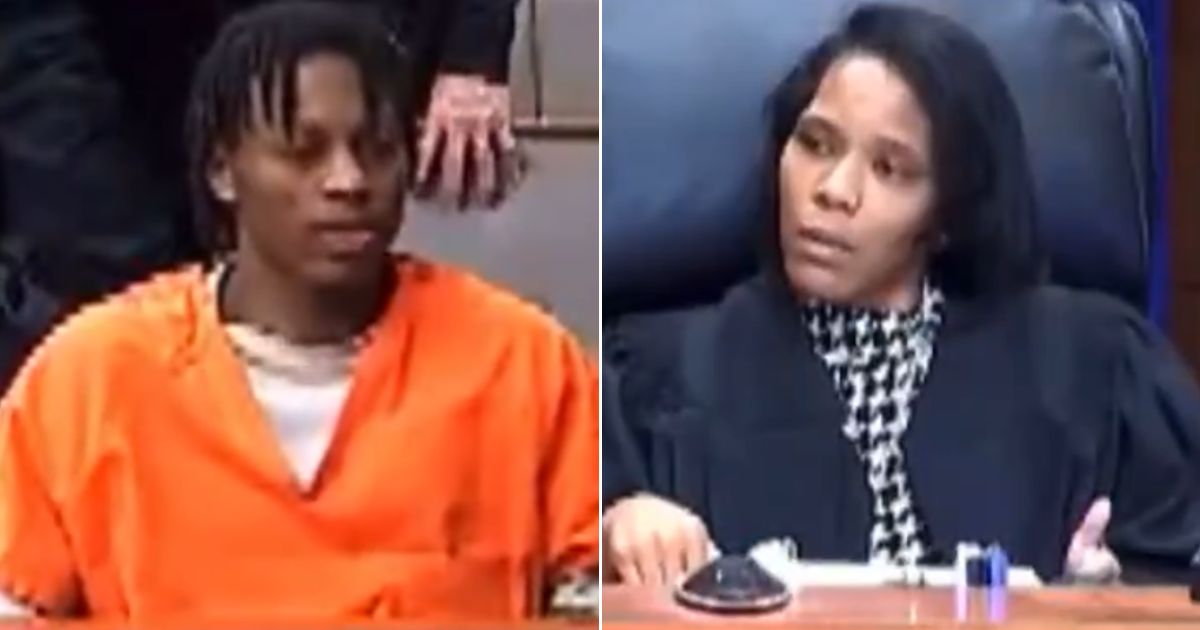
A Kentucky judge has drawn significant criticism for reducing the recommended prison sentence of a convicted rapist, citing racial factors as a significant influence in her decision. On December 2023, **Christopher Thompson**, 24, was found guilty by a jury in **Louisville** of multiple charges, including kidnapping, robbery, and sexual assault. The jury recommended a **65-year** sentence, but Judge **Tracy Davis** imposed a **30-year** sentence instead.
During the court proceedings, Thompson displayed a lack of remorse, making derogatory comments directed at Judge Davis. He reportedly stated, “I ain’t doing nothing. Eat my d***,” and expressed indifference toward the victim and her family. Despite these outbursts, Judge Davis emphasized her belief that Thompson could be rehabilitated, stating, “This court does not believe that Mr. Thompson…is beyond being rehabilitated.”
In her remarks, the judge noted the societal challenges faced by young African-American men and suggested that Thompson’s background played a role in shaping his actions. “If you were to come in here…as a 20-year-old African-American male that has been, you know, experienced this society, etc., and you would show that yes, O.K., this is the situation, this is who I am, I don’t want to be this person anymore,” she said.
The decision has sparked outrage among commentators and members of the public. **Matt Walsh**, a conservative commentator, has called for a civil rights investigation into Judge Davis’s actions, highlighting her social media presence under the handle **@DiversityDavis**. He criticized the judge’s rationale for prioritizing Thompson’s potential for rehabilitation over the victim’s suffering and community safety.
Many observers express concern that the reduction in Thompson’s sentence could have broader implications for public safety. Critics argue that allowing a convicted rapist to serve a significantly reduced sentence undermines the gravity of the crimes committed and may lead to further victimization upon his release.
The case raises important questions about the intersection of race, justice, and public safety in the legal system. As discussions continue, the implications of Judge Davis’s ruling will likely resonate beyond the courtroom, reflecting deeper societal issues regarding crime and punishment.
This situation highlights the ongoing debates surrounding criminal justice reform, particularly in how judges balance individual circumstances against the need for accountability and community safety. As the public awaits further developments, the case serves as a reminder of the complexities inherent in the judicial process.